Use sterile substrate
Prepare small trays or containers with freshly sterilized sawdust, hardwood chips, or a mix of autoclaved wood-based substrate to reduce competing fungi and bacteria when growing Flammulaster carpophilus.

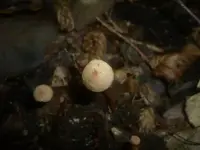
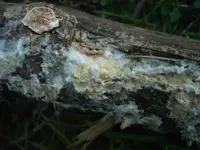
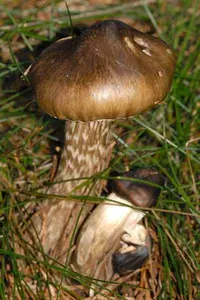
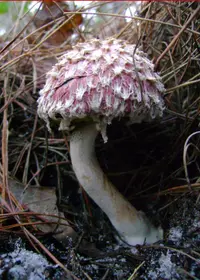
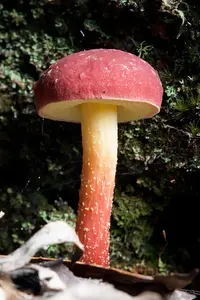
Flammulaster carpophilus is a small saprophytic fungus, not a leafy houseplant. It grows on decaying wood or plant debris, helping break down organic matter in forests and gardens. The fruiting bodies are typically tiny brown caps with a slightly scaly surface on thin stems, often appearing in small clusters. It is usually short-lived and seasonal, so it may appear and disappear quickly. This species is not commonly cultivated, and conditions for reliable growth are still poorly documented, which makes intentional culture challenging. Gardeners mainly encounter it as a spontaneous guest rather than a managed feature, so how to care for Flammulaster carpophilus is not well established beyond keeping its wood-rich habitat undisturbed.

Care Difficulty
Moderate Care

Light Preference
Partial Shade

Water Requirements
Moderate Water

Temperature Preference
Warm Climate

Hardiness Zone
Unknown

Soil Texture
Loamy, Organic-rich

Soil pH
Slightly acidic (6.5–7.0)

Soil Drainage
Well-drained

Fertilization
Minimal (feed rarely)
Scan your plant to receive care tips personalized for your specific plant
Available on iOS and Android
This small wood-inhabiting fungus prefers cool, shaded forest light rather than direct sun.
Moisture stability in the substrate is more important than a strict watering schedule for this decomposer fungus.
This species fruits best in cool to mild conditions typical of temperate forests.
This wood-decaying fungus does best in consistently moist, high-humidity conditions.
This saprobic fungus grows on decaying wood and woody debris rather than in conventional garden soil.
This species is not well suited to conventional container growing and is best maintained on outdoor logs or woodchip beds in shaded conditions.
This saprophytic fungus grows on decaying fruit and typically does not need added nutrients in managed settings.
As a small, short-lived mushroom, Flammulaster carpophilus does not require any pruning in cultivation or habitat management.
This species is not maintained as a potted or landscaped organism, so repotting or intentional transplanting is not part of normal care.
Reproduction occurs naturally via spores, and intentional propagation of this wild saprophyte is rarely attempted.
This fungus follows natural seasonal cycles and does not need targeted winter care in typical outdoor conditions.

Plant Health Check
Not sure what's wrong with your plant? Check your plant's health inside the app.
This species produces very small, tawny-brown caps, often only a few millimeters across, that fruit in dense clusters on decaying hardwood twigs, nut shells, and other woody debris rich in lignin.
It has ornamented spores covered with small warts or spines, a microscopic trait that helps mycologists distinguish it from similar brownish saprotrophic mushrooms in the same habitat.
In Europe it is frequently recorded on old hazelnuts, acorns, and other fallen fruits and seeds, where it helps break down the tough outer tissues as part of the forest decomposition community.
This small woodland mushroom is not considered edible. It is poorly studied toxicologically, offers no culinary value, and resembles other potentially harmful brown fungi. It should be treated as inedible and left for observation only.
Keep your plants happy and healthy with plant identification, disease detection, and easy care guidance.