Bovine Bolete Care (Suillus bovinus)

Also known as: Jersey Cow Mushroom
Bovine Bolete

About Bovine Bolete

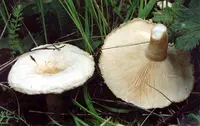
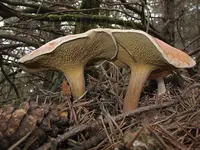
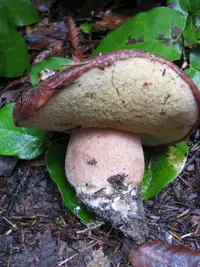
Bovine bolete, Suillus bovinus, is a soft-fleshed, pore-bearing mushroom rather than a leafy plant. It grows in a mycorrhizal partnership with pine roots, helping trees absorb water and nutrients. Caps are typically pale yellow-brown, often irregular and sometimes fused together, with a spongy, pore-covered underside instead of gills. This fungus appears in groups on the ground in coniferous forests, especially in sandy, well-drained soils across Europe and parts of Asia, and is sometimes found in planted pines elsewhere. It is generally regarded as an easy species to observe in suitable pine habitats, but to care for Bovine Bolete at home is difficult because it depends on living tree partners and specific soil conditions.

Main Plant Requirements

Care Difficulty

Moderate Care

Light Preference

Partial Shade

Water Requirements

Regular Water

Temperature Preference

Cool Climate

Hardiness Zone

3–8

Soil Texture

Sandy, Loamy, Organic-rich

Soil pH

Acidic (5.5–6.5), Slightly acidic (6.5–7.0)

Soil Drainage

Moist but well-drained

Fertilization

Minimal (feed rarely)

Get Personalized Care Plan

Scan your plant to receive care tips personalized for your specific plant

Available on iOS and Android

How to Care for the Bovine Bolete

This ectomycorrhizal mushroom prefers bright woodland conditions with filtered light rather than open, exposed sites.

  • Aim for dappled or filtered sun under pines, equivalent to roughly 2–4 hours of gentle direct morning sun plus bright shade for the rest of the day.
  • Tolerates light to medium partial shade, but heavy, dense shade reduces fruiting of Bovine Bolete and can lead to fewer, weaker mushrooms.
  • Avoid harsh, open afternoon sun that dries the upper soil and litter layer; in summer, choose sites with canopy protection and stable, indirect light.

This fungus needs consistently moist, not saturated, soil around its host tree roots to form healthy mycorrhizal associations.

  • Target soil that stays evenly moist in the top 5–8 cm, using well-drained sandy or sandy-loam soil that never holds standing water.
  • Increase moisture input in dry spells when the litter layer feels dry and crunchy, but allow the surface to slightly dry between deeper soakings to prevent rot.
  • Reduce supplemental moisture in cool, wet seasons; signs of overwatering include sour smell and slimy litter, while underwatering shows as very hard, dusty soil where Suillus bovinus stops fruiting.

This species prefers cool to mild conditions typical of conifer woodlands and responds strongly to seasonal temperature shifts.

  • Optimal fruiting usually occurs around 55–68°F (13–20°C), with steady soil moisture and moderate day–night temperature swings.
  • Mycelium tolerates down to about 23–28°F (-5–-2°C) in soil, but fruiting bodies are damaged by surface frost and repeated freeze–thaw cycles.
  • In hot weather above 77–82°F (25–28°C), choose shaded pine sites with thicker litter, which buffers soil temperatures and reduces heat and drought stress on the fungus.

Humidity is not a major factor for Suillus bovinus compared with moisture in the soil and surrounding substrate.

Suillus bovinus relies on specific soil conditions because it forms mycorrhizal partnerships with pine roots.

  • Use loose, sandy to sandy-loam soil with plenty of decomposed pine litter or needles incorporated through the top 10–15 cm.
  • Keep drainage rapid so water does not pool; slight dryness between moisture events is better than prolonged saturation.
  • Aim for slightly acidic conditions around pH 4.5–6.0, similar to typical pine forest soils.
  • Avoid compacted clay, heavily limed, or highly fertilized soils, which disrupt fungal growth and root association.

This species is not well suited to container growing because it depends on living pine roots and natural forest soil conditions.

This mycorrhizal fungus relies mainly on its pine host for nutrition, so Bovine Bolete needs little to no direct fertilization.

Suillus bovinus fruiting bodies do not need structural pruning, but limited management can support tree and site hygiene.

  • Remove only damaged or decaying fruiting bodies using clean hands or a sharp, disinfected knife.
  • Carry out any nearby tree pruning in late winter or early spring to reduce disturbance during peak fruiting.
  • Avoid cutting or disturbing the soil and fine roots where the fungus associates with its pine host.

This species is almost always grown in the ground with host pines, so management focuses on careful transplanting of young trees rather than moving the fungus itself.

  • Transplant pine seedlings with associated Suillus bovinus only during cool, moist seasons, typically early spring or early fall.
  • Check for dense root systems circling a nursery pot; this indicates the host seedling needs a larger planting site.
  • Handle the root ball gently and keep it intact to reduce stress on the fine roots where mycorrhizae occur.
  • Water thoroughly after transplanting, then keep soil evenly moist, not waterlogged, while roots re-establish.

Propagation relies on spores and, in practice, on establishing or moving host pines rather than handling the fungus directly.

  • Allow mature caps to release spores naturally around compatible pine seedlings in late summer to fall.
  • Plant young pines obtained with confirmed Suillus bovinus mycorrhizae already present on their roots.
  • Maintain moist, well-drained, slightly acidic soil and avoid fungicides that could suppress spore germination and colonization.

This fungus is cold hardy in typical temperate pine forests and usually requires no special winter care.

Care Tips

Mycorrhizal partner choice

Establish the fungus with compatible pine species, preferably young Pinus sylvestris or related pines, since this ectomycorrhizal partnership is essential for good fruiting.

Minimal ground disturbance

Avoid raking, deep hoeing, or frequent foot traffic over the inoculated area so the shallow mycelial network and fine tree roots remain intact and productive.

Low-competition groundcover

Keep the soil surface under host pines relatively open by limiting dense turf grass and aggressive groundcovers that can outcompete young roots and reduce mushroom yield.

Targeted organic mulching

Apply a thin layer (0.5–1 in) of pine needles or fine conifer wood chips over the inoculated zone to keep moisture stable and feed the mycelium without smothering it.

Seasonal monitoring routine

During the main fruiting season, walk the site after steady autumn rains to log where and when caps appear, then use this record to fine-tune irrigation and site management when growing Bovine Bolete in future years.

Common Pests and Diseases

Maggot infestation

This pest targets developing fruiting bodies, with fly larvae tunneling through the caps and stems of the mushrooms. Symptoms include soft, spongy tissue and small holes or galleries inside the flesh.

Solution

Harvest mushrooms when young and firm, removing and discarding any individuals that feel unusually soft or show clear tunneling. In home or small-scale forest settings, reduce attraction by promptly removing overmature or decaying mushrooms and avoid leaving cut or damaged fruiting bodies on the ground, as they encourage repeated egg laying by flies.

Slug and snail feeding

These mollusks feed on the soft mushroom tissue, leaving irregular holes, rasped surfaces, and slime trails on and around the fruiting bodies. Damage often appears overnight and can rapidly make mushrooms unharvestable.

Solution

Hand-pick slugs and snails during damp evenings, and keep the immediate area around fruiting bodies free of dense ground litter that provides hiding places. In garden edges or managed pine stands, use physical barriers like copper tape around collection zones or place iron phosphate bait stations at a distance from the mushrooms to limit feeding pressure.

Parasitic bolete mould

This disease affects boletes by colonizing the pore surface and flesh, often causing discolored, water-soaked, or mouldy patches that spread across the underside of the cap. Symptoms include a rapid breakdown of texture and an off odor as the fungus overtakes the mushroom.

Solution

Remove and discard any infected mushrooms as soon as discolored or mouldy pore surfaces are noticed, and avoid collecting from heavily affected clusters. Keep collection areas as clean as possible by removing decaying fruiting bodies and organic debris, which limits spore build-up and reduces the chance of recurrent infections when growing Bovine Bolete in semi-managed pine plantings.

Larval beetle damage

These insects lay eggs on or near the fruiting bodies, and the larvae bore into the cap and stem, leaving winding tunnels and frass (fine debris) inside. Symptoms include structurally weakened stems and caps that may collapse or break easily when handled.

Solution

Inspect mushrooms carefully before harvest and remove any that show visible entry holes or feel hollow. To reduce future infestations in small managed stands, promptly collect and dispose of damaged or overripe mushrooms and avoid leaving cut stems on the forest floor, thereby lowering local breeding sites for beetle populations.

Interesting Facts

Specialist pine partner

This fungus forms a tight ectomycorrhizal partnership with 2‑needle pines, especially Scots pine, exchanging mineral nutrients and water from the soil for sugars from the tree roots.

Slippery but poreless cap

The cap surface is slimy when wet, but instead of gills it has pale, angular pores that often become labyrinth-like with age, a pore structure used as a key identification feature.

Frequent Suillus laricinus mimic

It can closely resemble Suillus variegatus in the field, but differs in its lighter, more ochre tones and very soft, easily damaged flesh, which mycologists use to separate the species during surveys.

Botan icon

Did you know?

Suillus bovinus often fruits in mixed clusters that intertwine with another fungus, Gomphidius roseus, forming a three-way association in which G. roseus is thought to parasitize the Suillus mycelium while both remain tied to the same pine host.

FAQs about Bovine Bolete

This species is technically edible but considered low quality. The flesh is soft, often waterlogged, and can host many insect larvae. It is usually collected only as a mixed mushroom, not as a primary edible choice.

Grow Healthy Plants with Botan Care

Keep your plants happy and healthy with plant identification, disease detection, and easy care guidance.

Botan plant care app — identify plants on mobile

Explore More Plants