Edge Containment
Install a shallow plastic or metal edging 3–5 cm deep around beds to prevent the plant’s creeping rhizomes from invading adjacent areas and to keep the mat dense where you want coverage.

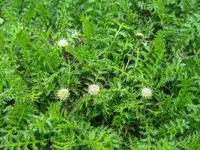
Leptinella squalida, often called brass buttons, is a low, mat-forming perennial grown mainly as a groundcover. It creates a dense carpet of finely divided, fern-like foliage dotted with tiny button-like flowers. Native to New Zealand and parts of Australia, it thrives in cool, moist habitats and often spreads between stones or along paths. The plant stays very low, which makes it useful between pavers or as a lawn alternative in small areas. Its main advantages are quick coverage and tolerance of light foot traffic, but it can be less durable in hot, very dry sites. Understanding how to care for Leptinella starts with offering consistent moisture, cooler conditions, and free-draining soil.

Care Difficulty
Moderate Care

Light Preference
Partial Shade

Water Requirements
Keep Soil Moist

Temperature Preference
Cool Climate

Hardiness Zone
6–9

Soil Texture
Loamy, Sandy, Organic-rich

Soil pH
Acidic (5.5–6.5), Slightly acidic (6.5–7.0)

Soil Drainage
Moist but well-drained

Fertilization
Minimal (feed rarely)
Scan your plant to receive care tips personalized for your specific plant
Available on iOS and Android
This compact groundcover prefers soft, cool light rather than intense sun.
This shallow-rooted plant prefers consistently slightly moist, not soggy, soil.
This cool-temperate groundcover handles a wide range of outdoor temperatures when established.
This species prefers moderate, slightly moist air but adapts to typical indoor humidity.
Leptinella squalida performs best in light, moist, well-drained soil that stays aerated.
This species is well suited to container growing, especially for small groundcover patches or edging.
This low-growing groundcover needs only light feeding to maintain dense, healthy foliage.
This mat-forming plant benefits from light pruning to stay neat and dense.
This spreading groundcover is usually transplanted outdoors rather than kept long term in containers.
This species is commonly multiplied by division, with seeds or cuttings used less often.
This plant is fairly cold hardy but may need light protection in severe winters, especially in containers.

Plant Health Check
Not sure what's wrong with your plant? Check your plant's health inside the app.
This species has very finely divided, fern-like leaf segments, but it is actually a member of the daisy family (Asteraceae), not a true fern. The ferny look comes from its highly dissected compound leaves, which increase surface area for light capture while staying very low to the ground.
Leptinella squalida naturally forms dense, creeping mats that tolerate light foot traffic once established. Its tightly packed rhizomes and low profile help it recover from occasional compression in paths and between pavers.
Instead of showy petals, this plant produces tiny, spherical flower heads that look like greenish to yellowish buttons on short stalks. Each button head is actually a tight cluster of many small florets, a typical structure in the daisy family.

In its native New Zealand and surrounding regions, Leptinella squalida often colonizes thin, disturbed soils in cool, open sites, where its creeping rhizomes help stabilize the soil surface and reduce erosion at a very small scale.
This species spreads by shallow, creeping stems and can form a dense mat, but it is usually not aggressively invasive. It is easy to edge or divide if it begins to encroach on nearby planting areas.
Keep your plants happy and healthy with plant identification, disease detection, and easy care guidance.