Winter moisture control
In regions with wet winters, plant in a sharply drained mound or rock crevice and consider a simple clear rain cover from late fall to early spring to prevent crown rot from prolonged saturation.

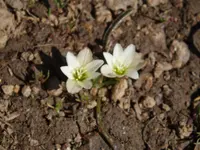
Nevada lewisia (Lewisia nevadensis) is a small, low-growing perennial native to dry mountain regions of the western United States. It often grows in open, rocky sites and gravelly meadows where drainage is very sharp.
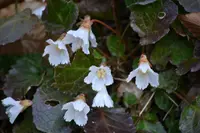
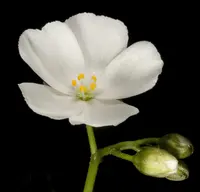
Plants form compact rosettes of narrow, fleshy leaves that store water, with short stems carrying delicate white to pale pink flowers in late spring. The overall look is neat and ground-hugging rather than tall or bushy.
This species is adapted to lean, fast-draining soils and periods of dryness, which makes it sensitive to heavy, wet conditions. Understanding these natural conditions is key to successful care for Nevada lewisia in gardens or containers.

Care Difficulty
Hard Care

Light Preference
Full Sun

Water Requirements
Low Water

Temperature Preference
Cold Hardy

Hardiness Zone
4–8

Soil Texture
Sandy, Loamy, Rocky

Soil pH
Acidic (5.5–6.5), Slightly acidic (6.5–7.0)

Soil Drainage
Well-drained

Fertilization
Minimal (feed rarely)
Scan your plant to receive care tips personalized for your specific plant
Available on iOS and Android
This alpine perennial needs strong light but benefits from protection during the hottest part of the day.
This species prefers dry-leaning conditions and is sensitive to excess moisture around the roots.
This cold-hardy alpine tolerates a wide temperature range when planted in sharply drained soil.
This alpine perennial prefers fairly dry air and does not need added humidity indoors or outdoors.
Lewisia nevadensis needs very sharp-draining, gritty soil to prevent root and crown rot.
This species can be grown successfully in containers if drainage is prioritized.
Feeding needs for Lewisia nevadensis are modest, as this alpine perennial is adapted to lean, rocky soils.
Pruning needs for Lewisia nevadensis are minimal and mainly focused on cleanliness and flower performance.
Transplanting or repotting Lewisia nevadensis should be infrequent and done carefully to avoid disturbing its sensitive roots.
Propagation of Lewisia nevadensis is usually done by seed or gentle division of mature clumps.
Winter care for Lewisia nevadensis focuses on keeping the crown relatively dry while tolerating cold temperatures.

Plant Health Check
Not sure what's wrong with your plant? Check your plant's health inside the app.
This species is tightly associated with recently melted snow zones in the western Great Basin and Sierra Nevada, often flowering in saturated soils only briefly free of snow cover in late spring to early summer.
Lewisia nevadensis behaves as a high-elevation annual or short-lived perennial, completing most of its life cycle rapidly while soil moisture is high, then surviving the dry season mainly as seeds or small storage structures.
Despite its small rosette above ground, it develops relatively deep, slender roots for its size, which help anchor it in loose granitic or volcanic substrates commonly found in its native mountain habitats.
This alpine species performs best outdoors in rock gardens, troughs, or containers kept cool and bright. Indoor conditions are usually too warm, humid, and low-light for long-term success, so Nevada lewisia indoor care is generally not recommended.
Keep your plants happy and healthy with plant identification, disease detection, and easy care guidance.