Cool root protection
Apply a 3–5 cm layer of fine, composted bark or leaf mold around the crown each spring to keep roots cool and moist without burying the stems, which significantly improves long-term vigor when growing Oconee bells.

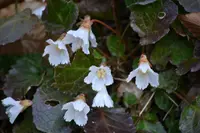
Oconee bells, Shortia galacifolia, is a low-growing, evergreen woodland perennial valued for its delicate early spring flowers. It forms compact clumps of rounded, leathery leaves that often take on reddish tones in cool weather.
In spring, it produces nodding, bell-shaped white flowers on short stems above the foliage. The plant is native to a few moist, shady mountain ravines in the southeastern United States, which makes it quite rare in the wild.
Its limited native range and need for cool, evenly moist, acidic soil make it more challenging than typical garden perennials. Gardeners who care for Oconee bells usually do best in shaded rock gardens or woodland beds that stay cool and consistently damp.

Care Difficulty
Hard Care

Light Preference
Partial Shade

Water Requirements
Keep Soil Moist

Temperature Preference
Cold Hardy

Hardiness Zone
6–8

Soil Texture
Loamy, Silty, Organic-rich

Soil pH
Strongly acidic (4.5–5.5), Acidic (5.5–6.5)

Soil Drainage
Moist but well-drained

Fertilization
Minimal (feed rarely)
Scan your plant to receive care tips personalized for your specific plant
Available on iOS and Android
Shortia galacifolia thrives in cool, dappled woodland light rather than direct, open sun.
This woodland perennial prefers consistently moist, cool, and free-draining soil.
This species prefers cool, stable conditions that mimic sheltered mountain woodlands.
This species prefers consistently moist air similar to cool woodland conditions.
Soil should mimic a cool, humus-rich, mountain woodland floor.
This species can be grown in containers when cool, shaded, and evenly moist conditions are maintained.
Shortia galacifolia is a woodland native that needs only light, careful feeding when grown in gardens or containers.
Shortia galacifolia needs minimal pruning, mainly for cleanliness and to maintain a low, natural mound.
This species is more often transplanted in shaded garden beds than repotted, due to its woodland nature.
Propagation of Shortia galacifolia is possible but slow, and success improves under cool, moist woodland conditions.
This woodland perennial is cold hardy in much of its native range and usually needs only modest winter care.

Plant Health Check
Not sure what's wrong with your plant? Check your plant's health inside the app.
This species is a rare geographic relict, surviving in only a few scattered populations along stream banks and moist ravines of the southern Appalachian Mountains after having a much wider range in past geological periods.
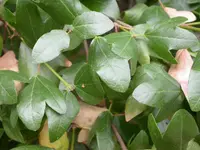
It holds its evergreen, round, glossy leaves through winter, but in spring older leaves often redden or bronze and are gradually replaced by fresh green foliage as the new season’s growth emerges.
The nodding, bell-shaped white flowers with pinkish tints position their reproductive structures so that only certain small bees and flies can effectively transfer pollen, which helps reduce wasted pollen and encourages efficient cross-pollination.

The species was first described from a specimen collected by André Michaux in the 1780s, then remained effectively “lost” to botanists for almost a century until it was rediscovered in 1877 near the Catawba River in North Carolina after a highly publicized botanical search.
This species spreads slowly by short rhizomes, forming small clumps rather than large colonies. It is not aggressive and rarely becomes a nuisance, so it suits shaded rock gardens and woodland edges where controlled spread is preferred.
Keep your plants happy and healthy with plant identification, disease detection, and easy care guidance.