Chinese Sweetgum Care (Liquidambar formosana)

Also known as: Formosan Sweetgum, Formosan gum
Chinese Sweetgum

About Chinese Sweetgum

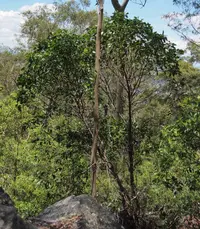
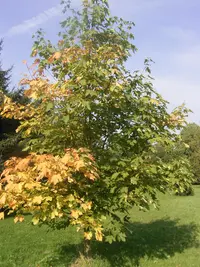
Chinese sweetgum (Liquidambar formosana) is a deciduous tree valued for its upright form and colorful, maple-like foliage. It typically develops a strong central trunk with a broad, pyramidal crown as it matures.

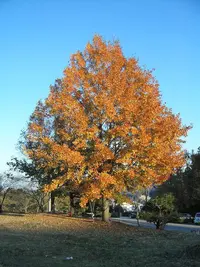
This species is native to East Asia, especially China and Taiwan, and is often used in parks, large gardens, and avenues. Leaves turn shades of red, orange, or purple in fall, which is a main ornamental feature.

Growth is moderate and the tree is generally robust if planted in suitable conditions. To care for Chinese Sweetgum, provide sun, evenly moist but well-drained soil, and enough space for its eventual size.

Main Plant Requirements

Care Difficulty

Moderate Care

Light Preference

Full Sun

Water Requirements

Moderate Water

Temperature Preference

Warm Climate

Hardiness Zone

7–9

Soil Texture

Loamy, Clay, Organic-rich

Soil pH

Acidic (5.5–6.5), Slightly acidic (6.5–7.0)

Soil Drainage

Moist but well-drained

Fertilization

Minimal (feed rarely)

Get Personalized Care Plan

Scan your plant to receive care tips personalized for your specific plant

Available on iOS and Android

How to Care for the Chinese Sweetgum

This deciduous tree prefers full sun but accepts light shade, especially in hotter regions.

  • Provide 6–8 hours of direct sun daily; in hot summers, prioritize morning sun with light afternoon shade to reduce leaf scorch.
  • Chinese Sweetgum tolerates partial shade (around 3–4 hours direct sun), but fall color and growth will be less intense.
  • In its first 2–3 years, avoid deep shade from buildings or dense trees; maintain bright exposure year-round for strong framework development.

This species prefers evenly moist, deep soil but does not tolerate standing water.

  • During the first 2–3 growing seasons, water when the top 5–8 cm of soil feels dry, applying a slow, deep soak to wet the root zone 20–30 cm deep.
  • Once established in the landscape, reduce frequency and rely mostly on rainfall, watering only during prolonged dry periods when leaves start to dull or slightly droop.
  • Ensure well-drained soil; soggy conditions cause yellowing leaves and dieback, while chronic underwatering leads to crispy leaf edges and early leaf drop in Liquidambar formosana.

This tree is adapted to temperate climates with distinct seasons.

  • Active growth is strongest around 65–80°F (18–27°C); it handles typical summer warmth if soil moisture is maintained and roots are mulched.
  • Mature trees tolerate winter lows near 0°F (−18°C) with short dips slightly below; young trees benefit from protection from severe frost and drying winter winds.
  • In regions with hot summers above 90°F (32°C), provide soil mulch and avoid heat-reflective sites like south-facing walls to limit heat stress and leaf scorch.

Humidity is not a critical factor for Liquidambar formosana, which adapts well outdoors in most temperate climates.

This species grows best in moist, deep, structured soil that holds water yet drains freely.

  • Use a loamy soil rich in organic matter, combining native soil with compost to improve structure and moisture retention.
  • Aim for slightly acidic to neutral pH, around 5.5–7.0, avoiding strongly alkaline or saline conditions.
  • On compacted or heavy clay sites, incorporate coarse sand or fine bark to improve aeration and reduce waterlogging risk.
  • Avoid shallow, stony, or extremely fast-draining substrates that dry out quickly and restrict root development in Liquidambar formosana.

This tree is only moderately suitable for long-term container growing and is best kept in large, stable outdoor tubs.

  • Choose a heavy, wide container to counter the tall, wind-catching canopy and reduce tipping risk.
  • Use a deep pot to allow a strong taproot and structural roots to anchor without circling excessively near the surface.
  • Select a thick-walled, non-porous container material to slow moisture loss and buffer roots from rapid temperature swings.

Liquidambar formosana benefits from modest, well-timed feeding rather than heavy fertilization.

  • Apply a balanced slow-release fertilizer (for example 10-10-10) once in early spring as new growth begins.
  • In poorer soils, supplement with a thin layer of compost over the root zone each spring, keeping it away from the trunk.
  • Use half-strength liquid balanced fertilizer only for young or container-grown Chinese Sweetgum during the active growing season.
  • Stop feeding in late summer to allow wood to harden and avoid stimulating tender growth before winter.

Pruning Liquidambar formosana focuses on structural health and clearance rather than heavy shaping.

  • Carry out main pruning in late winter to very early spring, before bud break.
  • Remove dead, diseased, or storm-damaged branches first, cutting back to healthy wood with clean bypass pruners or a sharp saw.
  • Thin crossing or crowded interior branches to improve airflow and maintain a strong, single-leader form.
  • Limit cuts on mature trees to smaller branches to reduce stress and lower the risk of decay entry points.

This species is usually grown in-ground, so care centers on correct transplanting rather than frequent repotting.

  • Transplant young trees in late fall or early spring when dormant and soil is workable.
  • Look for circling roots, root-bound containers, or stunted growth as signs a container specimen needs a larger pot or planting site.
  • Move to a hole 2–3× wider than the root ball, keeping the root flare at soil level and backfilling with native soil.
  • Water deeply after planting, mulch 5–8 cm around but not against the trunk, and keep soil evenly moist to reduce transplant shock.

Liquidambar formosana is most often propagated from seed, with vegetative methods used less commonly.

  • Collect ripe, brown seed capsules in fall and extract seeds once dry.
  • Provide a cold stratification period of about 60–90 days at 34–41°F to break seed dormancy.
  • Sow in spring in a free-draining seed mix, keep lightly moist, and place in bright, indirect light for germination.
  • Semi-hardwood cuttings in mid to late summer may root under high humidity and bottom heat, though success can be variable.

Established Liquidambar formosana trees are moderately cold hardy and usually need minimal winter care in suitable climates.

  • Mulch the root zone with 5–8 cm of bark or leaf mold in late fall, keeping mulch away from the trunk.
  • Young or newly planted trees benefit from burlap wraps or windbreaks in exposed sites to reduce desiccation.
  • Move container-grown specimens into a sheltered, frost-free or slightly protected area where roots will not freeze solid.

Care Tips

Root flare inspection

When planting or after leaf drop, gently uncover the upper 2–5 cm of soil around the trunk to ensure the root flare is visible and not buried, which reduces risk of girdling roots and trunk rot over time.

Wind-firm training

In the first 3–5 years, leave a single, sturdy stake on the windward side and tie the trunk loosely with a soft, wide tie, then gradually lower and remove ties as the tree develops taper and can flex naturally in the wind.

Branch angle management

During late winter, selectively remove or shorten very upright secondary branches with narrow crotch angles, favoring wide (45–60°) branch angles to reduce future limb breakage and improve long-term structure.

Surface root control

If roots begin to lift lawn or paving, apply a 5–8 cm mulch ring out to the drip line and keep turf away from the base, which guides new feeder roots deeper and reduces surface root dominance.

Autumn color optimization

For better fall color when growing Chinese Sweetgum, avoid high-nitrogen fertilization after midsummer and maintain a consistent watering schedule so the tree hardens off gradually before cold weather.

Common Pests and Diseases

Scale insects

This pest feeds on sap along twigs and branches, often appearing as small, immobile bumps and causing yellowing foliage and reduced vigor.

Solution

Prune out heavily infested twigs, then wipe remaining colonies with a cloth dipped in soapy water or horticultural oil; for taller landscape trees, apply a horticultural oil spray during the dormant season to smother overwintering stages and repeat as needed based on local Liquidambar formosana care recommendations.

Aphids

These insects cluster on young shoots and leaf undersides, excreting sticky honeydew that can lead to sooty mold on leaves and bark.

Solution

Dislodge colonies with a strong stream of water and, if needed, use insecticidal soap or a light horticultural oil on reachable foliage, repeating at 5–7 day intervals until new growth emerges clean and natural predators are active.

Leaf spot

This disease causes scattered brown or purple spots on leaves, which may coalesce and lead to early leaf drop, especially in humid or wet conditions.

Solution

Rake and dispose of fallen leaves, thin nearby vegetation to improve air circulation, avoid overhead watering, and in recurrent severe cases use a registered ornamental tree fungicide in early spring according to label directions.

Canker

This disease creates sunken, discolored patches on branches or the trunk, sometimes with oozing sap and dieback of affected limbs.

Solution

Prune out infected branches several inches below visible damage during dry weather, disinfect tools between cuts with alcohol or a bleach solution, and reduce plant stress through proper watering and mulching to support natural wound compartmentalization.

Spider mites

This pest thrives in hot, dry periods, causing fine stippling on leaves, bronzing, and delicate webbing between leaf veins and along small twigs.

Solution

Increase humidity around young trees when possible, hose down foliage thoroughly to wash off mites, and if needed apply insecticidal soap or a miticide labeled for ornamental trees, ensuring coverage of leaf undersides and repeating as label directs.

Interesting Facts

Three‑lobed leaf shape

Unlike the commonly cultivated American sweetgum, this species usually has three main leaf lobes instead of five, which makes its foliage easy to recognize in the field.

Resin for traditional uses

The tree exudes a fragrant resin from its bark, which has been used in East Asia in incense, varnish-like preparations, and as a traditional material in small-scale handicrafts.

Native montane distribution

It is naturally distributed in warm-temperate to subtropical forests of China, Taiwan, Vietnam, and Laos, often on hillsides and lower mountain slopes rather than lowland floodplains.

Botan icon

Did you know?

In parts of East Asia, this species has long been planted near temples and along historical roads for its reliable red to purple autumn foliage, making it one of the region’s classic ornamental trees for fall color, similar in cultural role to the Japanese maple in Japan.

FAQs about Chinese Sweetgum

This tree typically grows 30–60 cm per year under good conditions. It often needs 20–30 years to approach mature height and canopy spread, though growth is faster in deep, moist, well-drained soil.

Grow Healthy Plants with Botan Care

Keep your plants happy and healthy with plant identification, disease detection, and easy care guidance.

Botan plant care app — identify plants on mobile

Explore More Plants