Great Blue Lobelia Care (Lobelia siphilitica)

Also known as: blue cardinal flower, blue lobelia, great lobelia
Great Blue Lobelia

About Great Blue Lobelia

Great blue lobelia, Lobelia siphilitica, is a herbaceous perennial native to wetlands, streambanks, and moist meadows in eastern and central North America. It is often grown in gardens for late-summer color and wildlife value.

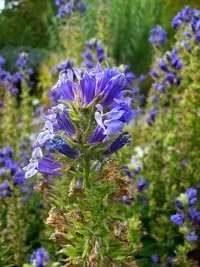
Plants form upright clumps with sturdy stems, narrow green leaves, and dense spikes of tubular blue to violet flowers that attract bees and hummingbirds. The flowers have a distinctive two-lipped shape typical of the lobelia genus.

This species prefers consistently moist soil, sun to light shade, and cooler summer conditions, which makes it well suited to rain gardens and pond edges. Once its moisture needs are understood, it is relatively straightforward to care for Great Blue Lobelia in temperate climates.

Main Plant Requirements

Care Difficulty

Moderate Care

Light Preference

Partial Sun

Water Requirements

Keep Soil Moist

Temperature Preference

Cold Hardy

Hardiness Zone

3–9

Soil Texture

Loamy, Clay, Organic-rich

Soil pH

Acidic (5.5–6.5), Slightly acidic (6.5–7.0)

Soil Drainage

Waterlogged tolerant

Fertilization

Minimal (feed rarely)

Get Personalized Care Plan

Scan your plant to receive care tips personalized for your specific plant

Available on iOS and Android

How to Care for the Great Blue Lobelia

This moisture-loving perennial grows best in consistent light conditions that avoid harsh extremes.

  • Provide 4–6 hours of sun daily, ideally morning sun with light afternoon shade, as Great Blue Lobelia prefers bright conditions without intense late-day heat.
  • Site plants in full sun only where soil stays consistently moist; in drier spots, choose partial shade or filtered light under high, open tree canopies.
  • Watch foliage color and flowering: sparse blooms and leggy stems suggest too much shade, while scorched, crispy leaves point to excessive direct sun exposure.

This species is adapted to naturally wet sites and needs steady moisture to perform well.

  • Aim for soil that stays evenly moist, not soggy; in garden beds, do not let the top 2–3 cm fully dry, especially during active growth and flowering.
  • Increase watering during hot, dry spells so the root zone never dries out, and reduce slightly in cool fall weather as Lobelia siphilitica begins to go dormant.
  • Signs of underwatering include wilting and dull, folding leaves, while yellowing foliage, mushy stems, or a sour soil smell indicate chronic overwatering or poor drainage.

This hardy perennial tolerates a wide temperature range but grows best in moderate conditions.

  • Active growth is strongest around 65–80°F (18–27°C), with cool nights supporting sturdy stems and prolonged flowering.
  • Established plants in the ground usually survive down to about -20°F (-29°C) under typical winter conditions with mulched soil and adequate snow cover.
  • During summer heat above 90°F (32°C), provide extra water and some afternoon shade to limit stress, leaf scorch, and shortened blooming duration.

This species prefers moderately moist air but usually adapts to outdoor humidity levels.

  • Aim for 40–60% humidity in garden or patio settings, matching its natural streamside habitats.
  • Plants tolerate short dry-air spells, but prolonged hot, very dry winds can cause leaf edge browning and faster wilting in Great Blue Lobelia.
  • If foliage tips crisp or buds abort, increase humidity by grouping plants, using nearby water features, or adding surface mulch to stabilize moisture.

This plant thrives in consistently moist, deep soils with high organic content.

  • Use a loamy, organic-rich soil that holds moisture yet does not become stagnant, such as garden loam mixed with compost.
  • Ensure slow to moderate drainage; soil should stay evenly damp, especially in summer, without long periods of standing water that promote root rot.
  • Aim for slightly acidic to neutral pH around 6.0–7.0, amending very alkaline soils with compost or leaf mold to improve structure and chemistry.
  • For clay-heavy ground, blend in compost and fine pine bark to increase aeration, and avoid very sandy mixes that dry out quickly and stress Lobelia siphilitica.

This species can grow in containers if moisture is managed carefully.

  • Select a deep, heavy pot that resists tipping when tall flower spikes develop and holds moisture more evenly than thin plastic.
  • Use a moisture-retentive mix such as 2 parts peat-free compost to 1 part loam and 1 part fine bark to prevent rapid drying.
  • Stand the container in a shallow outer tray only during hot spells, removing excess water after a few hours to avoid waterlogging.

This native perennial benefits from modest feeding but does not require heavy fertilizer for healthy growth.

  • Apply a balanced, slow-release fertilizer (around 10-10-10) or a thin layer of compost in early spring as new growth emerges.
  • During the growing season, use a half-strength balanced liquid feed every 4–6 weeks if soil is poor or plants look weak.
  • Stop feeding Great Blue Lobelia by late summer to allow stems to harden and prepare naturally for dormancy.
  • Avoid high-nitrogen products that push soft leafy growth at the expense of flowers and increase lodging risk.

Lobelia siphilitica responds well to light, timed pruning that maintains vigor and encourages flowering.

  • In late spring, remove winter-killed or damaged stems with clean, sharp hand pruners at ground level.
  • Deadhead spent flower spikes in mid to late summer to extend blooming and keep plants tidy.
  • After flowering, cut back tall, floppy stems by up to one-third to encourage bushier growth next season.
  • Thin out crowded clumps every few years to improve air circulation and reduce foliar disease.

This species is more often transplanted in gardens than kept long term in containers.

  • Transplant clumps in early spring or early fall when temperatures are mild and soil is moist but not waterlogged.
  • Look for slow growth, roots circling the container, or frequent wilting as signs that potted plants need a larger container.
  • Divide and replant every 3–4 years, spacing divisions 25–45 cm apart in consistently moist soil.
  • Water thoroughly after moving plants and provide light shade and even moisture for 1–2 weeks to reduce transplant shock.

Lobelia siphilitica multiplies well through both seed and division under suitable conditions.

  • Sow fresh seeds outdoors in fall so natural winter cold stratification breaks dormancy for spring germination.
  • Alternatively, cold-stratify seeds in the refrigerator for 6–8 weeks, then sow on the surface of moist seed mix under bright light.
  • Divide mature clumps in early spring, keeping several shoots and healthy roots per division and replanting immediately.
  • Keep new divisions and seedlings evenly moist in bright, indirect light until established, avoiding waterlogged conditions.

This cold-hardy perennial usually needs minimal winter care in most temperate climates.

  • Tolerates freezing temperatures in-ground across much of the northern US once established.
  • After hard frost, allow stems to die back naturally, then cut to ground level if a tidier look is desired.
  • Apply a 5–8 cm layer of organic mulch around the crown in late fall in exposed or colder sites.
  • For containers, move pots to a sheltered, unheated area to prevent repeated freeze–thaw of the root zone.

Care Tips

Moisture Zoning

In mixed borders, plant Great Blue Lobelia in the lowest, most moisture-retentive part of the bed or beside downspouts to match its natural wetland preference and reduce stress during dry spells.

Seasonal Cutback Timing

After flowering, cut stems back to just above the basal foliage rosette to encourage denser regrowth and reduce self-seeding in areas where you want tighter clumps.

Dividing Mature Clumps

Every 3–4 years, lift and divide crowded clumps in early spring while growth buds are visible, then replant divisions at the same depth to maintain vigor and prevent center die-out.

Slug And Snail Management

Place low, rough barriers such as crushed gravel bands or copper tape around young plants and remove nearby debris to reduce slug and snail damage on tender spring growth.

Wet Area Naturalizing

To grow Lobelia siphilitica into a naturalized drift, plant groups of 3–5 along pond edges or rain garden swales, spacing them 25–35 cm apart so they knit together and shade the soil, which suppresses weeds and stabilizes moist banks.

Common Pests and Diseases

Aphids

These insects cluster on young stems and flower spikes, sucking sap and causing curling, distortion, and sticky honeydew on leaves and buds.

Solution

Spray plants with a firm stream of water to dislodge colonies, then use insecticidal soap or a neem oil spray on all soft growth every 5–7 days until populations decline; encourage natural predators by avoiding broad-spectrum insecticides near the planting area.

Leaf miners

These insects create winding, pale tunnels inside the leaves, which can lead to cosmetic damage and reduced photosynthesis on heavily affected foliage.

Solution

Remove and dispose of mined leaves as soon as trails appear to interrupt the life cycle, and protect new foliage with a labeled spinosad or neem-based product applied according to package directions if damage is recurring or severe.

Powdery mildew

This disease appears as a white to gray powdery coating on upper leaf surfaces, sometimes leading to yellowing and premature leaf drop in dense plantings or late in the season.

Solution

Improve air circulation by thinning crowded stems, avoid overhead watering in the evening, remove badly affected leaves, and apply a sulfur or potassium bicarbonate fungicide at the first sign of symptoms according to label directions.

Rust

This disease causes small orange to brown pustules on the undersides of leaves, often with yellowing on the upper surface and gradual decline of affected foliage.

Solution

Promptly remove and discard infected leaves, avoid wetting foliage when watering, increase spacing around plants, and, if rust recurs yearly, apply a labeled ornamental fungicide preventively in early summer following package instructions.

Slugs and snails

These pests chew irregular holes in the foliage of young plants, often leaving slime trails on or near the damaged leaves, especially in damp, shaded sites.

Solution

Hand-pick at dusk or early morning, reduce hiding spots such as dense mulch or debris, use iron phosphate slug bait around plant bases, and keep soil surface slightly drier at the top layer while maintaining overall moisture suitable for growing Great Blue Lobelia.

Interesting Facts

Specialized bee pollination

The flowers have a tubular, two-lipped shape that is especially suited to bumblebees, which are the primary pollinators for this species in its native North American range.

Moist-soil specialist

This plant naturally occurs in wet meadows, stream banks, and floodplains, and it tolerates seasonal flooding far better than many other prairie or meadow perennials.

Late-season nectar source

It flowers in late summer to early fall, providing nectar and pollen for native bees and other insects at a time when many earlier-blooming wildflowers have already finished.

Botan icon

Did you know?

The species name siphilitica reflects a historical use by Indigenous peoples and early European settlers who applied preparations of this plant in attempts to treat syphilis, a practice that gave rise to both the scientific and some older common names, even though modern research does not support it as an effective medicinal treatment.

FAQs about Great Blue Lobelia

Poor flowering usually comes from too much shade, dry soil, or nutrient imbalance. Ensure consistent moisture, moderate fertility, and remove spent flower spikes. Dividing crowded clumps every few years also helps maintain vigorous bloom production.

Grow Healthy Plants with Botan Care

Keep your plants happy and healthy with plant identification, disease detection, and easy care guidance.

Botan plant care app — identify plants on mobile

Explore More Plants