Wind-shaping support
In very windy sites, use short, sturdy stakes and loose ties during the first 1–2 years to guide young shoots and prevent wind rock, then remove supports once the root system is well anchored.

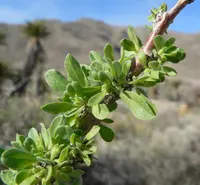
Peach thorn (Lycium cooperi) is a woody shrub native to arid regions of the southwestern United States and northern Mexico. It often grows in washes, desert slopes, and open scrub.
The plant forms a spiny, branching thicket with small gray-green leaves and pale tubular flowers that develop into orange to red berries. Its deep roots and drought tolerance make it well adapted to hot, dry climates.
This species suits low-water landscapes and restoration plantings, but the thorns and open habit require thoughtful placement. It prefers full sun, fast-draining soil, and low to moderate watering, which guides how to care for peach thorn in home gardens.

Care Difficulty
Easy Care

Light Preference
Full Sun

Water Requirements
Low Water

Temperature Preference
Warm Climate

Hardiness Zone
8–10

Soil Texture
Sandy, Loamy, Rocky

Soil pH
Slightly alkaline (7.0–7.5), Alkaline (7.5–8.5)

Soil Drainage
Well-drained

Fertilization
Minimal (feed rarely)
Scan your plant to receive care tips personalized for your specific plant
Available on iOS and Android
This desert shrub thrives in strong sun but benefits from some seasonal protection.
This drought-adapted species prefers infrequent, deep watering and fast-drying soil.
This shrub is adapted to hot deserts but also tolerates moderate winter cold.
This desert shrub handles very low humidity and rarely needs special moisture in the air.
This desert-adapted shrub prefers mineral, fast-draining soil that never stays wet for long.
This species can be grown in containers if the pot and medium are managed for dryness and stability.
Lycium cooperi is adapted to lean soils and usually needs minimal fertilization, especially in-ground in native-style plantings.
Lycium cooperi responds well to thoughtful pruning that maintains its natural, open structure and encourages healthy flowering wood.
Peach thorn is usually grown in the ground, so transplanting young plants correctly is more important than frequent repotting.
Lycium cooperi can be propagated by semi-hardwood cuttings or seeds when provided with warm, bright conditions and well-drained media.
Lycium cooperi is generally cold hardy in its recommended zones and needs only minimal winter care in the ground.

Plant Health Check
Not sure what's wrong with your plant? Check your plant's health inside the app.
This shrub is native to arid regions of the Mojave and Sonoran deserts, where it grows on dry washes, rocky slopes, and sandy soils that experience intense heat and very low rainfall.
Its intricate, thorny branch structure creates dense cover that offers nesting sites and protection for small birds and other desert animals from predators.
The small, fleshy berries provide seasonal food for birds and other wildlife, helping disperse seeds across harsh desert landscapes and supporting local food webs.
Lack of flowers often comes from insufficient sun, overly rich or frequently fertilized soil, or heavy pruning at the wrong time. Flower buds form on newer growth, so prune lightly after flowering and avoid high-nitrogen fertilizers.
Keep your plants happy and healthy with plant identification, disease detection, and easy care guidance.