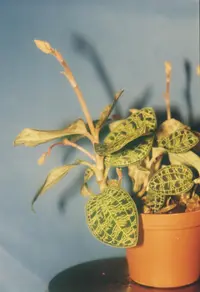




Best Soil for Macodes petola

A loose, moisture-retentive, acidic mix helps Macodes petola maintain healthy roots without becoming stagnant around them.

Soil Texture

Peaty, Organic-rich, Loamy

Soil pH

Strongly acidic (4.5–5.5), Acidic (5.5–6.5)

Soil Drainage

Moist but well-drained

Macodes petola Soil Guide

Native to Southeast Asia, this jewel orchid grows on humid forest floors in leaf litter and loose organic debris. Those conditions explain why Macodes petola prefers a peaty, loamy, organic-rich substrate that stays evenly moist while still allowing air around the roots.

Its fine orchid roots are not adapted to dense, compact soil. The best soil for Macodes petola holds moisture gently but drains excess water, creating a moist yet well-aerated root zone. An acidic substrate also suits the forest-floor conditions this species naturally experiences.

A homemade mix gives more control over texture and airflow for Macodes petola than standard indoor potting soil alone.

100% total mix = 20 scoops
15%
worm castings or leaf mold3 scoops
20%
perlite or pumice4 scoops
30%
peat moss or coco coir6 scoops
35%
fine orchid bark or small coco chips7 scoops

The finished blend should feel springy, slightly fluffy, and rich, with moisture spread through it but excess water moving through without pooling.

Macodes petola does best in acidic soil, with an ideal range around 5.0–6.0 pH. That level helps roots access key nutrients without making the mix chemically harsh or less balanced over time.

If pH drifts much higher, some nutrients become harder for the plant to take up even when they are present in the mix. A mildly to moderately acidic root zone is usually the most reliable choice.

This species has fine roots that can decline in stale conditions, so soil issues often start below the surface before top growth changes.

Compaction:

Dense mix limits airflow and can keep the root zone stagnant; gently loosen the top layer and plan to replace overly packed material with a fresher, airier blend.

Sour soil:

A musty smell or persistently heavy texture can suggest breakdown of organic material; remove the worst degraded portion and refresh with clean, structured mix.

Salt buildup:

Crust on the surface or pot edge may point to mineral residue; flush the container thoroughly and review the quality of water and added inputs.

Fungus gnats:

Small flies around the surface often breed in consistently wet organic media; let the upper layer become slightly less damp and clear away decaying debris.

Right Plant. Right Soil.

Botan helps match this plant to a more suitable substrate so soil choices are based on its actual growth habit, not guesswork.

FAQ

Yes. Drainage holes help excess water leave the container and keep the root zone from staying stagnant, which is especially important in a moisture-retentive Macodes petola soil mix.

More Plant Soil Guides

Soil Problem? Scan It.

A photo check in Botan can help you see whether soil conditions may be part of the problem and what to review next.

Botan app helping with soil and plant care
How to Group Plants in Landscaping: A Practical Layout Guide

8 min read · 31 Aug 2026

How to Group Plants in Landscaping: A Practical Layout Guide

Good plant grouping can mean the difference between a well-planned garden and one that looks sloppy. This guide explores layers, spacing, cluster shapes, and the plants that thrive when you group them.

Plant Care
How to Group Plants in Landscaping: A Practical Layout Guide
How Long Can Flowers Go Without Water? Everything You Need to Know

6 min read · 10 Jul 2026

How Long Can Flowers Go Without Water? Everything You Need to Know

Flowers can survive without water anywhere from 1-2 hours to several months, depending on the plant type, species, and growing conditions. Some strong-looking flowers are drought-sensitive, while delicate-looking plants may tolerate long dry periods surprisingly well.

Plant Care
How Long Can Flowers Go Without Water? Everything You Need to Know
Best Fertilizer for Vegetable Gardens – What to Use for Each Plant

11 min read · 20 Jul 2026

Best Fertilizer for Vegetable Gardens – What to Use for Each Plant

Here, you’ll find the right fertilizer formula for vegetables in your garden. Learn how to adjust feeding correctly throughout the growing cycle, spot nutrient deficiencies by their symptoms, and keep your plants healthy and prolific.

Plant Recommendations
Best Fertilizer for Vegetable Gardens – What to Use for Each Plant