Saucer magnolia Care (Magnolia × soulangeana)

Also known as: common magnolia, lily tree
Saucer magnolia

About Saucer magnolia

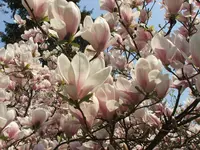
Saucer magnolia (Magnolia × soulangeana) is a deciduous flowering tree or large shrub valued for its early spring blooms. It forms a broad, rounded crown with strong branches and showy cup-shaped flowers that appear before the leaves. Blooms range from white to pink or purple, often with a two-tone effect, creating a strong seasonal focal point in gardens and streetscapes.

This hybrid originated in Europe but is now widely planted in temperate regions, especially in urban and suburban landscapes. It is considered moderately easy to grow if planted in a suitable climate and protected from late frosts. Gardeners who learn how to care for Saucer magnolia focus mainly on providing sun, shelter from harsh wind, and evenly moist, well-drained soil.

Main Plant Requirements

Care Difficulty

Moderate Care

Light Preference

Full Sun

Water Requirements

Regular Water

Temperature Preference

Cold Hardy

Hardiness Zone

4–9

Soil Texture

Loamy, Sandy, Organic-rich

Soil pH

Acidic (5.5–6.5), Slightly acidic (6.5–7.0)

Soil Drainage

Moist but well-drained

Fertilization

Minimal (feed rarely)

Get Personalized Care Plan

Scan your plant to receive care tips personalized for your specific plant

Available on iOS and Android

How to Care for the Saucer magnolia

This deciduous tree needs abundant light to flower well without scorching its foliage.

  • Provide 6–8 hours of direct sun daily, ideally with morning sun and light afternoon shade in hotter climates to protect buds and petals.
  • Tree tolerates light partial shade (around 4–5 hours sun), but Saucer magnolia will bloom less heavily in too much shade and produce lanky growth.
  • Avoid harsh, reflected afternoon sun from walls or pavement; in summer, strong western exposure can brown flowers, while deep shade encourages weak, sparse branching.

Magnolia × soulangeana prefers evenly moist but not saturated soil, especially while establishing.

  • Water when the top 5–8 cm of soil feels dry, soaking the root zone deeply, then allow excess to drain away rather than applying frequent shallow splashes.
  • In the first 2–3 years, check moisture weekly in spring–summer; increase frequency during hot, windy periods and reduce in cool, rainy seasons or winter dormancy.
  • Yellowing leaves, soft twigs, or sour-smelling soil suggest overwatering or poor drainage, while crisp leaf edges and premature leaf drop usually indicate drought stress.

This hardy ornamental magnolia tolerates cold winters but needs protection from extreme temperature swings.

  • Active growth is strongest around 60–75°F (16–24°C); flower buds form well after proper winter chill but open best in mild, stable spring weather.
  • Mature trees usually tolerate down to about -10°F (-23°C), but late spring frosts around 28–30°F (-2– -1°C) can brown or drop open blossoms and young buds.
  • In summer, sustained heat above 90°F (32°C) may stress the tree; mulch the root zone to keep soil cooler and avoid planting in reflected heat sites near pavement.

Humidity is rarely a limiting factor for Magnolia × soulangeana grown outdoors in temperate climates.

Magnolia × soulangeana prefers deep, moisture-retentive but well-drained soil with a slightly acidic reaction.

  • Use a loamy soil rich in organic matter, such as garden loam amended with 25–40% compost or leaf mold, to support steady moisture and root development.
  • Aim for pH 5.5–6.5; where soil is alkaline, mix in elemental sulfur or acidifying organic amendments like pine fines over several seasons.
  • Ensure drainage by avoiding compacted or heavy clay; improve structure by working in coarse sand or fine bark to increase pore space and aeration.
  • Avoid waterlogged spots or areas with a high water table, as prolonged saturation leads to root decline and increased susceptibility to root rot.

This species can be grown in containers when young or on a dwarf rootstock, but long-term success is challenging.

  • Select a large, deep, and heavy pot that limits tipping from wind and allows room for the developing woody root system.
  • Choose thick-walled clay or concrete containers in full sun sites to stabilize temperature and reduce rapid moisture swings around the roots.
  • Raise the pot on feet or spacers so drainage holes never sit in standing water, preventing chronic saturation of the lower root zone.

Magnolia × soulangeana benefits from modest, well-timed feeding rather than heavy fertilization.

  • In early spring, apply a slow-release balanced fertilizer (around 10-10-10) at label rates over the root zone, avoiding direct contact with the trunk.
  • Alternatively, use a 2–5 cm layer of compost as mulch to improve soil structure and provide gentle nutrients.
  • Feed once in early spring and, if growth is weak, once more in early summer; do not fertilize after mid-summer.
  • During winter dormancy, skip feeding entirely to avoid soft, frost-sensitive growth.

Magnolia × soulangeana needs light, careful pruning to maintain structure without reducing flowering.

  • Prune just after flowering in late spring so flower buds for next year are not removed.
  • Use clean, sharp bypass pruners or loppers to remove dead, damaged, crossing, or inward-growing branches.
  • Thin crowded interior shoots to improve airflow while keeping the natural, rounded form of the tree.
  • Avoid heavy cuts on old wood, which can stress the plant and reduce flowering for several seasons.

This magnolia is most often grown in the ground, so focus on thoughtful transplanting rather than frequent repotting.

  • Transplant young trees in late winter or early spring while dormant, before new growth starts.
  • Look for signs like circling roots in a pot, slow growth, or the plant drying out quickly as cues for moving to a larger space.
  • When transplanting, dig a wide hole, disturb circling roots gently, and replant at the same soil depth as before.
  • Water thoroughly after planting, apply a 5–8 cm mulch ring, and keep soil evenly moist for the first growing season to reduce stress.

Magnolia × soulangeana is usually propagated vegetatively to maintain cultivar traits, but success can be slow and variable.

  • Use semi-hardwood cuttings in mid to late summer, taken from healthy, current-season shoots.
  • Provide bottom heat (around 70–75°F), high humidity, and bright, indirect light to encourage rooting.
  • Apply a rooting hormone to cuttings, insert into a free-draining medium, and keep the medium just moist, not wet.
  • Ground layering of low branches in spring is another method; roots may take 1–2 seasons to form before separation.

This magnolia is generally cold hardy in much of the US but benefits from some winter-focused care, especially when young.

  • Mulch the root zone with 5–8 cm of bark or leaf mold in late fall, keeping mulch a few cm from the trunk.
  • Young trees in colder areas may need a breathable trunk wrap or windbreak to limit bark and bud damage.
  • Container-grown Saucer magnolia should be moved to a sheltered, unheated but frost-moderated space where roots will not freeze solid.

Care Tips

Bud frost protection

When late frosts are forecast after buds have swollen, drape a breathable frost cloth or old sheet over the canopy at dusk and remove it in the morning to reduce damage to flower buds and young shoots.

Strategic branch training

In the first 3–5 years, gently spread or stake selected young branches outward using soft ties to create a wide, stable framework that better resists storm damage and shows off the flowers.

Root zone shielding

Maintain a 5–8 cm layer of bark mulch over the root zone, keeping it a few cm away from the trunk, to buffer soil temperature, protect shallow roots from mechanical damage, and limit weed competition.

Careful underplanting

If underplanting, choose shallow-rooted, low-competition groundcovers and plant them at the dripline rather than directly against the trunk to avoid disturbing the magnolia’s sensitive surface roots when caring for Saucer magnolia.

Post‑storm inspection

After heavy wind or snow, check for split crotches or partially torn limbs and cleanly prune damaged wood back to a healthy lateral branch as soon as conditions are safe to reduce disease entry and structural weakness.

Everything About Saucer magnolia

Common Pests and Diseases

Scale insects

This pest feeds on sap along young stems and the undersides of leaves, causing yellowing, leaf drop, and reduced vigor. These insects often appear as small, rounded or oval bumps that do not move when touched.

Solution

Prune out heavily infested twigs, then wipe or gently scrub remaining scales from stems with a soft cloth or brush dipped in soapy water. For persistent problems, use a horticultural oil spray in late winter or early spring to smother overwintering stages, following label rates and avoiding application during high heat or drought stress.

Magnolia leaf spot

This disease causes small brown, tan, or purple lesions on leaves that may merge into larger dead areas, especially in wet springs. Symptoms include premature leaf drop and an overall thinning of the canopy if infections recur year after year.

Solution

Rake and discard fallen leaves to reduce the source of fungal spores, and water at the soil level to keep foliage dry. In gardens with a history of severe leaf spot, improve air circulation around branches by light thinning, and consider a registered ornamental fungicide applied at bud break if recommended by local extension services.

Verticillium wilt

This disease is caused by a soil-borne fungus that blocks water movement inside the plant, leading to wilting, yellowing, and dieback, often on one side of the tree. Symptoms include sparse foliage, branch death, and sometimes dark streaks in the sapwood beneath the bark.

Solution

Prune out and dispose of affected branches, cutting back into healthy wood and disinfecting tools between cuts. Avoid replanting magnolia or other highly susceptible species in the same spot, maintain even soil moisture and mulch to reduce stress, and consult a local arborist for long-term site and species selection if decline is advanced.

Magnolia scale

This pest is one of the largest soft scales on ornamentals and can heavily infest magnolias, producing sticky honeydew that coats leaves and surfaces below the tree. This pest weakens plants, attracts sooty mold growth, and can cause dieback on smaller branches.

Solution

During late winter, treat branches with horticultural oil to target overwintering nymphs, ensuring thorough coverage of twigs and branch crotches. In summer, manage crawlers (the mobile young stage) by spraying insecticidal soap or oil according to label directions, combined with pruning out badly affected shoots and encouraging natural predators by avoiding broad-spectrum insecticides.

Frost damage to buds

This problem occurs when late spring frosts kill flower buds that have already begun to swell, turning them brown and preventing bloom. Symptoms include blackened or mushy buds and distorted new growth following a cold snap.

Solution

Plant Magnolia × soulangeana in a somewhat sheltered location away from low pockets where cold air settles and avoid early-morning sun exposure that can thaw frozen tissues too rapidly. In smaller garden specimens, provide temporary frost protection with breathable fabric covers during forecast late frosts, and avoid late-season fertilizing that encourages tender growth going into winter.

Interesting Facts

Hybrid with sterile seeds

This ornamental tree is a hybrid between Magnolia denudata and Magnolia liliiflora and usually produces little to no viable seed, so it is mainly propagated by grafting rather than from seed.

Early but frost-risky bloom

Its large tulip-shaped flowers often open before the leaves in late winter or early spring, creating a striking display, but this also makes the buds highly vulnerable to late frosts that can brown or destroy the bloom for that year.

Many named cultivars

Over time, horticulturists have selected numerous cultivars differing in flower color, shape, and size, so what is sold under the common name saucer magnolia can look quite different from one garden to another.

Botan icon

Did you know?

Despite its delicate appearance, this hybrid has been widely planted in temperate cities across Europe and North America since the 19th century because it tolerates urban conditions moderately well and flowers reliably once established, making Magnolia × soulangeana plant care relatively straightforward for public landscapes and home gardens.

FAQs about Saucer magnolia

Poor flowering often results from late frost damage to buds, heavy pruning in late summer, too much shade, or drought stress the previous year. Protect buds from frost, avoid hard late pruning, and keep soil evenly moist.

Grow Healthy Plants with Botan Care

Keep your plants happy and healthy with plant identification, disease detection, and easy care guidance.

Botan plant care app — identify plants on mobile

Explore More Plants