Cyprus turpentine Care (Pistacia terebinthus)

Also known as: Terebinth, Turpentine tree
Cyprus turpentine

About Cyprus turpentine

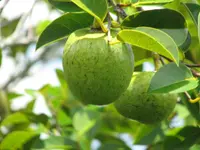
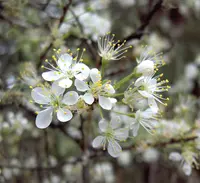
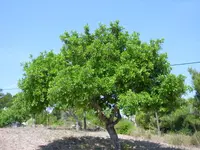
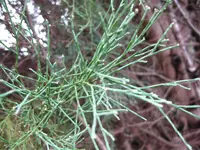
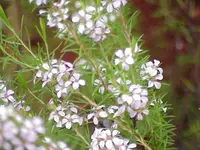
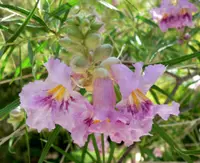
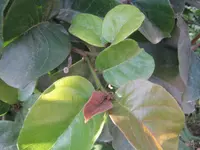
Cyprus turpentine, Pistacia terebinthus, is a deciduous shrub or small tree from the Mediterranean region. It forms a broad, often multi-stemmed crown with aromatic leaves and resinous sap.

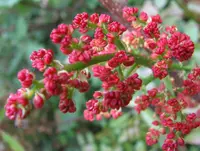
In nature it grows on dry, rocky slopes and open woodlands, where it tolerates heat, wind, and poor, stony soils. The reddish young shoots and small clusters of fruits give it seasonal interest.

Its strong drought tolerance and general toughness usually make it an easy plant once established, though it dislikes overly wet or heavy soils. Understanding how to care for Cyprus turpentine starts with providing plenty of sun and sharply drained ground.

Main Plant Requirements

Care Difficulty

Moderate Care

Light Preference

Full Sun

Water Requirements

Low Water

Temperature Preference

Warm Climate

Hardiness Zone

7–10

Soil Texture

Sandy, Loamy, Rocky

Soil pH

Slightly acidic (6.5–7.0), Slightly alkaline (7.0–7.5)

Soil Drainage

Well-drained

Fertilization

Minimal (feed rarely)

Get Personalized Care Plan

Scan your plant to receive care tips personalized for your specific plant

Available on iOS and Android

How to Care for the Cyprus turpentine

Pistacia terebinthus prefers strong, direct light typical of dry Mediterranean slopes.

  • Provide full sun for 6–8 hours per day; the plant performs best with unshaded exposure, especially in cooler or windy coastal areas.
  • Tolerates light partial shade, such as 3–4 hours of filtered morning sun, but dense shade leads to sparse growth and reduced resin on Cyprus turpentine.
  • In hot inland summers, allow full morning sun with some protection from intense late-afternoon sun to reduce leaf scorch on young plants.

This drought-tolerant shrub or small tree prefers infrequent, deep watering once established.

  • Water newly planted Pistacia terebinthus when the top 5–8 cm of soil feels dry, applying a slow, deep soak to encourage a deep root system.
  • Use sharply drained, gravelly or sandy soil; persistent surface puddling, sour smell, or soft, yellowing leaves indicate overwatering and poor aeration.
  • In the second year and beyond, reduce frequency and rely mainly on rainfall, watering only after prolonged dry spells when leaves start to dull or slightly curl.

This species thrives in warm, dry climates with pronounced seasonal changes.

  • Optimal growth occurs around 65–85°F (18–29°C), with active shoot growth mainly in late spring and early summer under these conditions.
  • Mature plants tolerate brief drops to about 15–20°F (-9 to -6°C), but young specimens benefit from protection from hard freezes and cold drying winds.
  • Handles summer heat up to 95–100°F (35–38°C) if soil is well drained and roots are not waterlogged, but extended extreme heat with drought can cause leaf scorch and early leaf drop.

Humidity is rarely a limiting factor for Pistacia terebinthus, which is naturally adapted to dry air.

  • Performs reliably at 30–50% humidity and does not require any artificial humidity increase for normal growth.
  • Tolerates very dry air; humidity stress usually appears only when roots are waterlogged, leading to leaf yellowing and drop rather than true dryness damage.
  • If Cyprus turpentine shows leaf tip browning along with compact, hard soil, improve root aeration and watering practices instead of raising air humidity.

Pistacia terebinthus prefers mineral, well-aerated soil that drains quickly and does not stay wet.

  • Use a sandy or gravelly loam with 30–50% coarse material such as sharp sand, fine gravel, or perlite to keep pores open.
  • Aim for slightly alkaline to neutral pH around 7.0–8.0; avoid very acidic mixes that can limit nutrient availability for this species.
  • Blend a modest amount of mature compost into the upper layer only, keeping total organic matter low to reduce moisture retention and root rot risk.
  • On heavy clay sites, grow in raised beds or mounded soil amended with grit and coarse sand to improve drainage and prevent standing water.

This species can be grown in containers, but requires careful attention to root space and stability.

  • Choose a deep, heavy container that resists tipping and allows a long taproot to develop without tight spiraling.
  • Use a very fast-draining mix of coarse sand, grit, and low-organic potting substrate so water passes through within seconds, not minutes.
  • Elevate the pot on feet or bricks so all drainage holes stay clear, preventing water from pooling under the container and suffocating roots.

This drought-tolerant Mediterranean tree needs only light feeding in most garden soils, so caring for Cyprus turpentine focuses more on soil quality than heavy fertilizer use.

  • Use a balanced, slow-release NPK fertilizer or well-rotted compost in early spring, applied in a thin layer over the root zone.
  • Feed young or container-grown plants 1–2 times per growing season, avoiding heavy applications on established trees in the ground.
  • Apply fertilizer at half the label strength and water in thoroughly to reduce salt buildup and root burn.
  • Stop feeding in late summer so growth hardens off before winter, avoiding soft, frost-sensitive shoots.

Pistacia terebinthus benefits from light, structured pruning to maintain a strong framework and remove problem wood.

  • Carry out main pruning in late winter or very early spring, before new growth starts.
  • Remove dead, diseased, crossing, or inward-growing branches to improve air flow and reduce pest issues.
  • Thin crowded interior shoots rather than shortening all tips, keeping a natural, open crown shape.
  • Use clean, sharp bypass pruners or a pruning saw, making cuts just outside the branch collar to aid healing.

This species is usually grown in the ground, so care focuses on correct transplanting of young trees rather than frequent repotting.

  • Transplant in late winter or early spring while the plant is dormant, reducing water stress and transplant shock.
  • Look for roots circling the container or emerging from drainage holes as a sign a nursery plant is ready to move.
  • Loosen or tease apart circling roots gently and set the root ball at the same soil depth in a well-drained site.
  • Water deeply after transplanting, then keep soil slightly moist for the first season to help roots establish, avoiding waterlogging.

Pistacia terebinthus is most often propagated by seed, with semi-ripe cuttings used where controlled conditions are available.

  • Sow stratified seed in late winter to early spring; cold stratification mimics natural winter and improves germination.
  • Use a free-draining mix, keep it just moist, and provide bright light with temperatures around 64–72°F.
  • Take semi-ripe cuttings in mid to late summer, using non-flowering shoots 10–15 cm long with several nodes.
  • Dip cuttings in rooting hormone, insert into a gritty medium, and maintain high humidity with good air circulation.

This deciduous tree is generally cold hardy in many temperate climates and needs only modest winter care once established.

  • Mature plants tolerate moderate frost, but young trees benefit from extra root-zone insulation.
  • Apply a 5–8 cm mulch layer around the base in late fall, keeping it clear of the trunk to prevent rot.
  • In colder areas, wrap young stems with breathable horticultural fleece and stake to reduce wind damage.
  • Move container-grown plants into a sheltered, unheated but frost-free area, watering sparingly through winter.

Care Tips

Deep root training

During the first 2–3 years, water less often but deeply to encourage a deep root system, which makes the plant more drought-resilient and stable on poor, stony sites.

Salt and wind acclimation

If planting near the coast, start young plants in a slightly sheltered spot and gradually expose them to stronger wind and salt spray over 1–2 seasons to reduce leaf burn and wind rock.

Formative framework pruning

In the first 3–5 years, remove competing leaders and favor 3–5 evenly spaced main branches to build a strong open framework that resists storm damage and improves air movement.

Volunteer seedling management

Check the surrounding soil each spring and pull or pot up volunteer seedlings while small, before the taproot develops deeply and makes them difficult to remove or transplant.

Graft compatibility planning

When using it as a rootstock for other Pistacia species, select scions from disease-free, tested mother plants and match stem diameters closely to improve graft take and long-term union strength while caring for Cyprus turpentine in a nursery setting.

Common Pests and Diseases

Tuberolachnus salignus aphids

These insects form dense colonies on young shoots and leaves, sucking sap and causing leaf curling, yellowing, and sticky honeydew that can lead to sooty mold on Pistacia terebinthus.

Solution

Prune and destroy heavily infested shoots, then hose down remaining foliage with a strong stream of water to dislodge colonies; if needed, apply a targeted insecticidal soap or neem oil spray, ensuring thorough coverage of leaf undersides and repeating every 7–10 days until populations drop.

Pistacia leaf gall aphids

This pest induces raised, blister-like galls on leaves and sometimes petioles, which can distort growth and reduce photosynthetic area on stressed trees.

Solution

Remove and dispose of affected leaves early in the season to reduce aphid numbers, avoid excessive nitrogen fertilization that encourages soft growth, and if infestations are recurrent, use a systemic insecticide labeled for ornamental trees applied in early spring before heavy gall formation starts.

Verticillium wilt

This disease is caused by a soilborne fungus that invades the vascular tissue, leading to sudden wilting, yellowing, and dieback of branches, often on one side of the tree first.

Solution

Prune out and destroy affected branches, disinfect pruning tools between cuts, maintain moderate, even soil moisture to reduce stress, and avoid planting Pistacia terebinthus where susceptible hosts have previously shown verticillium symptoms; severely affected trees are usually best removed and replaced with resistant species.

Alternaria leaf spot

Symptoms include small dark spots on leaves that can merge into larger patches with yellow halos, leading to premature leaf drop in humid conditions.

Solution

Collect and discard fallen leaves to reduce fungal spores, improve airflow around the canopy by selective thinning, irrigate at the soil level rather than over the foliage, and if needed apply a copper-based or other labeled fungicide during prolonged wet periods according to Pistacia terebinthus care instructions.

Scale insects

These insects appear as small, immobile bumps on stems and leaf veins, weakening the tree by sucking sap and producing honeydew that may support sooty mold growth.

Solution

Gently scrape or wipe off light infestations with a cloth soaked in diluted alcohol, encourage natural predators such as lady beetles by avoiding broad-spectrum insecticides, and for heavier infestations use a horticultural oil spray during the growing season or a dormant oil application in late winter to smother overwintering stages.

Interesting Facts

Source of Chian turpentine

This species produces an aromatic oleoresin historically called Chian turpentine, obtained mainly from bark and trunk exudates and used for centuries around the Mediterranean in varnishes and traditional crafts.

Early successional shrub

It often colonizes dry, disturbed slopes and rocky soils in Mediterranean ecosystems, helping stabilize the ground and creating shade and organic matter that facilitate establishment of later tree species.

Strong leaf dimorphism

Its leaves show marked seasonal dimorphism, with large reddish young leaflets that later harden, become greener, and develop a thicker cuticle, an adaptation that improves tolerance to intense sun and summer drought.

Botan icon

Did you know?

Archaeobotanical studies have identified remains and chemical traces of this species in pottery, ship timbers, and burial contexts from ancient Mediterranean civilizations, indicating that its resin and wood were traded and valued for specialized uses over several millennia.

FAQs about Cyprus turpentine

This species is deciduous, not evergreen. It drops its leaves in autumn, often with strong red or purple color, then stays bare over winter and leafs out again in spring under suitable temperate conditions.

Grow Healthy Plants with Botan Care

Keep your plants happy and healthy with plant identification, disease detection, and easy care guidance.

Botan plant care app — identify plants on mobile

Explore More Plants