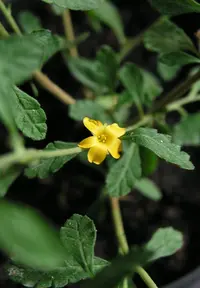
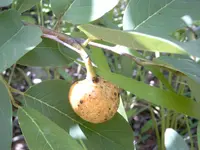
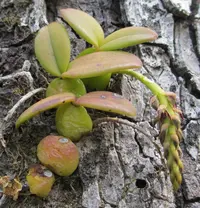
Starry false lily of the valley Care (Maianthemum stellatum)

Also known as: star-flowered lily-of-the-valley, Starry False Solomon's-seal, starry Solomon's-seal, Star-flowered False Solomon's Seal
Starry false lily of the valley

About Starry false lily of the valley

Starry false lily of the valley (Maianthemum stellatum) is a woodland perennial native to North America. It spreads slowly by rhizomes, forming loose colonies over time.

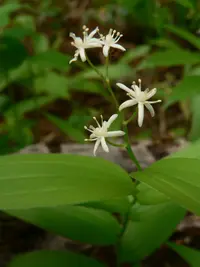
The plant has arching stems with narrow leaves and small white star-shaped flowers in spring, followed by attractive striped berries. It usually grows in partial shade, often under trees or along forest edges.

This species prefers cool, moist, well-drained soil rich in organic matter and tolerates natural leaf litter. It is generally low-maintenance once established, though growth is slower in dry or exposed sites.

Gardeners looking to care for Starry false lily of the valley should focus on providing stable moisture and protection from strong, direct sun.

Main Plant Requirements

Care Difficulty

Easy Care

Light Preference

Partial Shade

Water Requirements

Moderate Water

Temperature Preference

Cold Hardy

Hardiness Zone

3–8

Soil Texture

Loamy, Silty, Organic-rich

Soil pH

Acidic (5.5–6.5), Slightly acidic (6.5–7.0)

Soil Drainage

Moist but well-drained

Fertilization

Minimal (feed rarely)

Get Personalized Care Plan

Scan your plant to receive care tips personalized for your specific plant

Available on iOS and Android

How to Care for the Starry false lily of the valley

Maianthemum stellatum is a woodland perennial that prefers gentle, filtered light rather than strong direct sun.

  • Provide dappled shade or filtered light with 2–4 hours of gentle morning sun; avoid intense afternoon sun that can scorch leaves and fade Starry false lily of the valley flowers.
  • Site plants under open deciduous trees where they receive bright shade in spring, then more protection as the canopy fills in during summer.
  • In very shady spots, stems may stretch and flowering can decrease; shift gradually to a brighter, still shaded position if growth becomes sparse.

This woodland species prefers evenly moist, cool soil that never stays waterlogged.

  • Water when the top 2–4 cm of soil feel barely moist, aiming for consistently damp but not saturated conditions during the active growing season.
  • Use humus-rich, well-drained soil so excess water can drain away; persistent puddling, yellowing leaves, or soft stems indicate overwatering.
  • During dry summer spells, increase watering to prevent wilting or crispy leaf edges, then reduce frequency once foliage dies back in fall and winter dormancy.

This hardy perennial is adapted to cool to mild climates with cold winters and moderate summers.

  • Active growth is strongest at 55–75°F (13–24°C), typical of spring and early summer woodland conditions.
  • Roots tolerate winter cold well below 0°F (-18°C) when planted in the ground, and natural dormancy protects the plant from normal frost.
  • In hot climates, prolonged temperatures above 85°F (29°C) can stress plants; provide shade and mulch to keep soil cooler and reduce heat stress.

This woodland perennial handles a fairly wide humidity range and rarely needs special humidity management outdoors.

  • Target 40–60% humidity, which matches typical outdoor and most home conditions.
  • The plant tolerates occasional drier air but may show leaf tip browning and marginal crisping if kept very arid for long periods.
  • If grown as Starry false lily of the valley indoor care, group pots together or place near a pebble tray to slightly boost local humidity.

Maianthemum stellatum prefers moist, well-structured woodland-type soil that stays evenly damp but never stagnant.

  • Use a loose, organic-rich loam with fine texture that holds moisture yet crumbles easily in the hand.
  • Aim for slightly acidic to neutral pH, around 6.0–7.0, which supports nutrient availability and healthy rhizome growth.
  • Mix roughly 2 parts leaf mold or compost with 1 part garden loam and 1 part fine bark or perlite to improve aeration and drainage.
  • Avoid heavy clay that compacts, standing water, or very sandy mixes that dry out quickly and stress the shallow rhizomes.

This species can be grown in containers if the pot mimics cool, moist, woodland-like root conditions.

  • Choose a wide, shallow container to accommodate creeping rhizomes and prevent the root system from becoming crowded in depth.
  • Use a heavier ceramic or clay pot if exposed to wind so the spreading foliage and stems do not tip the container.
  • Elevate the pot slightly on feet or bricks so drainage holes stay clear and water does not pool under the base, which can rot rhizomes.

Maianthemum stellatum is a woodland native that needs only light, targeted feeding in typical garden soil.

  • Use a thin top-dressing of compost or leaf mold in early spring to mimic woodland leaf litter.
  • If growth appears weak, apply a balanced, slow-release fertilizer (around 10-10-10) at half strength once in spring.
  • Avoid summer and fall feeding to prevent soft growth; do not feed dormant clumps in winter.
  • In very poor soils, a light liquid feed at 1/4–1/2 strength once during peak growth can support flowering of Starry false lily of the valley.

Maianthemum stellatum requires minimal pruning, mainly for cleanliness and clump health.

  • Cut back dead or yellowed stems to soil level in late fall or very early spring using clean hand pruners or scissors.
  • Remove damaged or diseased foliage promptly during the season to limit spread of pathogens and keep plants tidy.
  • Thin out crowded, older stems at the base to improve air flow and maintain a natural, open colony structure.
  • Avoid heavy shearing; light, selective removal preserves the plant’s woodland character and flowering potential.

This species is usually grown in the ground, so focus on careful transplanting rather than frequent repotting.

  • Transplant clumps in early spring or early fall when growth is slow and soil is evenly moist.
  • Lift and move only when necessary, such as overcrowded patches or poor flowering, typically every 4–6 years.
  • Gently loosen soil around rhizomes, keep roots shaded and moist, and replant at the same depth to reduce stress.
  • Water thoroughly after transplanting, then maintain light, consistent moisture until new growth resumes and plants re-establish.

Maianthemum stellatum is commonly propagated by division of rhizomes, with seeds used mainly for longer-term projects.

  • Divide established clumps in early spring or early fall, when the plant is not in active flowering.
  • Lift a healthy section, cut rhizomes into pieces with at least 1–2 buds, and replant at original depth in humus-rich soil.
  • Keep the planting area evenly moist and shaded until new shoots appear and roots anchor securely.
  • For seed, sow fresh outdoors in a shaded, cold frame; germination is slow and may require natural winter chilling.

This species is cold hardy across most temperate climates and typically needs little dedicated winter care.

  • Dormant rhizomes tolerate freezing soil in-ground, even when tops die back completely after frost.
  • Apply a 3–5 cm layer of leaf mold or shredded leaves as mulch to buffer temperature swings and conserve moisture.
  • For container-grown plants in colder regions, move pots into a sheltered, unheated space to prevent root damage from deep freezes.

Care Tips

Rhizome spacing

When planting, space rhizomes 20–30 cm apart in loose drifts rather than tight clumps to reduce competition, encourage even spread, and make future division easier.

Leaf mulch management

Apply a thin, natural leaf-litter mulch in fall and refresh it lightly each year to mimic woodland conditions, protect rhizomes from freeze–thaw cycles, and maintain a stable moisture level.

Gentle colony division

Divide established clumps every 4–6 years in early spring just as shoots emerge, slicing rhizome sections with 2–3 growing points and replanting them promptly to rejuvenate growth and control spread.

Mark dormant patches

After foliage dies back, mark the colony edges with discreet stakes or tags so you avoid disturbing rhizomes when working nearby during the plant’s dormant period.

Slug and snail control

Use physical barriers like copper tape around small beds and hand-pick slugs at dusk or after rain to protect the young, tender shoots, which are particularly vulnerable in early spring when growing Starry false lily of the valley.

Common Pests and Diseases

Slugs and snails

This pest commonly feeds on the tender spring shoots and leaves, leaving irregular holes and shredded edges. Symptoms include slime trails on soil and foliage, especially after rain or overhead watering.

Solution

Hand-pick slugs and snails in the evening, use iron phosphate bait around clumps, and place simple traps such as boards or overturned pots that can be checked and cleared regularly. Reduce dense, wet debris near the plants to limit hiding spots while keeping the soil consistently moist but not waterlogged.

Leaf spot

This disease causes small, water-soaked lesions on leaves that expand into tan or brown spots, sometimes with darker borders. Symptoms include premature yellowing and early leaf drop in humid or wet conditions.

Solution

Remove and dispose of heavily spotted leaves and any fallen foliage to reduce inoculum. Improve air circulation, avoid overhead watering, and, if the problem recurs severely, apply a copper-based or other labeled ornamental foliar fungicide in early spring according to product directions.

Rust

This disease appears as small yellow spots on upper leaf surfaces with corresponding orange to brown powdery pustules underneath. Symptoms include gradual thinning of foliage and reduced vigor when infection is heavy.

Solution

Promptly remove and destroy infected leaves and plant debris, and water at soil level to keep foliage dry. In sites with repeated rust issues, thin nearby vegetation for better airflow and, if needed, use a sulfur or other rust-labeled fungicide early in the season when new foliage emerges.

Leaf miners

These insects create pale, winding tunnels or blotches within the leaf tissue, often visible as serpentine lines on the foliage. This pest usually causes cosmetic damage but can reduce photosynthesis if populations are high.

Solution

Cut off and discard leaves showing active mines to remove larvae from the plant. Encourage natural predators by avoiding broad-spectrum insecticides and, if damage becomes extensive, use a systemic insecticide labeled for ornamental leaf miners applied to the soil in early growth stages.

Interesting Facts

Star-shaped floral pattern

Each flower has narrow, pointed tepals arranged in a distinct star shape, which gives rise to the common name starry false lily of the valley and helps distinguish it from the closely related Maianthemum racemosum with fluffier blooms.

Striped berry evolution

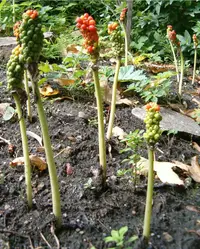
The fruits develop from green to white with dark longitudinal stripes before ripening to solid dark blue or almost black, a distinctive color pattern that likely aids birds in recognizing and timing fruit consumption.

Rhizome-based colony growth

This species spreads slowly through slender, creeping rhizomes, forming loose colonies in woodlands and along stream banks, which allows it to persist and re-sprout after disturbances such as light soil erosion or leaf-litter shifts.

Botan icon

Did you know?

Maianthemum stellatum shows notable tolerance of both shaded forest understories and more open, seasonally dry habitats in North America, making it one of the few woodland understory herbs that commonly occurs from relatively dry pine forests to moist riparian zones across such a broad geographic range.

FAQs about Starry false lily of the valley

This species spreads slowly to moderately by underground rhizomes, forming loose colonies rather than dense, smothering patches. In garden settings it is usually easy to manage. Occasional division or edging keeps clumps within their intended area.

Grow Healthy Plants with Botan Care

Keep your plants happy and healthy with plant identification, disease detection, and easy care guidance.

Botan plant care app — identify plants on mobile

Explore More Plants