


Protect from rot
Place the pot slightly tilted or use a top dressing of coarse grit so that water cannot sit in the crown, which greatly reduces the risk of rot in the growing points.

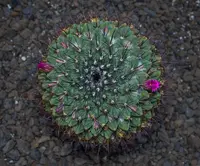
Mammillaria winterae is a small, clumping cactus known for its dense spines and showy, funnel-shaped flowers that often ring the stem near the top. It stays compact, which makes it suitable for windowsills and small indoor collections.
This species is native to arid regions of Mexico, where it grows in rocky, well-drained soils with strong sun exposure. Its slow growth, drought tolerance, and modest size make it relatively easy to manage once basic needs are understood.
To care for Mammillaria winterae, provide bright light, very free-draining mineral-rich soil, and infrequent but thorough watering, allowing the roots to dry well between waterings.

Care Difficulty
Moderate Care

Light Preference
Full Sun

Water Requirements
Low Water

Temperature Preference
Warm Climate

Hardiness Zone
9–11

Soil Texture
Sandy, Loamy, Rocky

Soil pH
Slightly acidic (6.5–7.0), Neutral (7.0)

Soil Drainage
Well-drained

Fertilization
Minimal (feed rarely)
Scan your plant to receive care tips personalized for your specific plant
Available on iOS and Android
This small cactus prefers bright, dry conditions that mimic an open, rocky habitat.
This species stores water in its stems and needs infrequent but thorough watering.
This cactus prefers warm, dry air with a marked difference between summer and winter conditions.
This cactus prefers dry air and rarely needs humidity adjustment indoors.
Mammillaria winterae needs a very fast-draining, mineral-rich substrate to prevent root rot.
This species is very suitable for container growing, including small dish gardens.
This small cactus has low nutrient demands but responds well to light feeding during active growth.
This species needs minimal pruning, mainly for cleanliness and to manage offsets.
This cactus prefers a stable pot but benefits from occasional repotting into fresh, very free-draining mix.
This plant is commonly propagated from offsets and can also be grown from seed with more patience.
This cactus needs a cool, dry winter rest and is sensitive to prolonged hard frost.

Plant Health Check
Not sure what's wrong with your plant? Check your plant's health inside the app.
This species is naturally restricted to rocky slopes in central Mexico, especially in Querétaro and Hidalgo, where it grows in thin, mineral-rich soils among shrubs and grasses.
It produces distinctive hooked central spines that help protect the stem from herbivores and shade the surface slightly, reducing water loss in intense sun.
In cultivation and habitat, it often flowers in late winter to early spring, producing a crown of small pink to magenta flowers that encircle the upper part of the stem.
This species needs a pronounced cool, dry rest in winter to set flower buds. If temperatures stay too warm, watering continues, or light is weak, it often produces only stem growth and very few or no flowers.
Keep your plants happy and healthy with plant identification, disease detection, and easy care guidance.

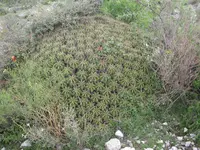
Cactus
Ferocactus robustus
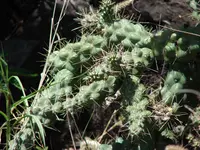
Chain-link Cholla
Cylindropuntia cholla

chautle livingrock
Ariocarpus fissuratus
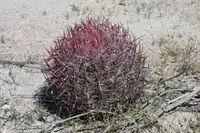
Fire Barrel Cactus
Ferocactus gracilis
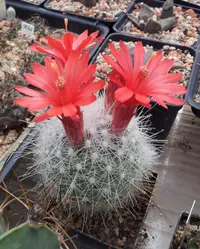
Mammillaria senilis
Mammillaria senilis
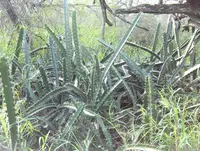
Triangle cactus
Acanthocereus tetragonus
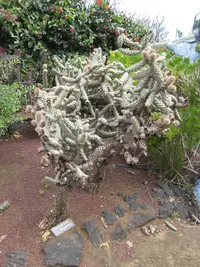
Adam's tree
Fouquieria diguetii
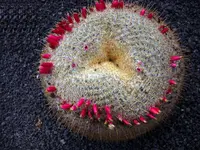
Mammillaria muehlenpfordtii
Mammillaria muehlenpfordtii