


pennyroyal Identification (Mentha pulegium)

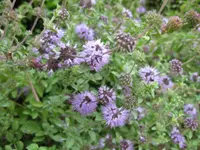
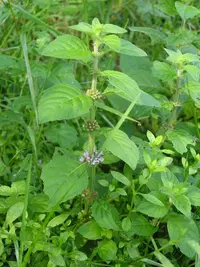
Recognize pennyroyal by its low, creeping stems, opposite oval leaves usually under 1 inch (2.5 cm) long, and tight rings of small lilac flowers clustered at the stem nodes.

Plants form mats rather than upright clumps, with slender square stems typical of the mint family.

Mentha pulegium Identification

Check Your Plant with Botan

Upload a clear photo to check your plant identification with Botan.

Clear images work best. Avoid photos taken too close or too far away

Check pennyroyal for a low, mat-forming mint habit with small opposite leaves.

  • Square stems trail or rise slightly, usually keeping the plant under 12 inches (30 cm) tall.
  • Leaves are rounded to oval, short-stalked, and small, often about 0.4 to 1.2 inches (1 to 3 cm) long.
  • Flowers sit in dense whorls around the stem at the leaf nodes, not in a long terminal spike.
  • Each flower is tiny, lilac to pinkish, and tubular with 4 small lobes visible at the mouth.

Crush a leaf only after the visual check if a closer confirmation is needed.

Mentha pulegium shows clear visual shifts from low leafy shoots to flower-ringed stems.

  • Young plant: Early shoots stay low and creeping, with opposite rounded to oval leaves on soft green stems and few side branches.
  • Mature plant: Stems spread and root at nodes, then turn more ascending, forming a denser mat about 4-12 inches (10-30 cm) tall.
  • Flowering stage: Upper stem sections show spaced whorls of small lilac to pinkish flowers in leaf axils, making the stem look banded rather than evenly leafy.

In summer, Mentha pulegium is easiest to recognize when small lilac to pink flower clusters appear in tight whorls around the stems, rather than only at the tips. By winter, top growth often dies back, leaving a low, sparse look or bare stems where it grows as a perennial.

A few low mints can be mistaken for pennyroyal at a glance.

water mint(Mentha aquatica)

Both have opposite mint leaves and lilac flower clusters. Water mint is taller, often 12–36 inches (30–90 cm), and its flowers form a dense terminal head. Mentha pulegium stays lower, and the flowers usually sit in spaced whorls along the stem.

field mint(Mentha arvensis)

This species also has small opposite leaves and whorled pale purple flowers. Field mint usually has broader, more obviously toothed leaves and a more upright habit. Mentha pulegium is typically lower and more creeping, with narrower leaves.

Mentha pulegium is native to Europe, North Africa, and parts of western Asia. It occurs in damp grassland, stream edges, ditches, seasonally wet meadows, and other low, open ground. That habitat can help with identification because true pennyroyal is usually found in moist, disturbed places rather than dry uplands or deep woodland. Seeing a mint-like plant in wet pasture or along shallow water supports, but does not confirm, this ID.

  • Toxic if ingested: Mentha pulegium contains pulegone, concentrated in the leaves and essential oil. Ingestion is toxic to humans and pets, especially with the oil.
  • Pregnancy risk: The leaves and especially the oil have been linked to serious harm if ingested during pregnancy in humans. This is a well-established safety concern.

Does Your Plant Match?

Upload a photo to Botan for a quick ID check or second opinion before you label it incorrectly.

FAQ

The clearest field mark is the flower arrangement: dense whorls of small lilac flowers packed around the stem at the leaf nodes, combined with opposite, short-stalked mint leaves and a strong minty scent.

More Plant Identification Guides

Find Out What Plant It Is

Use Botan to identify it from a photo, then see plant details, care information, and common problems.

Botan app identifying a plant from a photo
Frozen vs Fresh Vegetable Nutrients: Which Option Is Healthier?

6 min read · 8 Sept 2026

Frozen vs Fresh Vegetable Nutrients: Which Option Is Healthier?

Frozen and fresh vegetables are nutritionally comparable: frozen produce often retains vitamins just as well as fresh and may sometimes contain more. Here’s how blanching and storage affect nutrients—and when to choose each.

Plant Recommendations
Frozen vs Fresh Vegetable Nutrients: Which Option Is Healthier?
12 Best Cold-Hardy Vegetables for Cold Weather

7 min read · 13 Oct 2026

12 Best Cold-Hardy Vegetables for Cold Weather

Cold-hardy vegetables can keep a garden productive through chilly fall, winter, and early spring weather. This guide covers 12 reliable crops, their frost tolerance, and practical growing tips for better cold-season harvests.

Plant Recommendations
12 Best Cold-Hardy Vegetables for Cold Weather
Thorny Plants: A Comprehensive Guide

10 min read · 25 Aug 2026

Thorny Plants: A Comprehensive Guide

Many plants defend themselves with sharp thorns. This guide explores over 20 examples among flowers, shrubs, trees, and vines. You'll learn what each plant looks like, why it grows thorns, and how to quickly identify them.

Plant Recommendations
Thorny Plants: A Comprehensive Guide