Monstera (Monstera deliciosa) Watering Guide

This page explains when, how often, and how much to water Monstera deliciosa in straightforward, practical terms.

Water Requirements

Moderate Water

Monstera deliciosa Watering

Native to humid Central American forests, Monstera deliciosa grows where soil is damp but not waterlogged and briefly dries. Indoors, watering Monstera means aiming for lightly moist soil that never stays saturated for long periods.

This plant prefers slight moisture between sessions rather than constant wetness. Outdoor plants in warm climates usually face faster drying than indoor container specimens, shaping how to water Monstera.

In warm indoor conditions, Monstera deliciosa typically needs water about every 7–10 days, but timing should follow soil dryness, not the calendar. Water again when the top 1–2 inches (3–5 cm) feel dry. Brighter light or summer growth usually shortens the interval, while lower light lengthens it.

Water Monstera when the top 1-2 inches (3-5 cm) of soil feel dry, aiming for slow, even saturation.

  • Pour room-temperature water slowly over the soil surface, circling the pot to reach the entire root zone evenly.
  • Continue adding water until it begins to drain from the bottom holes, indicating the potting mix is fully moistened.
  • Let the pot drain thoroughly, then empty any saucer or cachepot so roots do not sit in leftover water.
  • Keep water directed at the soil only, avoiding the leaves and stem bases to maintain a clean, aerated crown area.

Improper moisture balance can stress Monstera deliciosa and trigger several avoidable growth problems indoors.

Yellowing Lower Leaves:

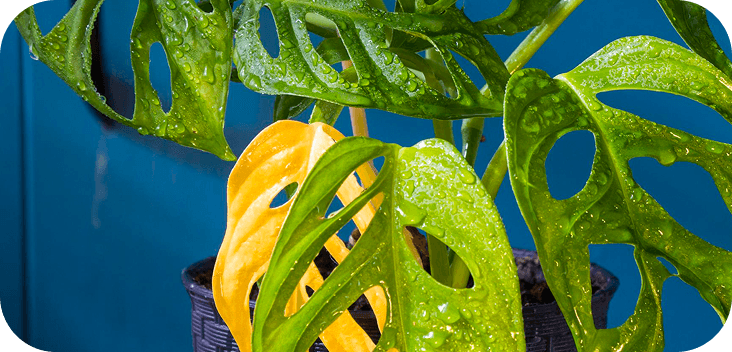
Older leaves turn uniformly yellow and limp when soil stays soggy, signaling chronic overwatering and poor aeration.

Brown Leaf Edges:

Crisp, brown margins usually reflect underwatering or excess fertilizer accumulating in drier potting mix.

Drooping Without Yellowing:

Soft, drooping foliage with green color often indicates brief underwatering or slightly compacted, drying soil.

Black Mushy Roots:

Soft, foul-smelling roots show advanced rot from prolonged waterlogging, requiring pruning and fresher, draining substrate.

Keep roots evenly moist in loose, draining mix, letting the top layer dry slightly between thorough waterings.

Unsuitable watering habits can stress Monstera deliciosa, weakening growth and making the plant more vulnerable to pests and environmental swings.

  • Watering by calendar: Following a fixed schedule ignores seasonal changes; instead, check topsoil dryness and adjust timing to current light and temperature.
  • Heavy, dense potting mix: Using compact soil traps moisture around thick roots; choose a chunky, well-draining mix with perlite or bark for faster drying.
  • Water left in saucer: Letting runoff sit against the pot base keeps roots saturated; empty the saucer shortly after watering so excess can escape.

Better watering means responding to soil moisture and environment, giving thorough drinks when needed, then letting excess drain and soil partly dry.

  • Spring: As new leaves and roots develop, the plant usually uses water faster; let the top inch dry, then water more attentively.
  • Summer: In bright, warm rooms it may dry out quickly; check soil more often, but still avoid keeping it constantly wet.
  • Fall: Growth usually slows as light drops, so extend the time between waterings and allow a bit more drying depth.
  • Winter: With low light and cooler rooms, growth can pause; water sparingly after the top 2 inches feel dry to prevent root problems.

Stop Guessing — Water Smarter with Botan

Botan suggests a balanced watering routine and practical care steps for Monstera deliciosa, and can also review plant photos to help identify emerging issues early.

Botan plant care app — identify plants on mobile

Interesting Watering Facts

Climbing for moisture

In the wild, Monstera deliciosa starts in the forest floor leaf litter, then climbs trees to reach higher humidity and more consistent moisture around the trunk and canopy, which helps explain its preference for evenly moist but well-aerated potting mix indoors.


Aerial roots as anchors

Its thick aerial roots not only anchor the plant to tree trunks but also take up surface moisture and nutrients from rain, mist, and decaying organic matter, so they benefit from occasional rinsing or contact with a damp, airy medium rather than being cut off.

Adapted to intermittent rains

Monstera deliciosa evolved in tropical forests with frequent but short rain events and fast-draining, organic-rich soils, so its roots tolerate brief drying between waterings but are prone to rot if kept constantly waterlogged in dense or poorly drained substrates.

FAQ

Water slowly until a bit of water drains from the bottom, then stop and empty the saucer. This confirms deep, even moisture without waterlogging the roots, which is key to healthy Monstera deliciosa watering.

Everything About Monstera

More Plant Watering Guides

Is Your Watering Routine Hurting Your Monstera?

Use Botan to review your watering pattern and adjust it with more confidence.

Watering a plant with a copper watering can
Top 15 Fast-Growing Trees For Your Garden

13 min read · 28 Jul 2026

Top 15 Fast-Growing Trees For Your Garden

Learn which of the 15 fastest-growing trees will suit your area. We’ll share detailed information on each: growth rate, mature spread, key tree demands, and main vulnerabilities. Read on and make the best choice possible.

Plant Recommendations
Top 15 Fast-Growing Trees For Your Garden
How to Clean Plant Leaves: A Simple Care Guide

6 min read · 4 Aug 2026

How to Clean Plant Leaves: A Simple Care Guide

Dusty leaves look dull and don't absorb light well. Below, you'll find simple ways to clean them, which tools are truly effective, how often you should do it, and what causes damage.

Beginner Guides
How to Clean Plant Leaves: A Simple Care Guide
Best Fertilizer for Vegetable Gardens – What to Use for Each Plant

11 min read · 20 Jul 2026

Best Fertilizer for Vegetable Gardens – What to Use for Each Plant

Here, you’ll find the right fertilizer formula for vegetables in your garden. Learn how to adjust feeding correctly throughout the growing cycle, spot nutrient deficiencies by their symptoms, and keep your plants healthy and prolific.

Plant Recommendations
Best Fertilizer for Vegetable Gardens – What to Use for Each Plant