Host Tree Debris
After a flush, top-dress the bed with a thin layer of fresh hardwood chips or shredded branches from non-resinous trees to mimic natural forest litter and keep the mycelium fed without disturbing the soil surface.

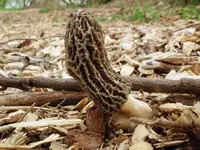
Landscaping Black Morel, Morchella importuna, is a cultivated morel fungus valued for its distinctive honeycomb caps and culinary use when properly cooked. It is not a leafy plant but a spring-fruiting mushroom that emerges from soil or mulch in garden beds and landscaped areas.
This species often appears in disturbed or human-made environments, such as urban gardens, woodchip paths, or newly landscaped sites. It can be challenging to establish reliably because it depends on specific soil conditions, organic matter, and moisture patterns.
Growers usually focus on substrate quality and consistent moisture rather than light, since fruiting bodies tolerate a range of light levels outdoors. Learning how to care for Landscaping Black Morel starts with understanding its preference for rich, well-drained, organic soil and cool, moist seasons.

Care Difficulty
Hard Care

Light Preference
Partial Shade

Water Requirements
Keep Soil Moist

Temperature Preference
Cool Climate

Hardiness Zone
4–8

Soil Texture
Loamy, Silty, Organic-rich

Soil pH
Slightly acidic (6.5–7.0), Neutral (7.0)

Soil Drainage
Moist but well-drained

Fertilization
Minimal (feed rarely)
Scan your plant to receive care tips personalized for your specific plant
Available on iOS and Android
This fungus prefers cool, bright conditions with protection from harsh midday sun.
Moist but not waterlogged conditions are essential for reliable Morchella importuna fruiting.
Temperature strongly influences timing and success of morel fruiting in outdoor beds.
Morchella importuna requires consistently moist, cool, high-humidity conditions to form reliable fruiting bodies.
Morchella importuna prefers loose, organic-rich, well-drained yet evenly moist substrates rather than dense mineral soil.
This species is challenging but can be grown in large outdoor containers that mimic a shallow woodland bed.
Morchella importuna grown in beds usually needs only modest nutrient inputs rather than heavy fertilization.
Morchella importuna does not require structural pruning, but fruiting bodies and debris can be managed for hygiene and sporulation control.
This fungus is rarely grown in traditional pots; management focuses on establishing and refreshing outdoor or contained beds rather than classic repotting.
Reproducing Morchella importuna in managed settings relies on using cultured spawn and appropriate substrates rather than simple garden-style propagation.
Outdoor beds of Morchella importuna in temperate climates generally tolerate normal winter conditions with minimal intervention.

Plant Health Check
Not sure what's wrong with your plant? Check your plant's health inside the app.
This species often fruits abundantly in human-modified sites such as landscaped beds, woodchip mulch, and compacted soils rather than in undisturbed forests, which is unusual for morels.
Unlike some woodland morels that fruit mainly near tree roots, this fungus frequently forms dense flushes emerging directly from bare or sparsely vegetated soil, especially in newly developed urban and suburban areas.
It is especially documented from the Pacific Northwest and other temperate regions of North America and Europe, where it has become one of the most commonly reported morel species in gardens and city landscapes.
This fungus is considered a choice edible when correctly identified and fully cooked. Raw or undercooked morels can cause digestive upset. Always avoid consuming specimens from contaminated sites, such as areas treated with pesticides, heavy metals, or roadside pollutants.
Keep your plants happy and healthy with plant identification, disease detection, and easy care guidance.