Ganoderma polychromum Care

Ganoderma polychromum

About Ganoderma polychromum

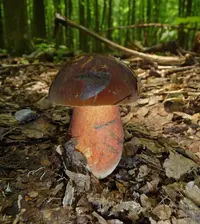
Ganoderma polychromum is a wood-decaying bracket fungus rather than a traditional leafy plant. It forms thick, shelf-like fruiting bodies on dead or weakened hardwood trunks and stumps. The surface is often layered in tan to dark brown tones with a woody, durable texture.

This species occurs mainly in temperate regions, especially in Europe, where it plays an important role in breaking down dead wood. It is not typically grown as a decorative houseplant, and conditions must mimic decaying wood for any attempt to care for Ganoderma polychromum. In nature it prefers stable moisture, shade to dappled light, and well-rotted wood as its substrate.

Main Plant Requirements

Care Difficulty

Moderate Care

Light Preference

Partial Shade

Water Requirements

Keep Soil Moist

Temperature Preference

Warm Climate

Hardiness Zone

Unknown

Soil Texture

Loamy, Silty, Organic-rich

Soil pH

Acidic (5.5–6.5), Slightly acidic (6.5–7.0)

Soil Drainage

Moist but well-drained

Fertilization

Minimal (feed rarely)

Get Personalized Care Plan

Scan your plant to receive care tips personalized for your specific plant

Available on iOS and Android

How to Care for the Ganoderma polychromum

This bracket fungus prefers shaded woodland light rather than direct sun exposure.

  • Provide dappled or filtered light under trees, with no more than 1–2 hours of weak early-morning sun and full shade the rest of the day.
  • Avoid strong midday or afternoon sun, which can desiccate fruiting bodies and dry the substrate supporting Ganoderma polychromum.
  • In summer, ensure canopy cover or shade from nearby vegetation; in winter, reduced light after leaf drop is acceptable, as the fungus tolerates low-light conditions well.

This wood-decaying fungus depends on stable substrate moisture rather than frequent surface watering.

  • Grow on a consistently moist but not waterlogged log or stump, allowing the outer 1–2 cm of wood surface to feel barely dry before rewetting.
  • Adjust watering seasonally; in hot, dry periods, soak the wood thoroughly, then let excess water drain away to prevent stagnant conditions and rot of supporting tissue.
  • Watch for pale, shrunken, or brittle brackets as a sign of underwatering and soft, foul-smelling substrate as a sign of prolonged overwatering.

This species prefers mild, temperate conditions and avoids extremes of heat or cold.

  • Aim for an active growth range of 55–75°F (13–24°C), where mycelium and fruiting bodies develop most reliably on woody substrates.
  • Protect from freezing conditions below 28°F (-2°C), which can damage young fruiting bodies, though established mycelium in wood may survive brief light frosts.
  • In hot weather above 85°F (29°C), provide shade and maintain wood moisture, as combined heat and drying winds can halt growth and cause cracking.

This wood-decaying bracket fungus prefers consistently moist air but tolerates short dry periods outdoors.

  • Aim for 60–80% humidity around fruiting bodies to reduce cracking and premature drying.
  • Dry air causes hardened, dull caps and slow growth; prolonged low humidity can halt fruiting.
  • Increase local humidity with damp mulch, nearby water trays, or light misting of surrounding substrate, not direct spraying of pores.

This saprophytic fungus grows on woody substrates rather than mineral soil, so the focus is on decaying wood structure and moisture, not typical potting mixes.

  • Use dense hardwood logs or large chunks of untreated wood with moderate decay, avoiding fresh resinous conifers that inhibit colonization.
  • Ensure the wood or wood-based block drains freely yet stays evenly moist; standing water around the substrate leads to anaerobic conditions and rot of the mycelium.
  • Maintain a slightly acidic to neutral environment (about pH 5.5–7) by combining hardwood chips, sawdust, and a small amount of composted bark if preparing an artificial block.
  • Improve aeration by drilling holes through logs or layering coarse wood chips, which allows gas exchange while still retaining enough moisture for Ganoderma polychromum development.

This species is only moderately suitable for container growing, mainly in controlled cultivation setups using wood-based substrates.

  • Choose a deep, rigid container that stabilizes heavy, shelf-like fruiting bodies and prevents tipping in wind or vibration.
  • Use side ventilation holes above the substrate level so the mycelium receives oxygen without exposing the core to rapid drying.
  • Elevate the container on blocks or a mesh stand to let excess water drain completely and to avoid wicking moisture back into the base of the substrate.

This wood-decaying fungus usually grows on nutrient-rich hosts and generally does not benefit from extra fertilization in garden or landscape settings.

This bracket fungus does not require pruning in the usual horticultural sense, since its fruiting bodies are seasonal and non-regenerating.

In cultivation, Ganoderma polychromum is usually managed on logs or stumps rather than in pots, so focus on positioning inoculated wood correctly instead of repotting.

  • Select fresh, disease-free hardwood logs or stumps and inoculate during mild weather in spring or early summer.
  • Avoid moving inoculated wood once mycelium has spread; disturbance can slow colonization and reduce fruiting.
  • If relocation is necessary, move during cool, stable weather and keep logs shaded and evenly moist to reduce stress.
  • Space inoculated pieces so air can circulate, reducing competition with other fungi and limiting rot problems.

This species is propagated by spores or commercial plug spawn rather than by typical plant methods such as cuttings or division.

  • Use plug spawn or sawdust spawn from a reliable supplier for consistent results when growing Ganoderma polychromum.
  • Drill holes in suitable hardwood logs in spring, insert spawn, and seal with wax to keep the wood from drying out.
  • Place inoculated logs in shaded, humid conditions with indirect rain exposure to support mycelium growth.
  • Allow 6–18 months for colonization and fruiting; avoid letting logs dry completely during this period.

Outdoor colonies on logs or stumps are generally cold hardy in temperate climates and often need no special winter care.

  • Leave inoculated logs in a stable, shaded position so freeze–thaw cycles do not topple or crack them excessively.
  • Maintain moderate ground moisture; avoid waterlogged sites that encourage competing fungi and deep rot.
  • For container-staged logs, keep them outside but against a sheltered wall to reduce extreme drying winter winds.

Care Tips

Sterile Inoculation Technique

Disinfect tools and work surfaces with 70% isopropyl alcohol before handling spawn or dowels to reduce contamination from competing fungi and bacteria when growing Ganoderma polychromum.

Log Selection Timing

Cut hardwood logs in late winter while trees are dormant and let them rest 2–4 weeks before inoculation so the natural antifungal compounds decline and colonization is more successful.

Moisture-Retention Setup

After inoculating logs, stack them off the ground on bricks or pallets and cover with a breathable shade cloth to keep moisture stable without encouraging rot.

Controlled Soaking Cycles

To stimulate fruiting, submerge fully colonized logs in clean, cool water for 12–24 hours, then stand them upright for drainage, repeating only when the log feels noticeably lighter and drier.

Spore Management Practice

Place a removable plastic or cardboard sheet under active brackets and replace it regularly to catch and discard heavy spore deposits, which helps maintain cleaner air and nearby surface hygiene when caring for Ganoderma polychromum.

Common Pests and Diseases

Bark beetles

These insects tunnel into the woody host supporting the fungus, causing galleries under the bark and weakening or killing the tree the conk grows on. Symptoms include fine boring dust, small round exit holes, and rapid decline of the host trunk or stump.

Solution

Remove and properly dispose of heavily infested wood to reduce beetle populations and limit spread. Keep nearby trees healthy through proper watering and mulching, avoid fresh mechanical wounds, and where allowed use pheromone traps or targeted trunk treatments on at‑risk trees rather than on the fruiting body itself.

Wood-decay competition fungi

This disease issue involves other aggressive wood-decay fungi colonizing the same log or stump, which can outcompete or replace established fruiting bodies. Symptoms include different-colored brackets or crusts appearing near or over existing conks, and changes in texture or cessation of new growth.

Solution

Select sound but already colonized hardwood for growing Ganoderma polychromum and avoid logs that already show multiple fungal species. If practical, cut away and discard competing fruiting bodies and keep the substrate in stable moisture and shade conditions that favor the target fungus rather than allowing repeated wet–dry extremes.

Slugs and snails

These pests feed on the soft growing edges of young brackets, leaving irregular bite marks, slime trails, and sometimes hollowed areas in the flesh. Damage is typically worst in damp, shaded sites and on newly forming fruiting bodies.

Solution

Hand-pick slugs and snails in the evening or early morning and remove nearby hiding places such as dense ground litter and boards. Where permitted, use iron phosphate bait around, not on, the fruiting bodies and consider copper barriers on small cultivation logs or beds to physically deter feeding.

Wood-boring larvae

These insects, often beetle or moth larvae, tunnel within the fruiting body or underlying wood, creating internal galleries, frass, and soft, collapsing areas in the conk. Symptoms include small entry holes, sawdust-like material, and brittle or structurally weakened brackets.

Solution

Cut out and dispose of heavily bored fruiting bodies and, if possible, remove or burn severely infested substrate wood. Store cultivation logs or display pieces off the ground in a dry, well-ventilated location to make conditions less favorable for egg-laying adults and check regularly so that early infestations can be pruned away.

Mold contamination

This disease problem appears as fuzzy green, white, or black mold patches on the surface of the conk or on the substrate, often after prolonged high humidity and poor airflow. Symptoms include off-odors, softening tissue, and stalled or misshapen growth of new brackets.

Solution

Improve air circulation around the substrate and reduce surface wetness by allowing the wood to drain and avoiding direct water on the fruiting bodies. Carefully trim off heavily molded tissue with a clean tool, discard contaminated pieces, and if cultivating indoors use a clean, dedicated substrate and maintain moderate humidity rather than constant saturation for effective Ganoderma polychromum care instructions.

Interesting Facts

Shelf-like wood decay

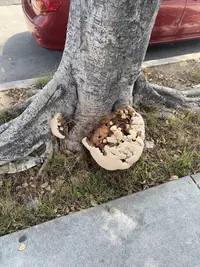
This species forms thick, overlapping shelf brackets on trunks and stumps and causes a white rot, selectively breaking down lignin and leaving wood pale and fibrous.

Distinctive multicolored cap

Mature fruiting bodies often show dull zoned bands of brown, gray, and sometimes yellowish tones with a matte, not varnished, surface, which helps distinguish it from the shiny red-brown reishi complex.

Soil line association

Fruiting bodies are frequently produced near the soil line at the base of broadleaf trees, reflecting its role as both a butt rot pathogen and a saprobe on buried roots and lower trunk wood.

Botan icon

Did you know?

Molecular studies have led to the recognition of G. polychromum as distinct from several visually similar Ganoderma species, so older field records and herbarium specimens labeled under other names have been reinterpreted as this taxon as DNA data clarified its identity.

FAQs about Ganoderma polychromum

This bracket fungus is not considered a culinary mushroom. It has very tough, woody flesh and no notable culinary value. Some related Ganoderma species are researched for medicinal use, but this one is generally treated as non-edible.

Grow Healthy Plants with Botan Care

Keep your plants happy and healthy with plant identification, disease detection, and easy care guidance.

Botan plant care app — identify plants on mobile

Explore More Plants