Morchella snyderi Care

Morchella snyderi

About Morchella snyderi

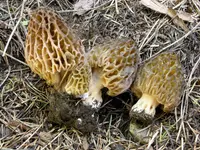
Morchella snyderi is a species of morel fungus, not a leafy houseplant. It produces hollow, cone-shaped fruiting bodies with a pitted, honeycomb surface in spring. The cap is usually tan to dark brown, blending well with forest litter.

This species is native to western North America, where it appears in mixed conifer forests, often after snowmelt or disturbance. It can be challenging to cultivate because it depends on complex relationships with soil, microbes, and sometimes tree roots. Gardeners who want to care for Morchella snyderi should understand that it prefers cool, moist, well-drained soil and natural, dappled woodland light rather than typical indoor or container conditions.

Main Plant Requirements

Care Difficulty

Hard Care

Light Preference

Partial Shade

Water Requirements

Regular Water

Temperature Preference

Cold Hardy

Hardiness Zone

4–8

Soil Texture

Loamy, Sandy, Organic-rich

Soil pH

Slightly acidic (6.5–7.0)

Soil Drainage

Moist but well-drained

Fertilization

Minimal (feed rarely)

Get Personalized Care Plan

Scan your plant to receive care tips personalized for your specific plant

Available on iOS and Android

How to Care for the Morchella snyderi

This spring-fruiting morel prefers bright, gentle light rather than intense, all-day sun.

  • Provide dappled or filtered light under deciduous trees, with about 2–4 hours of soft morning sun and shade or broken light in the afternoon.
  • Avoid strong afternoon sun, which can dry the fruiting zone and mulch surface, reducing Morchella snyderi productivity and causing caps to shrivel.
  • In late winter to early spring, increased light before full leaf-out is beneficial, but protect developing mushrooms with leaf litter so the soil surface does not bake.

Moist, well-drained soil is essential for reliable morel fruiting.

  • Keep the top 3–5 cm of soil and mulch evenly moist but never waterlogged, using deep, infrequent soakings rather than light daily sprinkling.
  • Increase moisture in late winter to spring as soil thaws and fruiting bodies form, then allow slightly drier conditions in summer dormancy to prevent rot.
  • Watch for signs of stress: cracked, very dusty soil and slow mushroom emergence indicate underwatering, while standing water or sour, rotten smells signal overwatering.

This species fruits best in cool to mild spring temperatures after soils have warmed slightly.

  • Optimal fruiting usually occurs around 50–65°F (10–18°C), once daytime highs reach this range for several days and soils are no longer frozen.
  • Mycelium in the soil can survive brief drops near 20°F (−6°C), but repeated hard freezes during fruiting damage developing caps and reduce yields.
  • Sustained heat above 75–80°F (24–27°C) quickly ends the season; provide shade and mulch to buffer rapid temperature swings in exposed sites.

This fungus depends more on soil moisture than air humidity, so indoor humidity control is usually unnecessary.

Morchella snyderi fruits best in loose, moist, well-drained, organic-rich soil that mimics forest conditions.

  • Use a loamy mix with 40–60% mature compost blended with native garden soil to provide structure and nutrients.
  • Keep drainage high by incorporating coarse sand or fine gravel so water drains within a few minutes after soaking.
  • Aim for slightly acidic to neutral pH around 6.0–7.0, avoiding strongly alkaline or salty substrates.
  • Maintain aeration by avoiding compaction; do not tread on the bed and avoid heavy clay that stays waterlogged.

This species is generally unsuitable for long-term container cultivation, as it depends on complex soil and root-zone interactions in the ground.

This native morel fungus typically does not benefit from conventional fertilization and is usually managed without added nutrients.

Morchella snyderi does not require pruning, as it is a wild morel fungus that fruits seasonally and lacks woody stems or foliage.

Transplanting focuses on moving colonized substrate rather than individual fruiting bodies with this wild morel species.

  • Transplant only during cool, moist conditions in early spring or fall to reduce stress on the fungal mycelium.
  • Look for dense, well-colonized substrate rather than exposed fruiting bodies when deciding what to move.
  • Lift and move soil or woody debris in intact blocks, minimizing disturbance and drying of the mycelium.
  • Water the new site gently and keep it evenly moist, not waterlogged, for several weeks after transplanting.

Intentional propagation of Morchella snyderi is challenging and not yet reliable for home growers, so it is rarely attempted.

This species is cold hardy in its native range and typically needs no special winter care beyond stable habitat conditions.

Care Tips

Prepare host trees

Establish a small grove of compatible conifers or mountain hardwoods 2–3 years in advance, as this morel forms long-term associations with living or recently dead trees and fruits best where fine roots and decaying organic matter overlap.

Use fire mimicry

In late summer or fall, burn a thin layer of clean, untreated hardwood chips or straw on the bed surface to create a light ash layer, which can stimulate fruiting by mimicking the post-fire conditions where this species is often found.

Control competing fungi

Before inoculation, pasteurize your substrate (e.g. 60–70°C hot-water soak or steam for 30–60 minutes) to reduce competitor fungi and soil pathogens, giving Morchella snyderi a better chance to colonize the site.

Manage snowmelt moisture

In regions with winter snow, shape beds with a slight slope or shallow swales so meltwater drains slowly through rather than pooling, which supports morel primordia while reducing the risk of anaerobic, waterlogged patches.

Stagger harvest timing

Harvest only fully elongated, firm fruit bodies and leave smaller, developing ones in place, which can extend the fruiting window and improve spore release while you are caring for Morchella snyderi in a managed bed.

Common Pests and Diseases

Fusarium fruit rot

This disease causes young or developing morel fruiting bodies to soften, collapse, and show white to pinkish mold on the surface, often starting at the base. Symptoms include rapid decay of the sponge-like cap and deformation of the pits and ridges.

Solution

Remove and discard all affected morels and nearby debris to reduce spore load, and avoid overhead irrigation or any prolonged surface wetness during fruiting. Maintain good airflow around the fruiting area and rotate fruiting beds or growing locations between seasons to reduce Fusarium buildup in the soil.

Bacterial soft rot

This disease leads to water-soaked, slimy, and foul-smelling breakdown of morel fruiting bodies, often beginning where insects or mechanical damage created small wounds. Symptoms include rapid liquefaction of tissue and collapse of the cap and stem.

Solution

Harvest morels promptly when mature, handle them gently to avoid bruising, and remove any damaged or decaying specimens as soon as they are noticed. Keep fruiting beds well drained, minimize standing water, and avoid excessive nitrogen-rich organic amendments that can favor soft-rot bacteria.

Sciarid fungus gnats

These insects lay eggs in moist substrates, and the larvae feed on fine fungal tissue and developing morel primordia, which can reduce yields and cause malformed or aborted fruiting bodies. Adults are small dark flies often seen hovering near damp growing beds or containers.

Solution

Reduce excess moisture at the surface of the substrate, use fine mesh over vents or bed covers to limit adult access, and remove decaying organic matter that attracts egg laying. Sticky traps placed just above the substrate level help monitor and reduce adult populations, and biological controls like Bacillus thuringiensis israelensis (Bti) can be applied to the substrate according to label directions to target larvae.

Slugs and snails

These pests feed directly on developing morels, leaving irregular holes and rasped surfaces on caps and stems, and may completely consume small fruiting bodies. Symptoms include slime trails on soil, mulch, or nearby wood and sudden disappearance of nearly mature morels.

Solution

Hand-pick slugs and snails in the evening or early morning, and use physical barriers such as copper tape, collars, or coarse grit around the fruiting zone to discourage entry. Keep the area around beds tidy and less attractive by removing dense groundcover, and if needed, apply iron-phosphate-based slug baits placed outside the main fruiting area, following label instructions carefully.

Parasitic morel mold

This disease, sometimes called morel blight, develops as white to grayish mold over the surface of young morel fruiting bodies, which then deform, yellow, and fail to mature properly. Symptoms include fuzzy mycelial growth that gradually covers pits and ridges and can spread across closely spaced specimens.

Solution

Promptly remove and discard all affected and nearby fruiting bodies to limit spread and avoid working in the bed when surfaces are wet to reduce spore transfer. Improve spacing, airflow, and drainage in the fruiting area, and rotate or rest heavily affected beds for at least 1 season before attempting to grow Morchella snyderi again, as part of long-term Morchella snyderi care instructions.

Interesting Facts

Mountain conifer specialist

This morel is strongly associated with mixed conifer forests of the western US, especially under Douglas-fir, ponderosa pine, and other montane conifers, often at mid to higher elevations.

Post-fire fruiting pattern

It can fruit both in undisturbed forests and after wildfires, but has been reliably documented producing more numerous and conspicuous mushrooms in recently burned conifer stands in the Rockies and nearby regions.

Diagnostic stem features

The species is distinguished from similar western morels by its often pale to whitish stem with fine longitudinal grooves and a tendency for the lower stem to discolor brownish with handling or age, features used in combination with microscopic traits and DNA data for identification.

FAQs about Morchella snyderi

Yes, this morel species is considered edible when fully cooked and correctly identified, but raw or undercooked mushrooms can cause digestive upset. Only collect from clean areas and avoid if there is any doubt about identification.

Grow Healthy Plants with Botan Care

Keep your plants happy and healthy with plant identification, disease detection, and easy care guidance.

Botan plant care app — identify plants on mobile

Explore More Plants