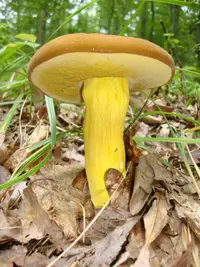
Mel-2 Care (Morchella tridentina)

Also known as: Mountain Blond Morel
Mel-2

About Mel-2

Mel-2 is a cultivated form linked to the wild morel fungus Morchella tridentina, valued for its distinctive honeycomb caps and culinary interest. It is not a leafy houseplant but a fungus that develops fruiting bodies from an underground network in suitable substrates. In nature, M. tridentina occurs in parts of Europe and nearby regions, often in forested or mountainous habitats with well-drained soils. It is considered challenging to grow reliably because fruiting depends on specific temperature shifts, moisture patterns, and a compatible substrate. For those aiming to care for Mel-2 indoors or in controlled beds, stable moisture, loose organic material, and indirect light are typically preferred.

Main Plant Requirements

Care Difficulty

Hard Care

Light Preference

Partial Shade

Water Requirements

Keep Soil Moist

Temperature Preference

Cool Climate

Hardiness Zone

Unknown

Soil Texture

Loamy, Silty, Organic-rich

Soil pH

Slightly acidic (6.5–7.0)

Soil Drainage

Moist but well-drained

Fertilization

Minimal (feed rarely)

Get Personalized Care Plan

Scan your plant to receive care tips personalized for your specific plant

Available on iOS and Android

How to Care for the Mel-2

Morchella tridentina prefers bright, indirect forest-like light rather than open, direct sun exposure.

  • Provide 3–5 hours of soft morning sun with dappled or filtered light for the rest of the day to mimic woodland edges.
  • Allow partial shade, especially in the afternoon; strong midday sun can dry the substrate quickly and damage developing fruiting bodies.
  • In spring fruiting sites, ensure light reaches the forest floor after snowmelt, but maintain leaf litter or light mulch to prevent full, exposed sun; this supports stable moisture and Mel-2 indoor care conditions.

This fungus needs steadily moist, never waterlogged, soil conditions for reliable fruiting.

  • Maintain soil that is evenly moist, allowing the top 2–3 cm to dry slightly between natural rain events or irrigations to avoid stagnant, saturated ground.
  • Increase moisture during active growth and fruiting, watching for caps shrinking, drying, or cracking as signs of underwatering, and for sour odor or mushy tissue as overwatering clues.
  • Grow Morchella tridentina in porous, well-drained, humus-rich soil; avoid compacted clay or standing water areas where puddles persist longer than 24 hours.

Stable cool to mild temperatures favor reliable morel production outdoors.

  • Aim for 50–60°F (10–16°C) during main fruiting, the range that supports both soil microbial activity and morel development.
  • Protect sites from hard frosts below 25°F (-4°C), which can damage young fruiting bodies, though dormant mycelium often survives short cold spells.
  • Provide shade and good soil moisture when temperatures exceed 70–75°F (21–24°C), since prolonged heat and dry conditions quickly end the fruiting season.

Morchella tridentina requires consistently moist, cool, high-humidity conditions to form fruiting bodies.

  • Aim for 70–90% relative humidity around the substrate, especially during primordia and fruiting stages.
  • Low humidity causes caps and ridges to dry, crack, or stop expanding, and pinheads may abort.
  • Increase humidity with a misted plastic tent, humidifier, or damp perlite trays, while keeping surfaces just barely moist, not wet.

Morchella tridentina develops best in loose, well-aerated, organically enriched substrate rather than compact garden soil.

  • Use a mix of leaf litter, well-aged hardwood chips, coarse sand, and a small portion of compost to mimic forest-floor structure.
  • Ensure rapid drainage so water does not pool; excess moisture around the sclerotia (resting structures) promotes rot and competing fungi.
  • Keep pH slightly acidic to neutral, roughly 6.0–7.0, by avoiding heavy liming and using leaf mold or pine-based organic matter.
  • Maintain a crumbly, aerated texture by avoiding fine peat-only mixes and periodically loosening the top layer without disturbing deeper mycelium.

This species is only marginally suitable for container growing and is generally challenging to manage in pots.

  • Choose a wide, shallow, rigid container that allows lateral spread of mycelium while maintaining an even moisture profile across the substrate.
  • Place the container outdoors in a shaded, naturally cool microclimate to reduce overheating and rapid moisture loss from the substrate surface.
  • Elevate the pot slightly off the ground so drainage holes stay clear and brief flushes of rain can drain away quickly without saturating the substrate.

Morchella tridentina is adapted to low-nutrient forest soils, so heavy fertilization is not recommended and can disrupt its fungal–root relationships.

  • If soil is very poor, apply a light top-dressing of well-aged compost in early spring, kept away from any host tree trunk.
  • Avoid synthetic high-nitrogen products; if used, choose a low-dose balanced NPK at 25–50% strength only once in spring.
  • Do not feed during summer dormancy or winter, as nutrient flushes then can stress the fungal network.
  • For long-term success when caring for Mel-2, prioritize maintaining leaf litter and natural organic matter instead of frequent fertilizer use.

Morchella tridentina itself is not pruned; any cutting focuses on surrounding host vegetation to maintain suitable light and airflow.

  • Best timing is late winter to early spring, before strong growth starts in nearby shrubs or trees.
  • Remove only dead, crossing, or heavily shading branches that reduce dappled light on the forest floor.
  • Use clean, sharp bypass pruners or a small saw to make smooth cuts just outside the branch collar.
  • Light, targeted pruning maintains an open canopy, which supports stable moisture and fruiting conditions without disturbing the soil.

Morchella tridentina is rarely grown in containers and is best managed by careful site establishment rather than frequent transplanting.

  • Choose a permanent site in late summer to early fall with compatible host trees, well-drained, calcareous or neutral soil, and stable moisture.
  • Transplant inoculated substrate or spawn with minimal disturbance, keeping mycelium shaded and moist during the move.
  • Avoid repeated lifting; fungal networks decline when soil is broken up or roots of host plants are disturbed.
  • After transplanting, water gently to settle soil, maintain leaf litter as a protective layer, and prevent compaction from foot traffic.

Morchella tridentina propagation is specialized and usually handled through mycelium or spawn rather than typical garden methods.

  • Most work uses inoculated grain, wood chips, or soil containing live mycelium, introduced near suitable host trees.
  • Best season is late summer to early fall, when soil is warm but not hot and moisture is more stable.
  • Place inoculated material 2–5 cm below the surface, under leaf litter, in loose, well-drained soil with moderate organic matter.
  • Maintain consistent moisture, good airflow, and undisturbed soil to allow the fungus to colonize the area over several months.

Morchella tridentina is generally cold hardy in temperate climates and requires minimal active winter care once established in the ground.

  • Allow natural leaf litter to remain over the site as an insulating mulch for the upper soil layers.
  • For very exposed spots, add a light layer of loose organic mulch to reduce freeze–thaw cycles in the top few cm.
  • Container-based experimental cultures, if used, should be moved into an unheated but frost-sheltered space to prevent complete freezing.

Care Tips

Substrate pre-conditioning

Before introducing spawn, hold your hardwood chip and coarse sand mix slightly moist at 50–60°F for 1–2 weeks to allow native microbes to stabilize, which reduces contamination and supports morel mycelium establishment.

Staged bed inoculation

Inoculate outdoor beds in 2–3 small batches spaced 10–14 days apart instead of all at once, which evens out colonization and lowers the risk that one contamination event will ruin the entire patch.

Calcium-rich amendment

For alkaline-loving morels, lightly mix in a laboratory-grade calcium carbonate product or finely crushed, rinsed limestone gravel into the top 5–8 cm of the bed to maintain a slightly alkaline reaction over several seasons.

Controlled spring soaking

To trigger fruiting, give the colonized bed one deep soaking that brings moisture 10–15 cm down, then allow the surface to dry very slightly while keeping sub-surface moisture steady, mimicking snowmelt followed by cool spring weather.

Minimal disturbance harvest

Cut morels at the base with a clean knife instead of pulling them up, and avoid raking or digging the bed, so the mycelium network remains intact and can continue producing new fruiting bodies in future seasons when growing Mel-2.

Common Pests and Diseases

False morel confusion

This issue involves toxic false morel fungi fruiting in the same habitat and being mistaken for edible morels. Symptoms include differences in cap shape, internal structure, and odor that are easy to miss for inexperienced foragers.

Solution

Learn key identification features before harvesting, including hollow interior, honeycomb-like pits with ridges that are continuous with the stem, and absence of cottony or chambered tissue inside the stem or cap. When uncertain, photograph specimens, consult a local mycological society or expert, and discard any doubtful mushrooms rather than consuming them.

Slug and snail feeding

These pests feed on developing and mature fruiting bodies, causing ragged holes, missing sections of caps, and slime trails on and around the morels. Damage is often heaviest in moist, shaded spots and during cool, wet periods.

Solution

Remove slugs and snails by hand during damp evenings, reduce dense ground cover that offers hiding spots, and use physical barriers such as copper tape or fine mesh around cultivation beds. In outdoor production or garden beds, ferric phosphate slug pellets labeled for use around edible crops can be applied sparingly according to label directions.

Fungal competitors in substrate

This problem occurs when other fast-growing fungi colonize the substrate or soil where Morchella tridentina is expected to fruit, leading to poor or absent morel production. Symptoms include visible molds or unfamiliar mushrooms emerging instead of morels and a sour or musty smell in the substrate.

Solution

Use clean, well-aged but not moldy organic material, avoid overwatering, and maintain moderate, stable moisture rather than saturation. Remove heavily contaminated patches of substrate, improve drainage and airflow, and rebuild beds with fresh material if competing fungi dominate the area where growing Morchella tridentina is intended.

Bacterial soft rot

This disease causes morel fruiting bodies to become water-soaked, slimy, and foul-smelling, especially in warm, very wet conditions. Symptoms include rapid collapse of caps and stems, with tissue turning translucent and then dark.

Solution

Harvest promptly when fruiting bodies reach maturity and avoid leaving damaged or overripe morels in place, since they can harbor bacteria. Improve air movement at ground level by avoiding thick, wet mulches, limit overhead watering in cultivation beds, and remove and discard any soft, slimy morels far from the growing area.

Fungus gnat larvae

These insects lay eggs in moist organic matter, and the larvae tunnel into morel stems and caps, causing internal scarring, soft spots, and premature decay. Symptoms include small entry holes, browning from the inside, and presence of tiny maggot-like larvae in the tissue.

Solution

Reduce excessive moisture and standing water around fruiting beds, and harvest morels as soon as they reach usable size to limit time exposed to egg-laying adults. Sticky traps placed near cultivation areas, combined with good sanitation and removal of old or decaying fruiting bodies, help reduce gnat populations and protect Mel-2 indoor care setups from chronic infestation.

Interesting Facts

Mediterranean limestone specialist

This morel is closely associated with dry, calcareous soils and often fruits in open woodlands or scrub on limestone, especially in Mediterranean and sub-Mediterranean regions.

Early spring fruiting

It typically appears very early in the season, often among the first morels to fruit in its range, forming solitary or small groups from late winter to spring depending on local climate.

Distinctive cap structure

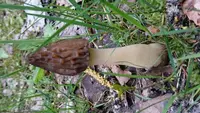
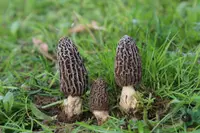
Its cap shows a characteristic pattern of vertically elongated pits and ridges, with the ridges remaining noticeably pale or whitish compared with many other morel species that darken more strongly.

Botan icon

Did you know?

Molecular studies have placed this species within the so-called Mel-2 lineage of the Esculenta clade, helping to clarify historical taxonomic confusion where the same mushroom was long described under several different names across Europe.

FAQs about Mel-2

This species is considered an edible morel when properly identified, fully cooked, and harvested from clean sites. Raw or undercooked morels can cause digestive upset. Misidentification with toxic look-alikes is a serious risk, so expert confirmation is important.

Grow Healthy Plants with Botan Care

Keep your plants happy and healthy with plant identification, disease detection, and easy care guidance.

Botan plant care app — identify plants on mobile

Explore More Plants