Pholiota limonella Care

Pholiota limonella

About Pholiota limonella

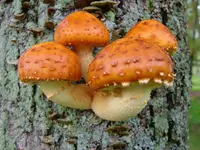
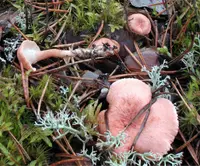
Pholiota limonella is a wood-rotting mushroom, not a leafy houseplant. It typically forms dense clusters of yellow to yellow-brown caps on dead or decaying conifer wood. The caps are often slimy or sticky when wet and may have small scales, while the gills are crowded and spore-bearing. This species occurs mainly in temperate regions, especially in coniferous forests of Europe, parts of Asia, and North America. It can be challenging to cultivate because it depends on the right woody substrate and stable moisture. Those who wish to learn how to care for Pholiota limonella should understand its need for cool, humid, and shaded conditions with access to suitable rotting wood.

Main Plant Requirements

Care Difficulty

Hard Care

Light Preference

Partial Shade

Water Requirements

Keep Soil Moist

Temperature Preference

Cool Climate

Hardiness Zone

Unknown

Soil Texture

Loamy, Organic-rich

Soil pH

Acidic (5.5–6.5)

Soil Drainage

Moist but well-drained

Fertilization

Minimal (feed rarely)

Get Personalized Care Plan

Scan your plant to receive care tips personalized for your specific plant

Available on iOS and Android

How to Care for the Pholiota limonella

This wood-rotting mushroom prefers cool, shaded forest conditions rather than direct sun exposure.

  • Provide bright shade or dappled woodland light, with no more than 1–2 hours of weak morning sun and full protection from strong midday and afternoon sun.
  • Site logs or stumps on the north or east side of structures or trees so Pholiota limonella is shielded from direct rays while still receiving open sky light.
  • In summer, increase shade if caps bleach, dry, or crack; in cooler seasons ensure the area is not in deep, sunless gloom all day to avoid overly cold, stagnant conditions.

Moist, not waterlogged, wood and soil are essential for reliable fruiting.

  • Maintain consistently damp substrate, allowing the surface of logs or mulch to feel moist to the touch but never slimy or submerged.
  • Increase watering or misting during hot, dry periods so the outer 1–2 cm of wood or litter does not dry hard; reduce additions during cool, wet weather to prevent standing water.
  • Watch for waterlogging signs such as foul odors or black, soft wood, and for underwatering signs like shrinking, cracked bark and very brittle mycelium beneath the surface.

This species fruits best in cool to mild outdoor conditions with protection from temperature extremes.

  • Aim for an active growth and fruiting range of about 50–68°F (10–20°C), typical of shaded woodland or forest-edge microclimates.
  • Protect colonized wood from hard frost below about 28°F (-2°C), which can damage exposed mycelium, and from rapid freeze–thaw cycles that split logs.
  • In hot spells above 77–82°F (25–28°C), increase shading and moisture to buffer substrate temperature, and avoid placing logs against heat-reflective surfaces such as bare walls or concrete.

This wood-decay mushroom prefers consistently moist air but does not require very high humidity outdoors.

  • Aim for 70–85% humidity around developing clusters to keep caps from cracking and drying at the edges.
  • It tolerates brief dips to 50–60%, but prolonged dry air slows growth and can cause thin, pale, or shriveled fruiting bodies.
  • Increase humidity by misting nearby surfaces, using a humidity tent, or placing trays of damp wood or bark close to Pholiota limonella logs.

This species fruits best on nutrient-rich woody substrates rather than typical garden soil, but surrounding soil conditions still matter for log or stump culture.

  • Maintain a loose, organic-rich environment around inoculated wood using leaf mold, well-rotted sawdust, or fine bark to retain moisture without becoming waterlogged.
  • Ensure rapid drainage in surrounding ground; avoid compacted clay pockets that hold standing water and encourage competing fungi and rot.
  • A slightly acidic to neutral zone, roughly pH 5.5–7.0, supports microbial activity that helps keep the substrate stable and less prone to putrefaction.
  • Improve aeration and drainage by mixing coarse bark chips or wood shavings into the top 5–10 cm of soil where logs or stumps contact the ground.

This species is not well suited to standard decorative container growing and is usually cultivated on logs or woody blocks instead.

This wood-decaying fungus typically extracts enough nutrients from its substrate and does not need added fertilizer in normal cultivation.

Pholiota limonella does not require true pruning, but fruiting bodies and spent substrate can be managed for hygiene and productivity.

  • Remove decayed or moldy fruiting bodies with clean gloves or a sterile knife to limit contamination.
  • Cut away obviously contaminated substrate blocks and discard them in sealed bags to prevent spore spread.
  • Harvest clusters by trimming at the base, which keeps the remaining mycelium intact for potential future flushes.
  • Use tool disinfectants such as 70% isopropyl alcohol between cuts to reduce disease transfer.

This fungus is usually grown on fixed substrates rather than repotted, but blocks or logs can be moved or renewed when productivity declines.

  • Look for signs such as exhausted substrate, sparse fruiting, or contamination before preparing a fresh inoculated block or log.
  • Time major moves or new substrate inoculation for mild conditions in spring or fall to reduce stress on the mycelium.
  • Plan on renewing or replacing substrate every 1–2 years, depending on yield and contamination pressure.
  • Handle colonized blocks gently, keep them shaded and evenly moist after moving, and avoid drastic temperature swings to limit shock.

Propagation of Pholiota limonella is typically done by controlled mycological methods rather than casual home techniques.

  • Use grain spawn or sawdust spawn from a reputable supplier instead of spores for more reliable establishment.
  • Inoculate pasteurized or sterilized hardwood-based substrate in late spring or early fall for stable temperatures.
  • Maintain high humidity, moderate airflow, and 60–70°F during colonization to support strong mycelial growth.
  • Work with clean tools and surfaces, minimizing open-air exposure of substrate to reduce bacterial and mold contamination.

Outdoor cultivation blocks or logs of this fungus are moderately cold tolerant but benefit from basic winter protection in harsh climates.

  • Mulch around outdoor logs or containers with 5–8 cm of straw, leaves, or wood chips to buffer temperature swings.
  • Avoid waterlogging in winter, since saturated cold substrate increases the risk of rot and loss of mycelium.
  • In very cold regions, move container-based setups into an unheated garage or shed where temperatures stay just above freezing.

Care Tips

Use fresh substrate

Prepare a fresh, pasteurized hardwood-based substrate for each new flush to limit contamination buildup, rather than reusing old blocks beyond 2–3 harvests.

Monitor cap color

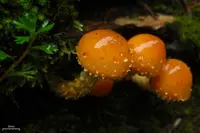
Harvest clusters when caps are bright yellow and still slightly convex, before heavy spore drop, to maintain good texture and reduce mess and respiratory irritation in enclosed grow spaces.

Ventilate fruiting area

Provide gentle, continuous air exchange during fruiting to prevent carbon dioxide buildup, which can cause elongated stems and small caps, while avoiding strong drafts that dry out the substrate surface.

Cluster support setup

Install small mesh panels or horizontal strings near the fruiting surface so heavy clusters can lean against them, reducing the risk of stems snapping under their own weight.

Hygiene between flushes

After each harvest, remove all stem butts and surface debris with clean tools and lightly mist the block, which helps reduce bacterial and mold problems when growing Pholiota limonella over multiple flushes.

Common Pests and Diseases

Fungus gnat larvae

This pest targets moist mushroom substrates, where the larvae feed on developing mycelium and young fruiting bodies, reducing yield and deforming caps. Symptoms include small black flies around the growing area and tunneling damage in stems or caps.

Solution

Reduce excess surface moisture, improve air movement, and use fine mesh or filters on vents to limit adult entry. Remove heavily infested blocks, apply biological controls such as Bacillus thuringiensis israelensis (Bti) according to label directions, and keep the fruiting room clean of spent substrate and debris as part of general Pholiota limonella care instructions.

Mushroom flies

This pest group includes various sciarid and phorid flies whose larvae burrow into the substrate and fruiting bodies, causing water-soaked spots, soft tissue, and contamination risk. Symptoms include clouds of small flies when disturbed and pinheads aborting or collapsing.

Solution

Install yellow sticky traps to monitor and reduce adult numbers, seal gaps in doors and vents, and maintain tight hygiene around the grow area. Discard heavily infested substrates, use properly pasteurized or sterilized growing media, and avoid leaving exposed, wet organic waste in or near the fruiting room.

Green mold (Trichoderma)

This disease appears as rapidly spreading white mycelium that soon turns bright green on the substrate surface, often outcompeting the mushroom mycelium. Symptoms include stalled colonization, patchy growth, and a dusty green spore layer on blocks or trays.

Solution

Remove and discard contaminated blocks promptly to prevent spore spread, and do not open them inside the main grow area. Review pasteurization or sterilization steps, lower excessive humidity on non-colonized surfaces, reduce handling of colonizing blocks, and disinfect shelves, tools, and floors between crops.

Bacterial blotch

This disease is caused by bacteria thriving on persistently wet caps and surfaces, leading to yellow-brown, greasy spots or streaks on fruiting bodies. Symptoms include slimy patches on caps and an unpleasant odor when infection is advanced.

Solution

Lower surface moisture by adjusting misting schedules so caps dry slightly between cycles and increase gentle air movement without creating strong drafts. Remove and discard affected mushrooms, avoid overhead splashing, and sanitize misters, nozzles, and room surfaces on a regular schedule.

Mite infestations

These insects are microscopic to very small and can feed on mycelium, spores, or decaying matter, leading to weak colonization, deformed fruiting bodies, and reduced yields. Symptoms include fine dust-like movement on substrate surfaces and slow, patchy mycelial growth despite correct environmental conditions.

Solution

Quarantine and remove heavily infested blocks, and thoroughly clean racks, walls, and floors to remove organic residues where mites breed. Use physical barriers and filters, avoid bringing in unpasteurized organic material, and consider heat treatment of empty rooms and equipment if infestations recur, while maintaining careful monitoring of the crop afterward.

Interesting Facts

Distinct lemon coloration

The caps of this species develop a bright lemon-yellow to yellow-brown color with age, often with small darker scales that help separate it from similar brown Pholiota species in the field.

Wood-decaying specialist

This fungus grows mainly on dead or dying conifer wood, especially spruce and pine, where it acts as a saprobe, breaking down lignin- and cellulose-rich tissues in the outer parts of trunks and stumps.

Cold-season fruiting

In much of its range, this species fruits in late summer to late autumn, sometimes persisting into early winter during mild periods, which makes it a characteristic member of late-season fungal communities on conifer logs.

FAQs about Pholiota limonella

This species is generally regarded as inedible or at best of very poor culinary value. Identification is difficult, and it can resemble toxic brownish mushrooms. For safety, it is best not to eat it at all.

Grow Healthy Plants with Botan Care

Keep your plants happy and healthy with plant identification, disease detection, and easy care guidance.

Botan plant care app — identify plants on mobile

Explore More Plants