Blue Tooth Care (Hydnellum caeruleum)

Blue Tooth

About Blue Tooth

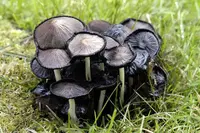
Blue tooth, Hydnellum caeruleum, is a tooth fungus rather than a traditional leafy plant. It forms low, irregular caps with spines on the underside instead of gills. Young specimens often show striking blue or bluish-gray tones that fade to brown with age.

This species typically grows on the ground in coniferous forests, especially with pines, in Europe and parts of North America. It has a mycorrhizal lifestyle, forming a nutrient-sharing partnership with tree roots, which makes it difficult to cultivate at home.

Gardeners who want to care for Blue Tooth should understand it prefers cool, moist, well-drained, acidic forest soils and natural shade, conditions that are hard to reproduce in typical gardens or containers.

Main Plant Requirements

Care Difficulty

Hard Care

Light Preference

Partial Shade

Water Requirements

Regular Water

Temperature Preference

Cool Climate

Hardiness Zone

5–8

Soil Texture

Loamy, Sandy, Organic-rich

Soil pH

Strongly acidic (4.5–5.5)

Soil Drainage

Moist but well-drained

Fertilization

Minimal (feed rarely)

Get Personalized Care Plan

Scan your plant to receive care tips personalized for your specific plant

Available on iOS and Android

How to Care for the Blue Tooth

This mycorrhizal fungus prefers cool, forest-like light conditions rather than open, exposed sun.

  • Provide dappled or filtered light under conifers or mixed woodland, equal to light levels found in bright but shaded forest floors, not direct midday sun.
  • Aim for 1–3 hours of gentle morning sun with shade the rest of the day; afternoon sun in open sites can scorch and dry the substrate too quickly for Blue Tooth.
  • In hot summers, increase shade to protect from heat stress, while in cooler seasons some extra indirect light through thinner canopy supports steady development.

This fungus relies on consistently moist, cool soil rather than direct, frequent surface watering.

  • Maintain evenly moist, well-drained, humus-rich soil; allow only the top 1–2 cm to begin drying before moisture is restored by rainfall or gentle soaking.
  • Prioritize drainage with loose, woody, needle-rich substrates, since waterlogged or compacted soil can reduce Hydnellum caeruleum vigor and encourage rot in associated roots.
  • In hot, dry periods, monitor for shrinking or cracking soil and dull, shriveling fruiting bodies, while overwatering shows as sour smell, algae, or standing water on the surface.

This forest species prefers cool to mild conditions and copes best with gradual, seasonal temperature shifts.

  • Optimal development occurs around 55–70°F (13–21°C), typical of shaded woodland soils, especially during late summer to early autumn fruiting.
  • Tolerates cool conditions down to about 25°F (-4°C) in dormancy, but repeated freeze–thaw cycles with saturated soil can damage associated roots and mycelium.
  • Sustained heat above 80°F (27°C), especially with dry air and sun-exposed soil, reduces fruiting; deep shade, mulch, and stable moisture help buffer high temperatures.

Humidity plays a minor role for Hydnellum caeruleum, which naturally handles relatively dry woodland air.

This fungus depends on undisturbed, organic forest soil rather than conventional garden bed preparation.

  • Prefers loose, spongy, organic-rich horizons built from decaying conifer needles, twigs, and leaf litter rather than mineral topsoil alone.
  • Requires consistently moist but not waterlogged conditions; avoid compacted or puddling sites that stay saturated after rain.
  • Tolerates slightly acidic to strongly acidic soil, roughly pH 4.0–6.0, often beneath conifers where acidic litter accumulates.
  • Encouraging Hydnellum caeruleum typically means leaving coarse woody debris, bark pieces, and needle litter in place to maintain aeration and mycorrhizal habitat.

This woodland fungus is not suitable for typical container growing because it relies on complex mycorrhizal relationships with tree roots in stable forest soil.

This woodland fungus relies on its mycorrhizal partnership with trees and normally does not need additional fertilizer in garden settings or containers.

  • Avoid applying synthetic balanced NPK fertilizers around Hydnellum caeruleum, as excess nutrients can disrupt its tree-root symbiosis.
  • Maintain a low-nutrient, well-drained, slightly acidic substrate instead of adding compost or manure-rich amendments.
  • If surrounding vegetation shows nutrient deficiency, use very light, slow-release fertilizer on nearby plants only, not directly where Blue Tooth fruits.

Hydnellum caeruleum does not require structural pruning, but limited removal of fruiting bodies can be done for hygiene or study purposes.

  • Cut only old, decayed, or damaged fruiting bodies at the base if they harbor mold or pests.
  • Use a clean, sharp knife or scissors and avoid disturbing the surrounding soil and tree roots.
  • Removing a few fruiting bodies does not improve growth, since the main organism is the underground mycelium.
  • Leave healthy fruiting bodies intact to allow spore production and population stability.

This fungus is rarely grown in containers, so management focuses on careful site preparation and minimal disturbance once established with host trees.

  • Transplant only when a planting site must be moved, since the mycelium forms a broad, delicate network around tree roots.
  • Plan any move in cool, moist weather in early fall or early spring to reduce stress and desiccation.
  • Lift a generous soil block that contains visible mycelium and associated feeder roots, keeping it intact.
  • Replant at the same depth, water gently, and shade the area to maintain even moisture while the fungal network re-establishes.

Hydnellum caeruleum is challenging to propagate in gardens because it depends on a specific mycorrhizal relationship with suitable trees.

  • Spore-based propagation occurs naturally; encouraging it mainly means leaving mature fruiting bodies in place to release spores.
  • Establish young compatible host trees in low-nutrient, acidic, well-drained soil where the fungus already occurs.
  • Avoid disturbance of the forest floor, as intact litter and stable moisture support mycelium spread.
  • Laboratory culture and inoculated seedlings are specialist methods and are not usually practical for home growers.

This species is cold hardy in temperate climates and usually needs no special winter protection once established with its host trees.

  • In very exposed sites, a light mulch of leaf litter around host tree roots helps stabilize soil moisture and temperature.
  • Do not use heavy, wet mulches that may waterlog the rooting zone and reduce aeration.
  • Container-based experiments with this fungus should be overwintered in a cold, sheltered, frost-prone but not waterlogged location.

Care Tips

Mimic forest litter

Spread a 2–3 cm layer of coarse, undecorated wood chips and partially decomposed leaf litter over the fruiting area each year to replicate the natural conifer floor these fungi prefer and to help maintain stable surface moisture.

Use conifer partners

Establish or maintain nearby pine or spruce hosts, since this species is mycorrhizal and fruits more reliably when roots of compatible conifers intermingle with the inoculated soil.

Avoid ground disturbance

Mark the inoculated zone and avoid raking, digging, or heavy foot traffic there, as disturbance can break fungal mycelium networks and sharply reduce fruiting for several seasons.

Manage competing moss

If dense moss or shallow-rooted groundcovers overgrow the site, gently thin small patches by hand each year to keep the surface open enough for fruiting bodies to emerge without tearing into the soil.

Plan for patience

Allow 2–5 years after inoculation before expecting consistent fruiting, and keep simple notes on weather and fruiting times to better understand the local pattern of growing Blue Tooth in your site.

Everything About Blue Tooth

Common Pests and Diseases

Parasitic fungi

This disease occurs when competitive wood-decay fungi colonize the same substrate and gradually overrun the fruiting bodies. Symptoms include distortion, reduced size, and premature collapse of the blue tooth caps and spines.

Solution

Remove and destroy heavily overgrown or misshapen fruiting bodies and any obviously competing fungal masses, then avoid adding fresh woody debris in that exact spot for a season to reduce inoculum. For intentional grow Hydnellum caeruleum setups, refresh the substrate with clean, well-decayed softwood and maintain good forest-floor style airflow to favor this species over fast-growing competitors.

Fungal maggots

These insects are fly larvae that tunnel through the fruiting body tissue. Symptoms include small holes, soft patches, and rapid decay of caps and spines.

Solution

Harvest fruiting bodies promptly when they reach maturity to reduce the window for egg-laying, and discard any that show tunneling or soft internal tissue. In outdoor cultivation beds, keep thick leaf litter slightly disturbed around the fungus to make the surface less attractive for adult flies to lay eggs, while still maintaining the cool, moist microclimate this species needs.

Slugs and snails

These pests feed on the soft outer surfaces and margins of the fruiting bodies. Symptoms include ragged edges, mucus trails, and missing sections of the cap or spines.

Solution

Hand-pick slugs and snails in the evening or early morning and relocate them away from the fungal patch. Use physical barriers such as rough grit or copper tape around small cultivated beds and keep nearby dense groundcover slightly thinned so the area remains moist but offers fewer daytime hiding spots for these mollusks.

Interesting Facts

Blue tooth coloration

Mature fruiting bodies often show a distinctive blue to blue‑gray coloration on the spines and cap surface, which contrasts with the more common brown tones of related tooth fungi. This pigmentation is especially visible in moist, shaded conifer forests where the species is typically found.

Tooth-like spore surface

Instead of gills or pores, this species produces its spores on dense, downward-pointing spines on the underside of the cap. These tooth-like structures increase the surface area for spore production and are a key identification feature in Hydnellum caeruleum care instructions.

Specialist forest partner

This fungus forms ectomycorrhizal associations with conifers, especially pines, meaning its hyphae wrap around tree roots and exchange nutrients with the host. It often appears in nutrient-poor, acidic forest soils where this partnership improves water and mineral uptake for the tree while the fungus receives sugars.

Botan icon

Did you know?

Hydnellum caeruleum is considered an indicator species for relatively undisturbed, old coniferous forests in parts of Europe, and local declines in its populations have been used to flag loss or degradation of long-established woodland habitats.

FAQs about Blue Tooth

This fungus is best grown outdoors in shaded woodland-style beds with moist, acidic, well-drained soil rich in organic matter. Indoor conditions rarely provide the complex soil life and microclimate it requires to form proper fruiting bodies.

Grow Healthy Plants with Botan Care

Keep your plants happy and healthy with plant identification, disease detection, and easy care guidance.

Botan plant care app — identify plants on mobile

Explore More Plants