Use local strains
Source spawn or colonized substrate from local or regional suppliers, since strains already adapted to your climate and native conifer hosts tend to fruit more reliably and repeatedly outdoors.

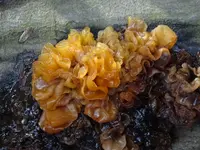
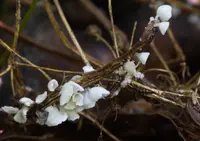
Leafy brain, Phaeotremella foliacea, is not a typical leafy plant but a gelatinous fungus often noticed by nature-focused plant owners. It forms lobed, brain-like clusters in shades of amber to dark brown.
This species usually grows on dead or decaying conifer wood in moist forests across temperate regions, especially in North America and Europe. Its need for consistently damp, cool, and shaded conditions makes it challenging to maintain in standard home environments.
Those interested in how to care for Leafy Brain should understand it depends on rotting wood and high humidity rather than potting soil. It is better appreciated in outdoor woodland-style settings or specialized terrarium setups than as a conventional houseplant.

Care Difficulty
Moderate Care

Light Preference
Shade

Water Requirements
Keep Soil Moist

Temperature Preference
Cool Climate

Hardiness Zone
Unknown

Soil Texture
Loamy, Silty, Organic-rich

Soil pH
Acidic (5.5–6.5), Slightly acidic (6.5–7.0)

Soil Drainage
Moist but well-drained

Fertilization
Minimal (feed rarely)
Scan your plant to receive care tips personalized for your specific plant
Available on iOS and Android
This jelly fungus forms best on shaded, decaying conifer wood rather than in direct open sun.
This wood-decaying jelly fungus depends on consistently moist, but not waterlogged, substrate rather than direct watering.
This jelly fungus prefers cool to mild woodland conditions with moderate temperature fluctuations through the year.
This wood-decay jelly fungus relies on consistently moist air and substrate to form healthy fruiting bodies.
This fungus grows on dead conifer wood rather than in soil, so conditions focus on the wood substrate instead.
This species is generally unsuitable for conventional container growing because it requires decaying conifer wood in a humid, outdoor microhabitat rather than a soil-filled pot.
This jelly fungus grows on decaying wood and usually needs no fertilization in natural or semi-natural settings.
Phaeotremella foliacea is not pruned in the usual horticultural sense, since it is a jelly fungus rather than a leafy plant.
Cultivation of this wood-decaying jelly fungus focuses on managing its woody substrate rather than classic repotting.
Propagation of Phaeotremella foliacea is specialized and typically handled by fungal or forestry researchers rather than home growers.
This species is cold hardy in most temperate climates and normally requires no special winter care.

Plant Health Check
Not sure what's wrong with your plant? Check your plant's health inside the app.
This jelly fungus is a parasite of other wood-decay fungi, especially those in the genus Stereum, rather than decomposing wood directly itself.
Its soft, gelatinous fruiting bodies form densely folded, brain-like masses that can reach several cm across and vary from olive-brown to dark brown.
It often fruits in cool, damp conditions on dead conifer wood, and can rehydrate and resume spore release after drying out when moisture returns.

Molecular studies have shown that material once called Tremella foliacea actually included several distinct species, and this led to its placement in the separate genus Phaeotremella to reflect its unique evolutionary lineage among jelly fungi.
This jelly fungus is considered edible but has little flavor and a gelatinous texture. It is mainly eaten in soups or stir-fries. Only collect from clean, correctly identified specimens to avoid contamination or misidentification risks.
Keep your plants happy and healthy with plant identification, disease detection, and easy care guidance.