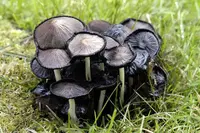
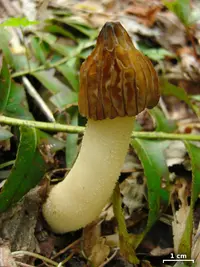
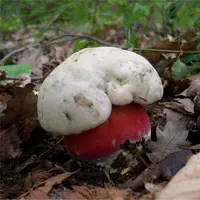
ruby dapperling Care (Leucoagaricus rubrotinctus)

ruby dapperling

About ruby dapperling

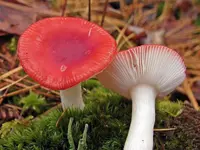
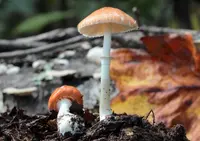
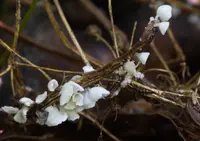
Ruby dapperling, Leucoagaricus rubrotinctus, is a small to medium-sized gilled mushroom, not a leafy houseplant. It typically appears with a reddish-brown, fibrous cap and a slender pale stem, often with color tones that darken toward the center of the cap.

This species is usually found on soil or leaf litter in woodlands and gardens, often near decaying organic matter. It tends to appear singly or in small groups rather than dense clusters.

Ruby dapperling is not considered an easy species for beginners to cultivate, as it has specific needs for substrate and humidity that are hard to replicate at home. Anyone planning to care for ruby dapperling should understand that it is mainly of interest for observation in natural or semi-natural settings rather than routine home cultivation.

Main Plant Requirements

Care Difficulty

Hard Care

Light Preference

Shade

Water Requirements

Keep Soil Moist

Temperature Preference

Cool Climate

Hardiness Zone

Unknown

Soil Texture

Loamy, Peaty, Organic-rich

Soil pH

Acidic (5.5–6.5), Slightly acidic (6.5–7.0)

Soil Drainage

Moist but well-drained

Fertilization

Minimal (feed rarely)

Get Personalized Care Plan

Scan your plant to receive care tips personalized for your specific plant

Available on iOS and Android

How to Care for the ruby dapperling

This woodland mushroom prefers low, filtered light that mimics a shaded forest floor.

  • Provide bright shade or dappled light under trees, avoiding more than 1–2 hours of direct sun, especially strong midday and afternoon exposure.
  • Site ruby dapperling where it receives early morning sun only, or full shade with indirect sky light, to prevent caps from drying and fading.
  • In summer, increase shade as canopy thins or during heat waves; in cooler seasons, slightly more indirect light is tolerated without stress.

This species needs consistently moist but not waterlogged soil to fruit reliably.

  • Aim for soil that feels evenly moist 5–8 cm deep; water when the surface starts to lose sheen but before it becomes dusty or cracked.
  • Use a loose, organic, well-drained substrate so excess water drains within a few minutes, reducing the risk of sour smell, slime, or mold from overwatering.
  • During hot, dry periods, check moisture daily; in cool, damp weather, reduce watering and rely more on natural rainfall for Leucoagaricus rubrotinctus.

This fungus thrives in mild to warm conditions typical of temperate woodland summers.

  • Optimal fruiting occurs around 60–77°F (16–25°C), where mycelium activity and cap development remain steady.
  • It tolerates down to about 40°F (4°C) in the soil but fresh fruiting bodies are damaged by frost and should be protected from freezing nights.
  • Prolonged heat above 86°F (30°C) dries substrate and stresses the organism, so provide deeper shade and extra moisture during heat waves.

This saprophytic mushroom prefers moderate to high humidity for reliable fruiting.

  • Aim for 60–80% humidity around developing caps and gills to reduce cracking and premature drying.
  • Tolerates brief drier periods, but consistently low humidity causes shriveling, brittle caps, and rapid veil tearing.
  • Increase humidity by misting the surrounding substrate surface lightly, using a humidity tent with vents, or placing trays of moist perlite nearby.

Leucoagaricus rubrotinctus needs a loose, organic-rich substrate that stays evenly moist yet drains freely.

  • Use a mix of well-rotted hardwood chips, leaf litter, and coarse compost to mimic decaying forest debris.
  • Ensure rapid drainage; avoid dense garden soil or heavy clay that compacts and slows oxygen movement to the mycelium.
  • Maintain a slightly acidic to neutral environment around pH 5.5–7.0 by blending in leaf mold or pine-based organic matter.
  • Improve aeration with 20–30% coarse materials like wood chips or perlite so the substrate holds moisture without becoming waterlogged.

This species can be grown in containers if the vessel supports stable, moist but aerated substrate.

  • Choose a wide, shallow tub or box so the mycelium can spread laterally through the substrate rather than only downward.
  • Use side and bottom perforations or slits to improve gas exchange while still retaining enough moisture in the substrate column.
  • Elevate the container on blocks or a rack so drainage holes remain unobstructed and excess leachate can run off freely without pooling underneath.

This saprophytic fungus obtains nutrients from decaying organic matter and usually does not benefit from added fertilizer.

Pruning is not applicable to Leucoagaricus rubrotinctus, as it is a mushroom-forming fungus rather than a leafy or woody plant.

Transplanting focuses on the fungal substrate rather than the visible mushrooms, which are only the fruiting bodies.

  • Move colonized substrate only if it is drying out, contaminated, or fully exhausting its food source, shown by weak or absent fruiting.
  • Transplant in mild, stable weather so mycelium, the vegetative fungal network, is not stressed by temperature swings.
  • Shift the entire colonized block or log into fresh, similar organic material instead of disturbing or breaking it apart.
  • Handle gently, keep moisture steady, and avoid direct sun on the substrate to limit mycelial shock.

Propagation of this wild mushroom is generally not attempted by home growers and is best left to experienced mycologists due to identification and safety concerns.

This species is typically treated as a wild fungus, and specific winter care is not provided in gardens or containers.

Care Tips

Sterile Substrate Handling

Use pressure-sterilized or oven-pasteurized substrate and tools, and cool them fully before inoculation to reduce contamination by molds that easily outcompete Leucoagaricus rubrotinctus.

Targeted Surface Mist

Mist only the surrounding casing or substrate surface lightly and avoid wetting developing caps directly, which helps prevent bacterial blotch and cap deformation.

Controlled Air Exchange

Provide gentle, regular fresh air exchange using a filtered vent or briefly opened lid 2–3 times daily to remove CO₂ buildup without causing substrate drying.

Sequential Harvest Technique

Harvest individual mushrooms by gently twisting and lifting just as caps begin to flatten, leaving smaller pins undisturbed so they can mature without damaging the mycelial network.

Sanitation Between Flushes

After each flush, remove all spent stems, yellowed mycelium, and any soft or discolored tissue, then lightly rehydrate the substrate to encourage healthy subsequent fruiting when growing ruby dapperling.

Common Pests and Diseases

fungus gnat larvae

This pest uses moist, fungus‑rich substrates to feed and its larvae can cluster around developing mushroom primordia and bases. Symptoms include small black flies hovering near trays and minor damage or collapse of very young fruiting bodies.

Solution

Reduce surface moisture between misting, improve air movement, and use fine mesh over fresh air inlets to limit adult entry. Apply a biological larvicide containing Bacillus thuringiensis israelensis (Bti) to the substrate surface according to label directions and remove heavily infested blocks or trays to break the life cycle.

sciarid fly infestation

These insects are strongly attracted to active mycelium and rich organic substrates and can introduce competitor molds or cause scarring on caps and stems. This pest is often noticed as small dark flies on walls, near vents, or walking on developing mushrooms.

Solution

Install yellow sticky cards close to substrate surfaces and air inlets to trap adults and monitor population levels, and seal gaps in the grow area to reduce entry. Maintain clean culture practice by quickly discarding contaminated substrate, avoiding exposed food or compost, and using fine prefilters on intake air when growing ruby dapperling indoors.

Trichoderma green mold

This disease develops on stressed or poorly colonized substrate, producing dense white mycelium that shifts to bright or dull green spore masses. Symptoms include stalled or patchy Leucoagaricus mycelium and areas that rapidly turn green, often with a slightly earthy or sharp odor.

Solution

Isolate and bag affected substrate immediately to prevent spore spread, then remove it from the grow area. For future batches, use properly pasteurized or sterilized substrate, avoid over‑wet mixes, and increase fresh air and hygiene during handling to favor Leucoagaricus rubrotinctus care over competitor molds.

bacterial blotch

This disease causes greasy, water‑soaked spots or streaks on caps that may turn yellow to brown and become sticky. Symptoms include deformed or collapsed fruiting bodies, especially where water droplets sit on the cap surface for long periods.

Solution

Reduce fine misting directly onto caps and instead maintain humidity with indirect methods, such as humidifiers or misting walls and floors, while increasing gentle air movement so caps dry within 1–2 hours after any wetting. Remove and discard affected mushrooms promptly and clean surfaces and tools with a food‑safe disinfectant between harvests to lower bacterial load.

cobweb mold

This disease appears as very fine, gray to off‑white, cobweb‑like growth that can quickly cover pins and caps under still, humid conditions. Symptoms include rapid softening and collapse of small fruiting bodies beneath the webby growth.

Solution

Immediately remove and seal any trays or blocks with visible cobweb growth, since spores spread easily in stagnant air. Improve fresh air exchange and slightly lower humidity, and if spotted early, lightly mist the affected area only with a 3% hydrogen peroxide solution, keeping it off healthy mushrooms as much as possible.

Interesting Facts

Distinctive ruby staining

The cap and stem surfaces often show red to wine-colored fibrils or scales that can intensify or smear into a ruby tone when rubbed or bruised, which inspires the common name ruby dapperling.

Shifting taxonomic history

This species has moved between several genera over time (including Lepiota and Agaricus) as mycologists refined its placement based on microscopic features such as spore shape and the structure of its gills and cap tissues.

Saprotroph of leaf litter

It lives as a saprotroph, breaking down fallen leaves and other plant debris in forests, contributing to nutrient recycling in the upper soil layer of mixed and coniferous woodlands.

FAQs about ruby dapperling

This mushroom is considered inedible and is suspected to be poisonous. It should never be eaten, even if it looks fresh or pest-free. Children and pets must be kept from handling or consuming any part.

Grow Healthy Plants with Botan Care

Keep your plants happy and healthy with plant identification, disease detection, and easy care guidance.

Botan plant care app — identify plants on mobile

Explore More Plants