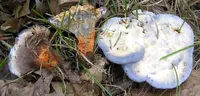
Phaeotremella frondosa Care

Phaeotremella frondosa

About Phaeotremella frondosa

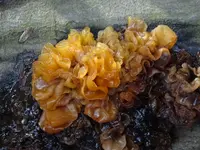
Phaeotremella frondosa is not a plant but a jelly fungus, known for its soft, frilly, orange to yellow fruiting bodies that resemble clustered seaweed. It usually appears on dead or decaying hardwood, especially oak, where it parasitizes other fungi on the wood. This species is widespread in temperate regions and is most often noticed during moist, mild weather when the jelly structures swell. Its dependence on specific host fungi and damp, shaded woodland conditions makes it difficult to cultivate deliberately, so attempts to care for Phaeotremella frondosa at home are rarely successful.

Main Plant Requirements

Care Difficulty

Hard Care

Light Preference

Shade

Water Requirements

Keep Soil Moist

Temperature Preference

Cool Climate

Hardiness Zone

Unknown

Soil Texture

Loamy, Organic-rich

Soil pH

Acidic (5.5–6.5)

Soil Drainage

Moist but well-drained

Fertilization

Minimal (feed rarely)

Get Personalized Care Plan

Scan your plant to receive care tips personalized for your specific plant

Available on iOS and Android

How to Care for the Phaeotremella frondosa

This wood-inhabiting jelly fungus prefers low to moderate, indirect light in its natural woodland habitat.

  • Provide dappled or filtered light, similar to light under deciduous trees, rather than full open sun exposure.
  • Allow 1–3 hours of soft morning sun if growing at a woodland edge, avoiding intense midday and afternoon sun that can dry the substrate.
  • In summer, protect from strong, direct sun that overheats logs; in autumn and winter, more open canopy light is acceptable as temperatures drop.

Moisture management focuses on keeping its woody substrate evenly damp but never waterlogged.

  • Ensure the supporting wood or substrate stays consistently moist to the touch, not dripping; dry, cracked wood indicates insufficient moisture.
  • Increase misting or gentle watering in warm, dry weather so the outer 1–2 cm of substrate does not fully dry, especially on exposed logs.
  • Reduce watering frequency in cool, wet seasons to avoid standing water, which encourages competing fungi and bacterial rot on the host wood.

This species develops best in cool to mild conditions typical of temperate woodlands.

  • Aim for an active growth range of about 50–68°F (10–20°C), where fruiting bodies form and hold their texture well.
  • Tolerate brief drops to around 32°F (0°C), but prolonged hard frost below 28°F (-2°C) can damage exposed fruiting tissue.
  • In hot spells above 77–82°F (25–28°C), shaded, humid conditions are important to prevent rapid drying and collapse of the jelly structures.

This jelly fungus prefers consistently moist air around fruiting sites rather than very dry conditions.

  • Aim for 70–90% humidity near developing fruitbodies; dry air slows growth and shrivels tissue.
  • In exposed or windy spots, low humidity shows as dull, flattened, or hardened lobes instead of firm, gelatinous clusters.
  • Raise local humidity outdoors by using rough, moisture-holding logs, partial shade, and nearby leaf litter that retains dampness.

This fungus develops on dead or decaying hardwood rather than true soil, but surrounding substrate conditions still matter.

  • Targets well-rotted hardwood on the ground where surrounding soil stays evenly moist but not waterlogged, often in loamy or organic-rich forest floors.
  • Benefits from substrate contact with humus-rich leaf litter that holds moisture while allowing air gaps, similar to loose woodland duff.
  • Prefers slightly acidic to neutral conditions around the wood (roughly pH 5.5–7); avoid compacted clay or alkaline rubble that dries out quickly.
  • For cultivation trials, pack hardwood pieces into a mix of shredded bark, leaf mold, and coarse wood chips to maintain aeration and drainage around the inoculated wood.

This species is not well suited to conventional container growing and is best established on hardwood in outdoor, naturally humid conditions.

This wood-decaying jelly fungus relies on its tree host and usually does not benefit from direct fertilizing.

Pruning is not applicable, as this fungus naturally appears and disappears on its host wood without structural shaping.

Transplanting focuses on moving infected host wood rather than the fungus itself.

  • Select fresh or partially decayed oak or other suitable hardwood showing compatible host fungi, since Phaeotremella frondosa develops on specific host associations.
  • Time moves in late fall or early spring when temperatures are cool and fungal activity is moderate.
  • Cut manageable wood sections, disturbing the bark and existing fungal growth as little as possible to reduce stress on the mycelium network.
  • Place wood in a shaded, moist, well-ventilated outdoor spot and avoid containers, which often dry out and disrupt natural colonization.

Propagation is specialized and usually attempted only by experienced fungal growers, as it depends on compatible host fungi in hardwood.

Outdoor colonies in suitable climates are generally cold hardy and need little targeted winter care.

  • Allow naturally fallen leaves to remain around host logs to act as a light mulch and stabilize moisture.
  • Avoid moving or disturbing colonized wood during hard freezes to limit mechanical damage to the jelly-like fruiting bodies.
  • Container or display pieces can be shifted to a cold, sheltered, unheated space to reduce freeze–thaw stress while staying dormant.

Care Tips

Host log selection

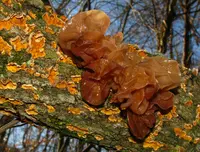
Use fresh, recently felled oak or beech branches already colonized or likely to be colonized by Stereum hirsutum, since this fungus is a parasite of Stereum and will only fruit reliably where its host is established.

Moisture-retentive stacking

Stack inoculated or host-rich branches in a shaded, sheltered cradle of coarse wood chips or leaf litter so the wood stays evenly moist while still allowing airflow around the logs.

Seasonal fruiting checks

Survey host logs after autumn rains and mild winter wet periods, as fruiting bodies often appear rapidly following extended damp weather rather than on a fixed calendar schedule.

Minimal handling of fruitbodies

Avoid frequent touching or brushing of the gelatinous masses, since mechanical damage and drying from warm hands can shorten their lifespan and reduce spore production.

Simple moisture monitoring

During dry spells, check that the outer bark of host branches does not become hard and fissured; if it does, lightly hose the log pile in the evening to rehydrate the substrate without creating standing water around it when caring for Phaeotremella frondosa.

Common Pests and Diseases

Host-canker decline

This disease affects the oak hosts that support the fungus, reducing the availability of healthy wood where fruitbodies form. Symptoms include branch dieback, bark cracking, and cankers on oaks associated with Phaeotremella frondosa.

Solution

Prune out cankered and dying oak branches during dry weather and disinfect tools between cuts, then improve host tree vigor through proper watering and mulching so it can compartmentalize cankers and continue supporting the fungus. Avoid trunk wounding and soil compaction around host trees, as stressed oaks are more prone to canker development and decline, which indirectly reduces suitable habitat for this species.

Armillaria root disease

This disease attacks the roots and lower trunk of hardwood hosts such as oak, sometimes killing trees that carry the parasitic stage of the Phaeotremella life cycle. Symptoms include thinning crowns, resin or sap near the base, and white fungal sheets beneath the bark at the root collar.

Solution

Remove severely infected trees and as much of the infected root system as possible to limit further spread, then avoid replanting highly susceptible hosts in the same location for several years. Maintain strong tree vitality through correct watering and avoiding mechanical damage, since healthy trees are better able to tolerate low background levels of Armillaria and continue to support growing Phaeotremella frondosa on remaining dead wood.

Bark-boring beetles

These insects tunnel into stressed or dying oaks and other hardwoods, accelerating branch death and creating conditions that alter the wood substrates colonized by the fungus. Symptoms include small round exit holes, fine boring dust, and rapid decline of individual branches or whole sections of the crown.

Solution

Promptly prune and remove heavily infested branches or weak trees before beetles disperse, disposing of the wood away from the site or chipping it thoroughly. Support host tree health with correct irrigation during drought and by preventing bark injuries, since vigorous trees are less attractive to bark-boring beetles and provide more stable, long-lasting habitat for the fungus.

Wood-decay basidiomycetes

These fungi, such as Trametes and Stereum species, compete directly for the same dead oak branches and logs, sometimes outcompeting or overgrowing Phaeotremella colonies. Symptoms include tough bracket or crust-like fruitbodies dominating the same pieces of wood where you expect to see jelly-like growths.

Solution

If managing dead wood in a garden or small woodland, rotate or partially remove pieces that are heavily colonized by tough bracket fungi while retaining a supply of moderately decayed oak wood to favor jelly fungi. Avoid over-wetting stacked logs and provide good airflow, as slightly drier, well-ventilated wood can reduce dominance by some aggressive bracket species and maintain a more diverse fungal community.

Interesting Facts

Host-specific parasite

This jelly fungus is a mycoparasite that specifically parasitizes Stereum species on broadleaf wood, especially Stereum hirsutum and Stereum rameale, rather than directly decomposing the wood itself.

Seasonal jelly cycles

Its orange to yellow, gelatinous fruitbodies can repeatedly dry out and then rehydrate and revive after rain, allowing it to persist on the same substrate across multiple wet–dry cycles.

Microscopic fingerprint

Under a microscope it shows distinctive smooth, ellipsoid basidiospores and tremelloid, branched hyphae with clamp connections, features that help separate it from other superficially similar jelly fungi.

Botan icon

Did you know?

Molecular studies reshaped its taxonomy, revealing that material once lumped under Tremella foliacea actually included several distinct lineages, leading to the recognition and wider documentation of Phaeotremella frondosa as a separate species associated specifically with broadleaf-inhabiting Stereum fungi.

FAQs about Phaeotremella frondosa

This jelly fungus is considered edible but is bland and mostly used for texture. It must be correctly identified and thoroughly cleaned and cooked. Avoid collecting from polluted areas, and never eat wild fungi without expert confirmation.

Grow Healthy Plants with Botan Care

Keep your plants happy and healthy with plant identification, disease detection, and easy care guidance.

Botan plant care app — identify plants on mobile

Explore More Plants