Use clean substrate
Prepare fresh, pasteurized sawdust or straw and handle it with clean tools and gloves to reduce contamination by competing fungi and bacteria when growing Pholiota spumosa.

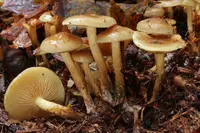
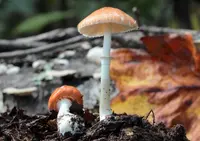
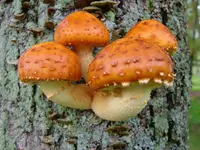
Pholiota spumosa is a saprophytic mushroom, not a leafy houseplant, that grows on dead or decaying wood. It forms clustered caps with yellow‑brown to ochre tones and a scaly or bubbly surface.
This species occurs mainly in temperate forests and parks across North America and Europe, often on buried wood, stumps, or logs. It plays an ecological role in breaking down wood and recycling nutrients.
Cultivation at home is uncommon, and it is not considered a beginner-friendly species. Successful attempts to care for Pholiota spumosa require controlled moisture, cool to mild temperatures, and consistently woody, decomposing substrate rather than standard potting soil.

Care Difficulty
Moderate Care

Light Preference
Partial Shade

Water Requirements
Keep Soil Moist

Temperature Preference
Cool Climate

Hardiness Zone
Unknown

Soil Texture
Loamy, Organic-rich

Soil pH
Slightly acidic (6.5–7.0)

Soil Drainage
Moist but well-drained

Fertilization
Minimal (feed rarely)
Scan your plant to receive care tips personalized for your specific plant
Available on iOS and Android
This saprophytic mushroom prefers cool, moist woodland light rather than direct, open sun.
Moist, not waterlogged, woody or organic substrate is critical for reliable fruiting.
This woodland species favors cool to mild conditions and struggles with temperature extremes.
This wood-rotting fungus does not rely on ambient room humidity but on consistently moist substrate conditions.
This species fruits best on a moist, organic-rich substrate rather than conventional potting soil.
This species is suitable for container cultivation when grown as a specialty mushroom in controlled outdoor or sheltered setups.
This wood-decaying fungus grows on nutrient-rich logs and rarely benefits from additional fertilizer in managed settings.
Pholiota spumosa fruiting bodies do not need horticultural pruning, but limited sanitation can be useful in culture or display settings.
In cultivation, this species is managed by renewing or shifting its woody substrate rather than traditional repotting.
Propagation of this saprobic fungus relies on controlled spread of mycelium rather than standard plant techniques.
In most temperate regions this wood-inhabiting fungus is naturally cold hardy and needs little directed winter care.

Plant Health Check
Not sure what's wrong with your plant? Check your plant's health inside the app.
The cap is covered with small, pale, foam-like scales or granules that stand out clearly against the darker yellow-brown background, giving rise to the species name spumosa, which refers to a foamy appearance.
This saprotrophic fungus is most often found on decaying hardwood logs and stumps, especially beech and other broadleaf trees, and is less frequently recorded on conifers.
The species produces a rusty brown spore print, a key diagnostic feature that helps separate it from visually similar yellowish agarics with pale or white spore prints.
This mushroom is not considered a recommended edible species. Identification is difficult and it resembles some toxic brown-spored mushrooms. For safety, it is best treated as inedible and left unconsumed by people and pets.
Keep your plants happy and healthy with plant identification, disease detection, and easy care guidance.