parrot feather watermilfoil Care (Myriophyllum aquaticum)

Also known as: Parrot's feather, Water-Feather
parrot feather watermilfoil

About parrot feather watermilfoil

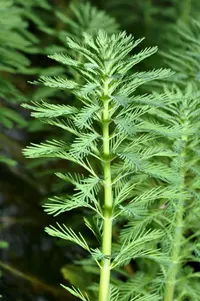
Parrot feather watermilfoil (Myriophyllum aquaticum) is an aquatic perennial often used in ponds and water gardens. It forms dense, feathery foliage that floats or emerges above the water surface. The plant is native to South America but is now naturalized and sometimes invasive in many warm and mild climates. It spreads quickly through stems and fragments, which makes it easy to establish but harder to control in outdoor ponds. It prefers still or slow-moving, nutrient-rich water and strong light. Gardeners who care for parrot feather watermilfoil should plan for regular maintenance to prevent overgrowth and escape into natural waterways.

Main Plant Requirements

Care Difficulty

Moderate Care

Light Preference

Full Sun

Water Requirements

Aquatic

Temperature Preference

Warm Climate

Hardiness Zone

6–11

Soil Texture

Sandy, Loamy, Organic-rich

Soil pH

Slightly acidic (6.5–7.0), Neutral (7.0)

Soil Drainage

Waterlogged tolerant

Fertilization

Minimal (feed rarely)

Get Personalized Care Plan

Scan your plant to receive care tips personalized for your specific plant

Available on iOS and Android

How to Care for the parrot feather watermilfoil

This aquatic species prefers bright conditions but tolerates some shade in ponds and water gardens.

  • Provide 4–6 hours of direct morning sun with light or dappled shade in the hotter afternoon to limit leaf scorch.
  • Allow partial shade (2–4 hours direct light) in warm climates; in cooler regions it benefits from closer to full sun for dense growth.
  • Watch stems: long, pale, weak growth signals insufficient light, while crisping or bronzing tips suggest too much intense midday sun.

This plant is adapted to saturated or submerged conditions and does not tolerate drying out.

  • Grow in shallow water or at the edge of ponds where stems stay submerged or the substrate remains constantly waterlogged, never allowing the surface to dry.
  • Use a silty or loamy substrate that holds moisture but avoids deep layers of anaerobic black sludge, which indicate poor oxygen levels and root stress.
  • Monitor health signs: limp, browning emergent tips suggest the water level dropped or dried mud, while foul odor and mushy stems point to chronic stagnation.

This aquatic plant prefers mild to warm conditions and is sensitive to frost.

  • Aim for water temperatures of 68–82°F (20–28°C) for strongest growth; shoots often slow or stall below 60°F (16°C).
  • Protect from cold snaps; Myriophyllum aquaticum is typically damaged by light frost and can die back if exposed to 32°F (0°C) or lower for long periods.
  • In hot summers above 86°F (30°C), provide some afternoon shade and maintain good water circulation to limit heat stress and oxygen loss.

This aquatic species needs very high ambient humidity to keep emergent foliage healthy.

  • Aim for constant 70–100% humidity around emergent stems, similar to conditions over still water.
  • Dry air leads to browning tips, crisp leaf whorls, and slowed shoot growth in parrot feather watermilfoil.
  • Increase humidity by grouping water tubs, using wide water surfaces, and shielding plants from drying winds.

This plant grows best rooted in saturated, fine-textured substrate under water.

  • Use a heavy loam or clay-loam rich in organic matter so stems anchor firmly and do not float up.
  • Aim for slow-draining, permanently waterlogged substrate; standard fast-draining potting mixes dry and become unstable.
  • A pH around 6.5–7.5 suits Myriophyllum aquaticum, so avoid highly acidic peat-only mixes or very alkaline media.
  • Fill baskets with garden loam plus 10–20% compost, capping with rinsed sand to limit clouding and improve stem support.

This species is suitable for containers such as ponds-in-a-pot or baskets submerged in water features.

  • Choose a wide, shallow aquatic basket so spreading rhizomes and shoots have horizontal room without tipping the container.
  • Weight the container with gravel or rock around the rim to keep buoyant stems from pulling it off balance in shallow water.
  • Select sturdy plastic or mesh pond baskets that retain fine soil but allow water movement, preventing anaerobic, foul-smelling pockets.

This aquatic plant grows well with modest feeding in nutrient-poor water during the warm season.

  • Use a balanced liquid aquatic fertilizer at 1/4–1/2 strength for caring for parrot feather watermilfoil in ponds or containers.
  • Apply every 4–6 weeks during active growth in spring–summer if water tests show low nutrients.
  • Avoid heavy use of compost or soil-based fertilizers that can trigger algae blooms.
  • Stop or greatly reduce feeding in late fall and winter when growth slows.

Myriophyllum aquaticum benefits from periodic pruning to manage spread and maintain healthy growth.

  • Best timing is during active growth in late spring through early fall for quick recovery.
  • Trim back long, leggy, or crowded stems just above leaf whorls to encourage bushier growth.
  • Remove dead, damaged, or discolored stems to improve water circulation and reduce decay.
  • Use clean scissors or aquascaping shears and discard trimmings responsibly to prevent escape into natural waterways.

This species is usually grown in ponds or large containers and only needs transplanting when overcrowded or declining.

  • Plan transplanting for spring or early summer when water is warming and growth is active.
  • Look for slow growth, thinning foliage, or dense mats as signs that clumps need lifting and division.
  • Gently lift rooted sections, rinse off excess substrate, and replant small bundles 10–15 cm apart in aquatic baskets or shallow margins.
  • Keep roots submerged, handle stems carefully, and shade newly moved plants for a few days to reduce transplant shock.

Myriophyllum aquaticum is commonly propagated from stem cuttings taken during the growing season.

  • Take 8–12 cm tips from healthy, non-woody stems in late spring or summer.
  • Remove lower leaves and either float cuttings or anchor them lightly in fine aquatic substrate.
  • Provide bright light, gentle water movement, and stable temperatures around 68–77°F for reliable rooting.
  • Thin new growth if stands become too dense, keeping only the strongest rooted sections.

This plant is frost-sensitive and needs attention in regions with cold winters, especially when grown in containers.

  • In mild climates, established plants can overwinter if roots remain in ice-free water at least 45–50°F.
  • In colder zones, move containers indoors to a cool, bright tank or tub before hard frost.
  • Avoid letting stems freeze solid at the surface; submerge viable shoots slightly deeper for protection.

Care Tips

Contain Spread

Use bottomless nursery pots or mesh baskets sunk into the pond or tub to confine roots and limit aggressive spread, making it easier to thin and remove excess growth before it escapes into natural waterways.

Submerged Stem Renewal

Periodically trim older, woody emergent stems and replant fresh, soft tip cuttings 10–15 cm deep so the planting stays dense, vigorous, and less prone to lodging or collapsing on the water surface.

Winter Management

In climates with mild winters, reduce biomass by cutting back and netting out excess foliage in late fall to prevent thick surface mats that decompose and foul the water over winter.

Water Circulation Control

Position plants away from filters, pumps, and spillways, and use simple barriers such as perforated plastic edging to prevent stems from clogging intakes while still allowing good water circulation.

Regular Pest Inspection

Inspect foliage weekly for aphids and chewing damage, especially on sheltered pond margins, and hose down or manually remove early infestations before resorting to any targeted, aquatic-safe treatment when caring for parrot feather watermilfoil.

Common Pests and Diseases

Aphids

This pest feeds on tender shoot tips and submerged stems, causing distortion, pale growth, and sticky honeydew on emergent foliage.

Solution

Rinse stems thoroughly with a strong stream of water or dip infested sections in clean water to dislodge insects, then remove heavily infested shoots. If needed, use an aquatic-safe insecticidal soap or neem-based product, applying only to emergent foliage and avoiding direct treatment of fish or other aquatic life.

Spider mites

These insects attack emergent foliage in warm, dry conditions, leading to fine webbing, stippled leaves, and bronzing or drying of the feathery shoots above the water line.

Solution

Increase humidity around emergent growth by gentle misting and regularly hose down foliage to break webs and remove mites. For persistent outbreaks, prune and discard the most affected stems and treat remaining emergent growth with an appropriate miticide or insecticidal soap labeled safe for use near water, shielding the pond surface where possible.

Leaf spot

This disease causes small brown to black lesions on emergent leaves and stems, sometimes coalescing into larger dead patches that weaken the plant canopy.

Solution

Trim and discard affected shoot tips and floating debris to reduce inoculum, and avoid overhead watering of emergent foliage in containers. Improve water circulation and light penetration, and if the problem persists, use a pond-safe fungicide labeled for aquatic ornamentals according to instructions.

Algal overgrowth

This condition occurs when filamentous algae smother submerged and emergent shoots, blocking light and reducing photosynthesis, which leads to thinning and dieback of parrot feather watermilfoil stands.

Solution

Manually remove algae from stems by gently lifting and stripping mats, and reduce nutrient input by limiting fish feeding and controlling fertilizer runoff; this is a key part of Myriophyllum aquaticum care instructions. Enhancing water movement and, where appropriate, adding shade or floating plants can also help limit algal growth and protect the plant.

Interesting Facts

Amphibious growth strategy

This species can grow rooted underwater and then extend feathery, emergent shoots above the surface that change structure and physiology to cope with air exposure and higher light.

Clonal spread by fragments

Even small stem pieces with nodes can root and form new colonies, which makes the plant very effective at vegetative spread and difficult to remove once established.

Impact on freshwater habitats

Dense surface mats of this plant reduce light penetration, slow water movement, and can outcompete native aquatic vegetation, altering habitat for fish, invertebrates, and waterfowl.

Botan icon

Did you know?

Myriophyllum aquaticum is considered a noxious or prohibited invasive aquatic plant in multiple regions, and its sale, transport, or intentional release is legally restricted in many US states and other countries due to its documented ecological and economic impacts.

FAQs about parrot feather watermilfoil

This species spreads very aggressively through fragments and creeping stems. In ponds and slow-moving water it can quickly form dense mats that crowd out other plants and obstruct water flow, so strict containment and regular removal are essential.

Grow Healthy Plants with Botan Care

Keep your plants happy and healthy with plant identification, disease detection, and easy care guidance.

Botan plant care app — identify plants on mobile

Explore More Plants