


Frond support setup
Install a low wire ring or discreet stakes around the clump to keep long fronds upright and prevent breakage where they arch over pot edges or pathway borders.

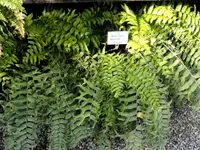
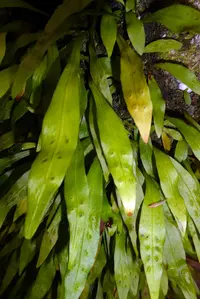
Giant swordfern, Nephrolepis biserrata, is a large evergreen fern valued for its long, arching fronds and dense, fountain-like clumps. It often forms impressive groundcover or lush accent plantings. Native to tropical and subtropical regions, it grows naturally in humid forests, wetlands, and along shaded edges. The plant prefers consistently moist, well-drained soil and protection from harsh, direct sun. Its vigorous growth and sturdy fronds make it relatively forgiving, but it needs regular moisture and humidity to look its best. For many home growers, learning how to care for giant swordfern mainly means balancing shade, moisture, and airflow.

Care Difficulty
Moderate Care

Light Preference
Partial Shade

Water Requirements
Keep Soil Moist

Temperature Preference
Tropical / Frost Sensitive

Hardiness Zone
10–12

Soil Texture
Loamy, Peaty, Organic-rich

Soil pH
Acidic (5.5–6.5), Slightly acidic (6.5–7.0)

Soil Drainage
Moist but well-drained

Fertilization
Light (every 4–6 weeks)
Scan your plant to receive care tips personalized for your specific plant
Available on iOS and Android
Nephrolepis biserrata grows best in bright, indirect light that mimics dappled forest shade.
This fern prefers evenly moist, not soggy, soil with no long dry periods.
This tropical fern thrives in warm, stable temperatures without sudden extremes.
This fern prefers consistently high humidity to keep fronds lush and minimize browning.
Nephrolepis biserrata prefers a loose, moist, and organic-rich substrate that drains freely yet never dries out completely.
This species is well suited to container growing, provided the pot supports its vigorous, spreading root system.
This large fern benefits from modest, consistent feeding during its active growing season.
Nephrolepis biserrata responds well to light, periodic pruning that maintains a clean, arching shape.
This fern forms dense root systems that benefit from thoughtful repotting or transplanting to maintain vigor.
This species is most commonly propagated by division and by using its creeping stolons rather than spores.
This tropical fern is frost-sensitive and needs protection anywhere winter temperatures drop near freezing.

Plant Health Check
Not sure what's wrong with your plant? Check your plant's health inside the app.
This species often grows as an epiphyte on tree trunks or rock faces in the wild, anchoring with fibrous roots rather than relying on soil. Its long, arching fronds can form dense hanging curtains in humid forests.
The leaflets have finely serrated, double-toothed margins, which is a key diagnostic feature separating it from the closely related and more common Nephrolepis exaltata.
The sori (spore clusters) form two rows along each side of the midrib on the underside of the pinnae, a pattern botanists use to confirm identification when describing Nephrolepis biserrata care in scientific and horticultural contexts.

In ideal tropical conditions near its native habitats, this fern can develop individual fronds exceeding 2–3 m in length, making it one of the largest species within the Nephrolepis genus.
Growth is moderate to fast in warm, humid conditions. New fronds appear throughout the growing season, and clumps can reach near-mature size in 2–3 years, especially when Nephrolepis biserrata care focuses on steady moisture and nutrients.
Keep your plants happy and healthy with plant identification, disease detection, and easy care guidance.

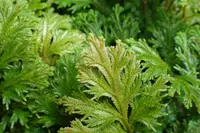
variegated spikemoss
Selaginella martensii
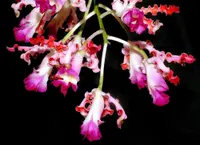
the trumpet player's Schomburgkia
Myrmecophila tibicinis
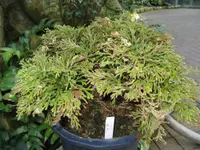
Selaginella tamariscina
Selaginella tamariscina
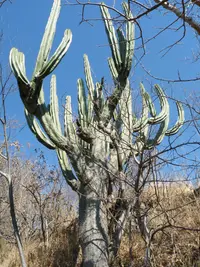
Pitaya de Queretaro
Stenocereus queretaroensis
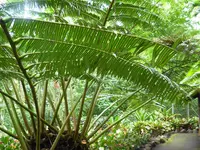
Oriental vessel fern
Angiopteris evecta
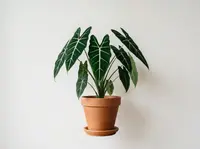
Elephant's Ear
Alocasia micholitziana 'Frydek'
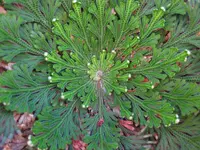
Rose of Jericho
Selaginella lepidophylla
lance fern
Loxogramme dictyopteris