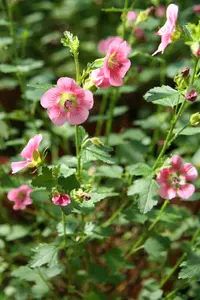
South American tobacco Care (Nicotiana sylvestris)

Also known as: Woodland Tobacco, Argentine Tobacco, wood tobacco
South American tobacco

About South American tobacco

Nicotiana sylvestris, often called South American tobacco or flowering tobacco, is a tall, fast-growing ornamental from the nightshade family. It is usually grown as an annual in temperate gardens.

The plant forms a rosette of large, soft green leaves and sends up tall stalks with dangling, tubular white flowers that release a strong evening fragrance. It naturally occurs in parts of South America, especially in montane and subtropical regions.

Its rapid growth, generous flowering, and tolerance of regular garden conditions make it relatively easy to establish, though it can be short-lived and reseeds readily. To care for South American tobacco, provide a sunny to lightly shaded spot, moderately moist soil, and protection from strong, drying winds.

Main Plant Requirements

Care Difficulty

Moderate Care

Light Preference

Partial Sun

Water Requirements

Regular Water

Temperature Preference

Tropical / Frost Sensitive

Hardiness Zone

10–11

Soil Texture

Loamy, Sandy, Organic-rich

Soil pH

Acidic (5.5–6.5), Slightly acidic (6.5–7.0)

Soil Drainage

Moist but well-drained

Fertilization

Moderate (every 2–4 weeks)

Get Personalized Care Plan

Scan your plant to receive care tips personalized for your specific plant

Available on iOS and Android

How to Care for the South American tobacco

Nicotiana sylvestris prefers bright outdoor conditions with some protection from harsh midday sun.

  • Provide 4–6 hours of morning sun with light afternoon shade; dappled or filtered light suits most garden sites.
  • Allow partial shade, especially in hot climates, as full afternoon sun can scorch leaves and shorten South American tobacco flowering time.
  • In cooler seasons or coastal climates, it tolerates longer sun exposure; in midsummer, increase shade to reduce leaf wilt and sunburn risk.

This species prefers consistently moist but not waterlogged soil for healthy growth.

  • Water when the top 2–3 cm of soil feels dry, aiming for even moisture during active growth without leaving the soil soggy.
  • Use well‑drained soil; yellowing, limp leaves and a sour smell suggest overwatering, while drooping, dry leaves and brittle stems indicate underwatering.
  • In spring and fall, reduce frequency slightly as evaporation slows, but do not let in‑ground Nicotiana sylvestris dry out completely during flowering.

This plant thrives in mild, frost‑free conditions typical of many summer annuals.

  • Aim for 65–80°F (18–27°C) for best growth, flowering, and leaf development during the main growing season.
  • Protect from frost; growth slows below about 50°F (10°C), and freezing temperatures can kill plants outright.
  • In heat waves above 90°F (32°C), provide extra shade and soil moisture, as prolonged extreme heat can cause flower drop and leaf scorch.

This plant prefers moderately moist air but adapts to typical household humidity if watered well.

  • Target 40–60% relative humidity for South American tobacco to reduce leaf edge browning in warm conditions.
  • Tolerates short spells of drier air, but prolonged humidity below 35% may cause curled, papery leaves and slower growth.
  • Increase humidity outdoors with dense companion planting or a nearby water feature; indoors, use a pebble tray rather than misting leaves.

Nicotiana sylvestris grows best in moist, airy, organic-rich soil that drains freely.

  • Use a loamy structure with plenty of organic matter; aim for roughly 50% compost or leaf mold, 30–40% garden loam, and 10–20% perlite or coarse sand.
  • Ensure rapid drainage; water should pass through in seconds and the surface should not stay waterlogged longer than a few hours after heavy watering or rain.
  • Keep soil slightly acidic to neutral, around pH 6.0–7.0, which supports nutrient uptake and reduces risk of micronutrient deficiencies.
  • Avoid heavy clay that compacts, standing water, or very thin sandy mixes; where drainage is poor, raise the planting area and work in coarse grit for better aeration.

This species is suitable for container growing when given enough root volume and stable support.

  • Choose a heavy, wide-based pot to counter the tall, top-heavy flowering stems and reduce tipping in wind or on balconies.
  • Select a container at least 30 cm deep so the fast-growing roots can spread downward without circling tightly near the base.
  • Use a slightly porous material such as unglazed terracotta if overwatering is a risk, as it allows gradual moisture loss and limits root rot pressure.

Nicotiana sylvestris is a fast-growing annual that benefits from moderate feeding in nutrient-poor soils.

  • Use a balanced liquid fertilizer (for example 10-10-10) at half strength every 2–3 weeks during the main growing season.
  • Alternatively, mix slow-release granules into the top 5–8 cm of soil at planting time for steady nutrition.
  • In rich garden soil, limit feeding to a light compost top-dress once in mid-season for South American tobacco.
  • Stop or greatly reduce fertilization in late fall and winter, especially for container plants overwintered indoors.

Nicotiana sylvestris responds well to light, timely pruning that supports flowering and a tidy shape.

  • In late spring to mid-summer, pinch or cut back spent flower spikes to encourage new blooms and prevent excessive self-seeding.
  • Remove dead, yellowing, or damaged leaves at the base using clean scissors or pruning snips to improve air flow.
  • Thin crowded stems by cutting them at soil level, which reduces disease risk and helps remaining stems grow stronger.
  • At season’s end, cut plants to ground level and dispose of debris to limit overwintering pests and diseases.

This tall annual is usually grown in beds, so focus on careful transplanting rather than long-term repotting.

  • Transplant seedlings outdoors in spring after frost, when plants have 2–3 true leaves and soil has warmed.
  • Shift container-grown plants only if roots circle the pot, growth stalls, or watering frequency becomes very high.
  • Move into a container 2–5 cm wider with fresh, well-drained mix, handling the root ball gently to limit stress.
  • Water thoroughly after transplanting, shade for 2–3 days if sun is intense, and avoid heavy feeding until new growth appears.

This species is most commonly propagated from seed and often self-sows in suitable conditions.

  • Sow seeds indoors in late winter to early spring, 6–8 weeks before the last frost date.
  • Surface-sow on moist, fine seed mix; do not cover, as Nicotiana sylvestris seeds need light for germination.
  • Maintain 65–75°F and high humidity; expect germination in roughly 10–20 days.
  • Harden off seedlings gradually outdoors, then transplant to their final position once frost risk has passed.

In most climates Nicotiana sylvestris is grown as a frost-tender annual and does not need complex winter care.

  • Plants are damaged by frost, so allow them to complete the season and then remove and compost or discard spent growth.
  • In mild regions, leaving a light mulch over the root area may help any self-sown seedlings appear the following spring.
  • Move any container plants indoors before nights drop consistently below 40°F, and keep them cool, bright, and just moist.

Care Tips

Pinch Young Plants

Pinch out the main growing tip when plants reach 15–20 cm tall to encourage bushier growth, more flowering stems, and better stability in wind.


Stake Early

Install slender stakes and loosely tie stems while they are still under 30 cm tall so the tall, top-heavy flower spikes stay upright and do not snap in summer storms.

Deadhead Strategically

Remove spent flower clusters regularly but leave a few healthy seed pods to mature if you want to collect seed, as this prolongs bloom while still allowing controlled self-sowing.

Rotate Planting Sites

Shift planting areas each year within the garden to reduce buildup of soil-borne pests and diseases that commonly affect tobacco relatives, such as root rots and wilts.

Monitor Nicotine Sensitivity

Wear gloves when handling sap and avoid planting near edible crops where children might graze, since all parts contain nicotine and this should be considered when caring for South American tobacco.

Common Pests and Diseases

Tobacco hornworm

This pest is a large green caterpillar that rapidly defoliates plants, often leaving only midribs and stems. Symptoms include large chewed holes in leaves and dark pellet-like droppings on and below the plant.

Solution

Hand-pick caterpillars daily and drop them into soapy water, especially in the evening when they are most active. Encourage natural predators, and if damage is heavy, use a biological control such as Bacillus thuringiensis (Bt) sprayed on foliage according to label directions.

Aphids

These insects cluster on tender shoot tips and undersides of leaves, sucking sap and causing curling, distortion, and sticky honeydew that can lead to sooty mold. Symptoms include stunted new growth and the presence of ants farming the aphids.

Solution

Rinse colonies off with a strong stream of water and remove heavily infested shoot tips. For persistent infestations, use insecticidal soap or a light horticultural oil, making sure to coat the undersides of leaves and repeating as needed.

Tobacco mosaic virus

This disease causes mottled light and dark green patches, leaf distortion, and overall reduced vigor. Symptoms include narrow, puckered leaves and stunted growth, especially in warm conditions.

Solution

Remove and destroy infected plants promptly, including fallen leaves, to reduce virus sources. Disinfect tools, avoid handling plants after smoking or touching tobacco products, and grow Nicotiana sylvestris from clean, disease-free seed to prevent introduction of the virus.

Downy mildew

This disease produces yellow to pale patches on upper leaf surfaces and a grayish-white fuzzy growth on the undersides, especially in cool, humid weather. Symptoms include leaf yellowing, wilting, and premature leaf drop.

Solution

Improve air circulation, avoid overhead watering, and water early in the day so foliage dries quickly. Remove affected leaves and, in persistent cases, use an appropriate copper or phosphonate fungicide, following label instructions and focusing on preventive coverage.

Flea beetles

These small jumping beetles chew many tiny round holes in leaves, giving them a shot-hole or lace-like appearance, particularly on young plants. Symptoms include slowed growth and, in severe cases, significant loss of leaf area on seedlings and transplants.

Solution

Use floating row covers to protect young plants during peak beetle activity and keep the soil surface free of plant debris. For high populations, apply a targeted low-impact insect control such as spinosad to foliage and nearby soil, and rotate planting locations each year to reduce overwintering beetles.

Interesting Facts

Night-scented pollination

This species releases a very strong, sweet fragrance only at night, which specifically attracts hawkmoths that can hover and reach its deep tubular flowers.

Ancestral tobacco lineage

Genetic studies indicate that this wild species belongs to a basal lineage within the tobacco genus, making it useful in research on the evolution of cultivated tobaccos.

Research model plant

The plant has been used in plant physiology and pathology research, including studies on photosynthesis and disease resistance, because of its large leaves and relatively fast growth.

Botan icon

Did you know?

Modern molecular evidence shows that genomes from wild species closely related to this plant contributed to the hybrid origin of commercial tobacco, so it helps scientists reconstruct the complex ancestry of Nicotiana tabacum.

FAQs about South American tobacco

Poor flowering usually results from insufficient light, excess nitrogen fertilizer, or heat stress. Ensure at least moderate sun, use balanced fertilizer, and deadhead spent blooms so the plant directs energy into forming new flower spikes.

Grow Healthy Plants with Botan Care

Keep your plants happy and healthy with plant identification, disease detection, and easy care guidance.

Botan plant care app — identify plants on mobile

Explore More Plants