Secure Rhizomes
Anchor rhizomes into heavy aquatic soil with flat stones or aquatic staples so they cannot float up when bubbles form or fish disturb the substrate.

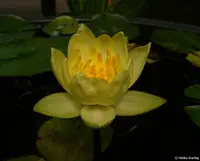
Yellow waterlily (Nymphaea mexicana) is an aquatic perennial that grows rooted in shallow water, with round floating leaves and bright yellow, star-like flowers. It forms spreading colonies through rhizomes, often covering calm ponds, lakes, and slow-moving waterways.
This species is native to the southern United States and parts of Mexico, where it thrives in warm, sunny, freshwater habitats. It is considered moderately easy to grow if given still water, full sun, and nutrient-rich, mucky soil.
Gardeners who care for yellow waterlily should be aware that it can spread aggressively in suitable climates, so container planting or defined water features help keep it under control.

Care Difficulty
Moderate Care

Light Preference
Full Sun

Water Requirements
Aquatic

Temperature Preference
Tropical / Frost Sensitive

Hardiness Zone
8–11

Soil Texture
Silty, Organic-rich

Soil pH
Slightly acidic (6.5–7.0), Neutral (7.0)

Soil Drainage
Waterlogged tolerant

Fertilization
Moderate (every 2–4 weeks)
Scan your plant to receive care tips personalized for your specific plant
Available on iOS and Android
This tropical pond plant needs abundant direct light to flower and grow well.
This species is an aquatic plant that depends on stable, clean, still or slow-moving water rather than soil moisture cycles.
This warm-water lily prefers mild to hot conditions and suffers in cold or freezing water.
This aquatic species relies on surrounding water more than air humidity, so ambient levels matter little indoors or outdoors.
This species grows best in dense, mineral, underwater soils rather than loose garden mixes.
This species is well suited to container culture in ponds or large water features.
Nymphaea mexicana benefits from light, targeted feeding during active growth to support blooms without fouling the water.
Pruning Nymphaea mexicana maintains water quality, encourages new growth, and supports steady flowering.
Container-grown Nymphaea mexicana or plants in managed ponds need periodic transplanting to prevent overcrowding and decline.
Nymphaea mexicana is most commonly propagated by division of the rhizome in controlled pond or container setups.
Cold sensitivity means Nymphaea mexicana in temperate climates needs thoughtful winter management, especially in shallow ponds or containers.

Plant Health Check
Not sure what's wrong with your plant? Check your plant's health inside the app.
This species spreads across still or slow-moving water by long, floating stolons that produce new plants at intervals, allowing it to form large, interconnected colonies on lakes and ponds.
Its bright yellow, star-like flowers open during the day and close at night, timing their bloom with diurnal pollinators that are active in full light.
Although native to parts of the southern United States and Mexico, it has become invasive when introduced to regions such as Australia and some other warm-climate areas, where dense mats can outcompete local aquatic vegetation.

In some regions, this species has been intentionally introduced into artificial and modified waterways, where it has rapidly colonized irrigation channels and rice fields, forcing ongoing management to maintain water flow and protect agricultural infrastructure.
This species spreads quickly by rhizomes and seed, forming dense colonies if not managed. In small ponds or natural waterways, it can become invasive. Use contained baskets and remove extra rhizomes and seed pods regularly.
Keep your plants happy and healthy with plant identification, disease detection, and easy care guidance.