




sensitive fern Identification (Onoclea sensibilis)

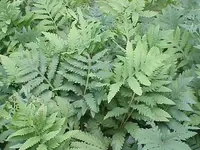
Recognize sensitive fern by its broad, once-pinnate fronds, with deeply lobed pinnae that create a coarse, triangular outline 1 to 3 feet tall (30 to 90 cm).

It grows in upright clumps from creeping rhizomes, and separate fertile fronds stand stiffly above or among the green fronds with beadlike, rolled segments.

Onoclea sensibilis Identification

Identify Your Plant with Botan

Take or upload a photo to confirm your plant ID with Botan.

Clear images work best. Avoid photos taken too close or too far away

  • 1 free identification
  • No sign-up
  • 30,000+ plants in database

Use these quick checks to confirm Onoclea sensibilis by sight.

  • Fronds rise in loose clumps from the ground, with no woody stem or trunk.
  • Sterile fronds are broadly triangular and usually 1 to 3 feet (30 to 90 cm) long.
  • Leaf divisions are deeply lobed but not cut into many tiny leaflets, giving a coarse outline.
  • The lowest pinnae, or side divisions, are often the largest and point outward.
  • Fertile fronds stand separate from the leafy fronds and carry beadlike segments along the upper stem.

Check both the broad leafy fronds and the narrow fertile fronds on the same clump.

Sensitive fern shows clear visual differences between juvenile, mature, and fertile stages.

  • Juvenile plant: Young fronds are smaller and simpler, with shallow lobing and a more upright outline before the broad, strongly separated pinnae become obvious.
  • Mature plant: Sterile fronds form broad, triangular to deeply pinnatifid blades on separate stalks, often reaching 1-3 feet (30-90 cm) tall with a colony-forming spread.
  • Fruiting stage: Fertile fronds differ sharply from sterile ones, standing stiffer and narrower, with beadlike rolled segments that hide the sporangia instead of flat green blade tissue.

In spring, sensitive fern unfurls broad, soft green sterile fronds from creeping rhizomes. These fresh fronds look bright and tender, then form loose colonies through early summer. By late summer into fall, separate fertile fronds stand more upright with beadlike pinnae that turn brown and persist after the green sterile fronds collapse with frost. Those stiff brown fertile stalks can remain visible into winter.

A few wet-site ferns can be mistaken for sensitive fern.

ostrich fern(Matteuccia struthiopteris)

Both have broad sterile fronds in clumps. Ostrich fern fronds are more finely divided, with many narrow pinnae, not broad lobes. Its fertile fronds are stiff, plume-like spikes that persist through winter.

cinnamon fern(Osmundastrum cinnamomeum)

Young sterile fronds can seem similarly broad and upright. Cinnamon fern has clearly separate leaflets along a central stalk, while Onoclea sensibilis has deep lobes on one blade. Fertile fronds form distinct cinnamon-brown spikes in the center.

Native to much of eastern and central North America, Onoclea sensibilis occurs from Newfoundland west to Manitoba and south through the eastern United States. Range helps narrow identification when a similar fern is found outside this region. It is most often seen in wetlands and moist woods, including swamps, marsh edges, streambanks, ditches, and floodplain forests. Finding it in consistently damp to wet ground is a useful field clue.

Not Sure About the ID?

Use Botan to identify or confirm the plant from a photo, helping avoid mix-ups with similar-looking species.

FAQ

No. This fern does not make fruits or seeds. For sensitive fern identification, check the separate fertile fronds with bead-like segments and the broad, deeply lobed sterile fronds instead.

More Plant Identification Guides

Know Your Plant Better

Identify it from a photo with Botan, then get plant details, care information, and common problems for that species.

Botan app identifying a plant from a photo
20 Most Popular Fruits Around the World

7 min read · 22 Jul 2026

20 Most Popular Fruits Around the World

Curious which fruits the world actually eats the most? Here's the top-20 by production volume, an overview of what people choose in each region, and a few figures that defy common assumptions.

Plant Recommendations
20 Most Popular Fruits Around the World
20 Funny Plant Names That Make You Laugh

8 min read · 16 Oct 2026

20 Funny Plant Names That Make You Laugh

Some plants carry names that sound like jokes. This guide explains the origins of 20 funny plant names. You will also see which of these plants you can grow at home.

Plant Recommendations
20 Funny Plant Names That Make You Laugh
Top 15 Fast-Growing Trees For Your Garden

13 min read · 28 Jul 2026

Top 15 Fast-Growing Trees For Your Garden

Learn which of the 15 fastest-growing trees will suit your area. We’ll share detailed information on each: growth rate, mature spread, key tree demands, and main vulnerabilities. Read on and make the best choice possible.

Plant Recommendations
Top 15 Fast-Growing Trees For Your Garden