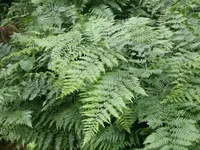

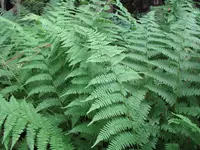
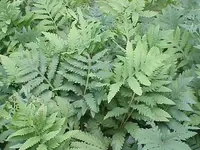

bracken fern Identification (Pteridium aquilinum)

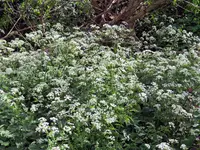
Recognize bracken fern by its large, broadly triangular fronds, often 2 to 6 feet tall (0.6 to 1.8 m), divided two to three times into many small leaflets.

Each frond rises singly on a stiff stalk from the ground rather than from a crown, creating loose colonies with noticeable spacing between fronds.

Pteridium aquilinum Identification

Check Your Plant ID

Use a clear photo to confirm what plant you have.

Clear images work best. Avoid photos taken too close or too far away

  • 1 free identification
  • No sign-up
  • 30,000+ plants in database

Check the frond shape and the way each leaf rises from the ground.

  • Large triangular fronds are usually 2-3 times divided, giving a lacy but broad outline.
  • Each frond stands alone on a stiff, upright stalk rather than forming a tight central crown.
  • Plants often reach 2-6 feet (0.6-1.8 m) tall, with fronds spreading wide from a single stalk.
  • Look for Pteridium aquilinum leaf edges rolled under, hiding a thin line of spore cases along the margins.

Rolled-under leaflet edges are one of the most useful visible checks.

Pteridium aquilinum shows useful visual differences from first frond emergence to full-sized colonies.

  • Juvenile plant: Early fronds are few and simple-looking, with narrower triangular blades and less divided segments; stalks rise singly from the ground rather than forming a broad stand.
  • Young plant: As it establishes, fronds become broader and clearly three-parted, with side branches spreading outward; plants often stand 1-3 feet (30-90 cm) tall.
  • Mature plant: Mature growth forms large, airy clumps or colonies with tall, stiff stalks and fully divided triangular fronds, often reaching 3-6 feet (0.9-1.8 m).

In spring, bracken fern sends up new fronds as tightly coiled fiddleheads. These unfurl into large, triangular fronds by late spring to early summer, creating the plant’s most recognizable look. By late fall, fronds turn yellow to brown and die back. Winter usually leaves the plant absent above ground, with no woody stems or evergreen foliage to see.

Several ferns can be mistaken for bracken fern at a glance.

eastern hay-scented fern(Dennstaedtia punctilobula)

Both have airy, triangular fronds. Hay-scented fern is usually lower, often 1-3 feet (30-90 cm), and forms dense colonies; its fronds look finer and more delicate.

western brackenfern(Pteridium pubescens)

It shares the same broad, divided frond shape. A practical difference is range and texture: Pteridium pubescens is a western species and is typically hairier beneath the frond.

lady fern(Athyrium filix-femina)

Both can have large, lacy green fronds. Lady fern grows in tight clumps from one crown, while bracken sends up single fronds spaced along creeping rhizomes.

Pteridium aquilinum has a very broad native range across temperate and subtropical parts of the Northern Hemisphere, so geography alone rarely confirms it. Habitat is more useful. It commonly forms large stands in open woods, forest edges, clearings, heaths, and disturbed ground. Finding extensive colonies in sunny to lightly shaded sites helps narrow identification.

  • Toxic if eaten: Bracken fern contains toxic compounds in its fronds and rhizomes. Ingestion is a concern for humans and pets.
  • Cancer risk with repeated exposure: This species is associated with carcinogenic compounds, especially when plant parts are eaten repeatedly. The concern relates to ingestion, not routine skin contact.

Scan. Check. Confirm.

Use Botan to identify or verify a plant from a photo, helping avoid mix-ups before labeling, logging, or comparing similar species.

FAQ

Look for large, broadly triangular fronds that rise singly from the ground rather than from a central crown. Each frond is divided two to three times, giving a lacy but coarse look useful for identifying bracken fern.

More Plant Identification Guides

Identify Your Plant and Learn More

Use Botan to identify a plant from a photo, then see species-specific care information, safety notes, and common problems.

Botan app identifying a plant from a photo
12 Best Cold-Hardy Vegetables for Cold Weather

7 min read · 13 Oct 2026

12 Best Cold-Hardy Vegetables for Cold Weather

Cold-hardy vegetables can keep a garden productive through chilly fall, winter, and early spring weather. This guide covers 12 reliable crops, their frost tolerance, and practical growing tips for better cold-season harvests.

Plant Recommendations
12 Best Cold-Hardy Vegetables for Cold Weather
How to Clean Plant Leaves: A Simple Care Guide

6 min read · 4 Aug 2026

How to Clean Plant Leaves: A Simple Care Guide

Dusty leaves look dull and don't absorb light well. Below, you'll find simple ways to clean them, which tools are truly effective, how often you should do it, and what causes damage.

Beginner Guides
How to Clean Plant Leaves: A Simple Care Guide
Best Time to Plant Grass Seed: When to Seed Your Lawn

6 min read · 19 Nov 2026

Best Time to Plant Grass Seed: When to Seed Your Lawn

The best time to plant grass seed depends on your climate and grass type. Cool-season lawns establish best in late summer or early fall, while warm-season grasses perform best once soil warms in late spring or early summer.

Plant Care
Best Time to Plant Grass Seed: When to Seed Your Lawn