



Cow Parsley Identification (Anthriscus sylvestris)

To recognize Cow Parsley, look for a tall, upright plant with hollow, grooved stems and finely divided, fernlike leaves that are arranged alternately along the stem.

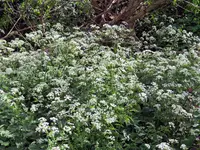
Its small white flowers are grouped in broad, flat-topped umbrella-shaped clusters called umbels, often held above the foliage on branching stalks.

Anthriscus sylvestris Identification

Identify Your Plant with Botan

Upload a clear image to check whether your plant ID is correct.

Clear images work best. Avoid photos taken too close or too far away

Use a few plain structural features to check this plant by eye.

  • An upright, branching plant, often 3-5 feet (0.9-1.5 m) tall.
  • Leaves are finely divided, fern-like, and broadly triangular in outline, often 6-12 inches (15-30 cm) long.
  • Small white flowers are grouped in flat to slightly rounded umbrella-like clusters.
  • Each flower has 5 petals, with the outer petals often a bit larger than the inner ones.

Check several stems and leaf clusters, since size and fullness can vary.

Anthriscus sylvestris shows clear visual shifts from low leaf rosettes to tall flowering stems.

  • Young plant: Early growth forms a basal rosette close to the ground, with finely divided, triangular leaves on stalks and no obvious upright stem.
  • Mature plant: Before blooming, the plant sends up hollow, ridged stems and a looser outline, often reaching 3-5 feet (0.9-1.5 m) with leaves spaced along stems.
  • Flowering stage: Upper stems branch widely and carry flat-topped clusters of small white flowers, changing the plant from leafy and narrow to airy and umbrella-like.
  • Fruiting stage: After flowering, the white clusters contract and turn seed-bearing, with slender elongated fruits replacing petals and giving the heads a drier, sharper texture.

In spring, Cow Parsley quickly produces fresh, finely divided green leaves, then by late spring to early summer it becomes much easier to spot when broad, flat clusters of small white flowers rise above the foliage. After flowering, the white heads give way to narrow, elongate fruits that dry and turn brown. By late summer, the plant often looks spent, with drying stems and fading foliage.

Several white-flowered members of the carrot family can be mistaken for Cow Parsley.

wild chervil(Anthriscus caucalis)

Both have finely divided leaves and airy white umbels. Wild chervil is usually shorter and its fruits are bristly, while Anthriscus sylvestris has longer, smooth, beak-like fruits.

sweet cicely(Myrrhis odorata)

It shares ferny foliage and white umbels. Sweet cicely has larger, softer-looking leaflets and very long, ribbed seed pods; its foliage often looks brighter green and more strongly divided.

poison hemlock(Conium maculatum)

The overall shape and white umbels can confuse beginners. Poison hemlock has smooth stems with obvious purple blotches, while Anthriscus sylvestris typically lacks those bold stem marks.

Anthriscus sylvestris is native across much of Europe and temperate Asia. In North America, it is introduced rather than native. It is most often found in meadows, hedgerows, woodland edges, roadsides, and streambanks. Finding it in moist, disturbed ground in these temperate settings can help separate it from similar white-flowered carrot-family plants tied to drier fields or marshes.

  • Dangerous look-alikes: Anthriscus sylvestris is in the carrot family and can be confused with highly poisonous hemlocks, especially poison hemlock (Conium maculatum). This matters mainly for human ingestion.
  • Key visible difference: Poison hemlock typically has smooth, hollow stems with purple blotches, while Anthriscus sylvestris is usually hairy and lacks those purple stem markings. Do not judge safety from flowers alone.

Scan. Check. Confirm.

Use Botan to compare a photo and help verify the plant, so you can move forward with more confidence.

FAQ

Yes. After flowering, it forms narrow, elongated fruits in small umbels. Their slim, beakless shape helps with Cow Parsley identification, especially once white flowers have faded and leaves alone are less distinctive.

More Plant Identification Guides

Identify First. Learn What Comes Next.

Use Botan to identify a plant from a photo, then review plant details, care information, and common problems.

Botan app identifying a plant from a photo
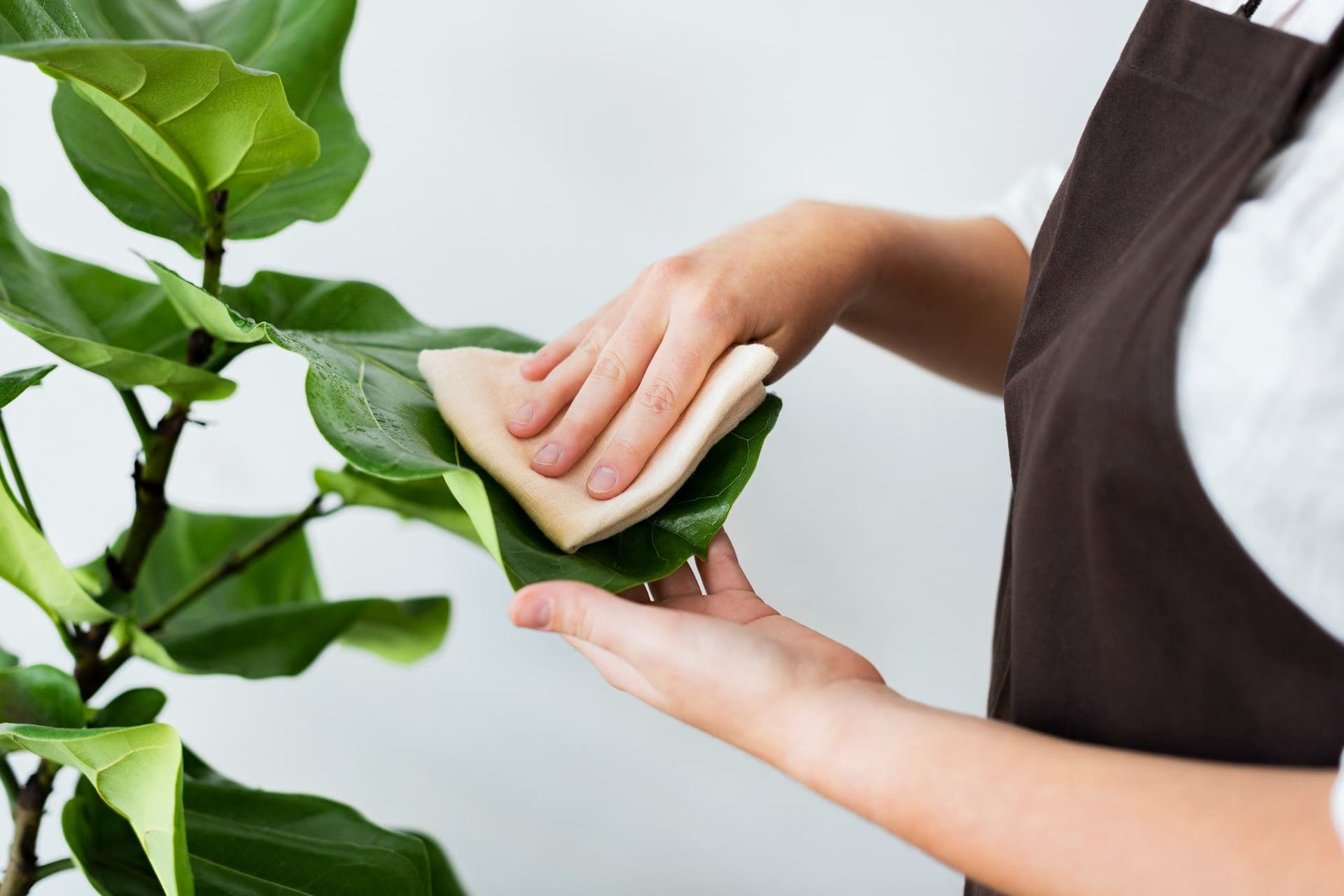
How to Clean Plant Leaves: A Simple Care Guide

6 min read · 4 Aug 2026

How to Clean Plant Leaves: A Simple Care Guide

Dusty leaves look dull and don't absorb light well. Below, you'll find simple ways to clean them, which tools are truly effective, how often you should do it, and what causes damage.

Beginner Guides
How to Clean Plant Leaves: A Simple Care Guide
How Often to Water Fruit Trees

7 min read · 11 Aug 2026

How Often to Water Fruit Trees

Irrigation needs change as roots establish and weather shifts. This guide gives practical starting intervals, explains how soil and tree type change them, and shows how to recognize both excess moisture and drought stress.

Plant Care
How Often to Water Fruit Trees
Top 15 Fast-Growing Trees For Your Garden

13 min read · 28 Jul 2026

Top 15 Fast-Growing Trees For Your Garden

Learn which of the 15 fastest-growing trees will suit your area. We’ll share detailed information on each: growth rate, mature spread, key tree demands, and main vulnerabilities. Read on and make the best choice possible.

Plant Recommendations
Top 15 Fast-Growing Trees For Your Garden