Opuntia auberi Care

Opuntia auberi

About Opuntia auberi

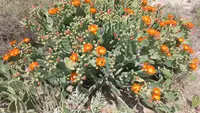
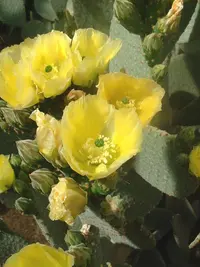
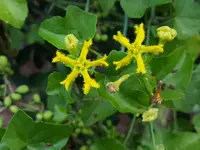
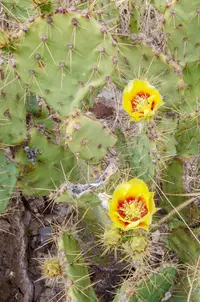
Opuntia auberi is a shrubby cactus species with flat, oval pads and short spines, forming low, branching clumps over time. It often shows small, colorful fruits after flowering.

This species is native to arid and semi-arid regions of Mexico, where it grows in rocky, well-drained soils and full sun. Its drought tolerance and slow, steady growth habit generally make it a low-maintenance choice for experienced beginners.

Understanding how to care for Opuntia auberi mainly involves providing strong light, minimal moisture, and gritty, free-draining soil to prevent root rot and maintain firm, healthy pads.

Main Plant Requirements

Care Difficulty

Easy Care

Light Preference

Full Sun

Water Requirements

Low Water

Temperature Preference

Warm Climate

Hardiness Zone

9–11

Soil Texture

Sandy, Loamy, Rocky

Soil pH

Slightly acidic (6.5–7.0), Neutral (7.0)

Soil Drainage

Well-drained

Fertilization

Minimal (feed rarely)

Get Personalized Care Plan

Scan your plant to receive care tips personalized for your specific plant

Available on iOS and Android

How to Care for the Opuntia auberi

This cactus thrives in strong sun but benefits from gradual acclimation outdoors.

  • Provide 6–10 hours of direct sun daily, ideally with morning and midday sun; in very hot inland areas, give light afternoon shade to prevent pad scorching.
  • Young or recently moved plants need 7–10 days of stepwise exposure, starting with bright filtered light, to avoid sunburn patches.
  • In winter, accept lower sun angles and shorter days but keep the plant in the brightest, most open spot to maintain compact, sturdy growth for Opuntia auberi.

This desert cactus prefers infrequent, deep watering in very fast-draining soil.

  • Water only when the top 5–8 cm of soil are completely dry; in hot active growth this may be every 10–21 days, but always check the soil instead of a fixed schedule.
  • Use gritty, fast-draining soil and ensure excess water runs out quickly; prune back watering if pads look swollen, soft, or yellowish, which suggests overwatering.
  • In winter or cool, cloudy periods, reduce watering sharply to brief, occasional soakings; wrinkling or slight pad shriveling indicates it is time to water again for Opuntia auberi.

This cactus is adapted to warmth and sun but has limited frost tolerance.

  • Aim for 70–90°F (21–32°C) during active growth; short spikes to 95–100°F (35–38°C) are tolerated if soil drains well and airflow is good.
  • Protect from hard freezes; most plants are only safe to about 25–28°F (-4 to -2°C) if dry, so cover or move them before extended cold or wet frost.
  • In cooler months, a drier, cooler rest around 45–60°F (7–16°C) helps avoid rot, but sustained temperatures below 25°F (-4°C) can damage pads and roots.

This cactus handles typical indoor humidity well and rarely needs special adjustments.

  • Target 20–50% humidity, similar to most heated or air‑conditioned homes, without extra humidification.
  • Dry indoor air is generally tolerated, but prolonged humidity above 60% increases rot risk at the pads and roots.
  • Early humidity stress shows as soft, pale, or moldy pads; increase air movement and keep the plant away from steamy kitchens or bathrooms.

This species needs very fast-draining, mineral soil that prevents water from lingering around the roots.

  • Use a sandy, gritty mix made from 50–70% mineral components such as pumice, coarse sand, or small gravel, plus 30–50% cactus potting mix.
  • Aim for slightly acidic to neutral pH around 6.0–7.5, which supports nutrient availability without stressing roots.
  • Improve aeration by adding extra pumice or perlite so water runs through in seconds and the mix dries within a few days.
  • Avoid heavy peat, clay, or dense compost that compacts, holds water, and promotes root and pad rot in Opuntia auberi.

This prickly pear adapts well to container growing when the pot is chosen to manage moisture and stability.

  • Select a wide, shallow pot that matches the spreading root system and lowers the risk of tipping as pads extend outward.
  • Choose an unglazed terracotta container to allow moisture to evaporate faster from the sides and limit root rot risk.
  • Raise the pot slightly on feet or bricks so drainage holes stay clear and excess water leaves quickly after every watering.

This cactus needs modest feeding to support steady pad growth in containers.

  • Use a low-nitrogen balanced cactus fertilizer (diluted to 25–50% strength) or a light top-dressing of compost in spring.
  • Feed Opuntia auberi every 4–6 weeks during active growth in late spring and summer only.
  • Do not fertilize in fall and winter, when growth slows and roots rest.
  • Always water lightly before liquid feeding to avoid root burn in the dry substrate.

Pruning is mainly used to control size and remove damaged tissue on this cactus.

  • Best time to prune Opuntia auberi is late spring to early summer, once frost risk has passed.
  • Remove dead, diseased, storm-damaged, or badly scarred pads using clean, sharp pruners or a serrated knife.
  • Thin out crowded or crossing pads at the base to improve light penetration, airflow, and overall shape.
  • Allow cut surfaces to dry and callus in a bright, airy place to reduce infection risk.

Container plants and young outdoor specimens benefit from occasional repotting or transplanting.

  • Plan to repot every 2–4 years in late spring, when roots circle the pot or growth slows noticeably.
  • Choose a shallow, heavy container with large drainage holes and a gritty cactus mix to limit rot risk.
  • Lift the plant with folded newspaper or tongs to avoid spines, disturbing roots as little as possible.
  • After repotting, keep soil almost dry for 7–10 days so any root injuries can callus before watering.

This species is most commonly propagated from stem pads rather than by seed.

  • Take healthy pads from Opuntia auberi in late spring or early summer using sterilized, sharp tools.
  • Let cut pads dry and callus for 5–10 days in a warm, shaded place before planting.
  • Set pads upright in barely moist, gritty cactus mix and provide bright, indirect light for rooting.
  • Maintain temperatures around 70–80°F and very light moisture until roots form, then increase light gradually.

This cactus tolerates light frost but benefits from some winter protection in colder regions.

  • In-ground plants in marginal climates should have a 5–8 cm layer of coarse, dry mulch around the root zone.
  • Keep soil very dry in winter to reduce risk of cold-related root rot.
  • Move containers under cover or indoors before extended freezes, providing the brightest possible light.
  • Avoid contact with wet snow or ice on pads, which can cause scarring and tissue collapse.

Care Tips

Use mineral mulch

Top-dress the soil surface with 1–2 cm of coarse gravel or pumice to keep pads dry at the base, reduce rot risk, and stabilize the plant in its container.

Pad orientation management

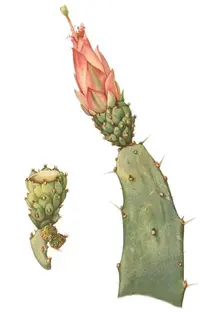
When potting or repotting, orient the flattest side of each pad toward the strongest light source so new growth stacks evenly and the plant does not lean or twist over time.

Safe pad handling

Handle pads only with rigid tongs, folded newspaper, or thick leather gloves and brush off any loose glochids with a stiff, dry brush before moving or repotting to prevent injury and pad damage.

Controlled pad propagation

For propagation, cut mature, firm pads with a sterile knife, let the cut end callus in a dry, shaded place for 7–14 days, then plant just the bottom 1–2 cm to anchor it without burying the whole pad.

Winter dryness strategy

In regions with cool, wet winters, keep containers under a roof overhang or cold frame so pads receive bright light and cold exposure while staying mostly dry, which is critical for reliable overwintering when growing Opuntia auberi outdoors.

Common Pests and Diseases

Cochineal scale

This pest forms dense white, cottony clusters on pads and feeds on sap, often causing yellowing and weakened growth. Symptoms include sticky honeydew and bright red staining when insects are crushed.

Solution

Physically remove colonies by spraying pads with a strong jet of water, then wipe remaining insects with cotton swabs dipped in 70% isopropyl alcohol. For larger outdoor clumps, improve air circulation, reduce overhead watering, and, if needed, apply a horticultural soap or paraffinic horticultural oil labeled for cacti, keeping pads out of direct sun until dry to avoid scorch.

Pad spot (phyllosticta spot)

This disease causes small, circular, sunken spots that turn tan to dark brown with a defined edge on the pads. Over time, affected areas can coalesce and deform pads, especially in humid or poorly ventilated conditions.

Solution

Cut out or remove heavily spotted pads with a sterile knife and discard them in the trash, not compost. Reduce humidity around the plant, space plants for airflow, keep pads dry when watering, and in outdoor plantings consider a preventive copper-based fungicide during extended wet periods according to label directions.

Soft bacterial rot

This disease leads to water-soaked, soft, foul-smelling areas on pads that quickly collapse. Symptoms include oozing tissue and rapid spread in warm, wet conditions or after mechanical injury.

Solution

Immediately cut away all affected tissue well into healthy, firm pad material using a sterile blade and discard infected parts. Allow cut surfaces to dry and callus in a warm, dry place with excellent airflow, then adjust watering to keep the soil dry to slightly dry and avoid splashing water onto wounded pads.

Spider mites

These insects are tiny sap-feeding arachnids that thrive in hot, dry conditions and can cause a dusty, stippled appearance and dulling of pads. Symptoms include fine webbing in pad joints and along spines and a general loss of vigor.

Solution

Rinse pads thoroughly with a strong but controlled stream of water, focusing on joints and crevices, then let them dry in bright, indirect light. If populations persist, use repeated applications of insecticidal soap or a light horticultural oil labeled for mites, always applying in the cooler part of the day and testing a small area first, as part of broader Opuntia auberi care instructions in arid climates.

Interesting Facts

Endemic island cactus

This species is naturally restricted to Isla Mujeres off the coast of Quintana Roo, Mexico, where it grows in a small, localized coastal habitat rather than across broad desert regions like many other prickly pears.

Coastal limestone specialist

It typically grows in rocky, calcareous substrates close to the sea, showing a strong preference for exposed limestone outcrops and coastal scrub rather than deep, fertile soils.

Threatened by tourism

Its very limited range on a popular tourist island makes it vulnerable to habitat disturbance and land development, so it is often mentioned in conservation assessments of the local flora.

FAQs about Opuntia auberi

Growth is generally slow to moderate. Young plants may add a few new pads each year, increasing as they establish. Rate depends strongly on light intensity, warmth, and watering frequency, with cooler or wetter conditions slowing pad production noticeably.

Grow Healthy Plants with Botan Care

Keep your plants happy and healthy with plant identification, disease detection, and easy care guidance.

Botan plant care app — identify plants on mobile

Explore More Plants