

butterweed Identification (Packera glabella)

Recognize butterweed by its smooth, hollow, leafy stem and its broad, stalkless upper leaves that clasp the stem with rounded lobes.

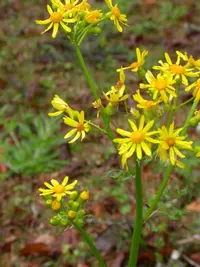
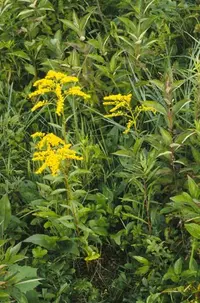
At flowering, it forms a flat-topped cluster of small yellow daisy-like heads on plants usually 1 to 3 feet (30 to 90 cm) tall.

Packera glabella Identification

Check Your Plant ID

Take a photo and use Botan to confirm your plant identification.

Clear images work best. Avoid photos taken too close or too far away

Check the plant’s leaves, stem, and flower heads together.

  • It grows as an upright, mostly smooth herb, often about 1 to 3 feet (30 to 90 cm) tall.
  • Lower leaves are broad and lyrate, with a large end lobe and smaller side lobes.
  • Upper leaves clasp the stem at the base instead of having clear leaf stalks.
  • Flower heads are bright yellow, daisy-like, and carried in a flat-topped cluster.
  • Each head usually shows about 8 to 13 narrow ray florets around the center.

The stem-clasping upper leaves are especially useful to confirm Packera glabella.

Butterweed shows clear visual shifts from basal rosettes to flowering stems and then seedheads.

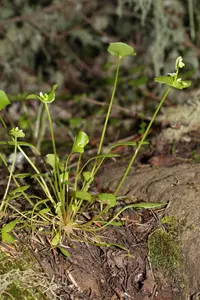
  • Juvenile plant: Plants begin as a low basal rosette with smooth, fleshy, spatula-shaped to shallowly lobed leaves, without the tall hollow stem seen later.
  • Young plant: Before flowering, the rosette enlarges and leaves become more deeply cut, while upright stems start rising from the center and begin showing alternate leaves.
  • Flowering stage: The plant reaches about 1-3 feet (30-90 cm) tall, with hollow, nearly hairless stems topped by branched clusters of small yellow daisy-like heads.
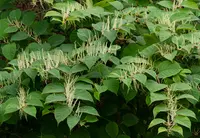
  • Fruiting stage: After bloom, yellow heads are replaced by white, fluffy seedheads, giving the top a cottony look and making the plant appear paler and more open.

In spring, Packera glabella quickly becomes conspicuous when clusters of bright yellow, daisy-like flower heads rise above the basal leaves. Bloom is usually heaviest from mid to late spring. By early summer, the flowers give way to small seed heads with white, fluffy tufts, changing the plant from yellow-topped to soft, silvery-looking. After seed set, the plant often declines and may disappear from view.

A few yellow-flowered asters can be mistaken for butterweed at a quick glance.

golden ragwort(Packera aurea)

Both have clusters of yellow daisy-like heads and basal leaves. Golden ragwort is usually shorter, with distinctly heart-shaped basal leaves and greener, less clasping stem leaves; Packera glabella typically has smoother, more glaucous stems and upper leaves that clasp the stem.

cressleaf groundsel(Packera gracilis)

This species shares the same general flower color and overall habit. It is separated most reliably by its more deeply cut, pinnatifid stem leaves, while Packera glabella more often shows broader, less finely divided upper leaves with a smoother, inflated-looking stem.

Packera glabella is native to eastern and central North America, including much of the eastern United States and parts of southeastern Canada. It is most often found in moist to wet places such as floodplains, streambanks, ditches, wet meadows, and open bottomlands. That setting helps separate it from similar ragworts of drier uplands or shaded woodland interiors.

  • Toxic plant parts: Packera glabella contains pyrrolizidine alkaloids in its leaves, stems, flowers, and other tissues. The main concern is ingestion by humans and pets.
  • Livestock and pet risk: This species is also known to poison grazing animals when eaten, especially in hay or pasture. The risk is from ingestion, not normal skin contact.

Not Sure About the ID?

Use Botan to identify or confirm the plant from a photo, which helps avoid mix-ups before you label or compare it.

FAQ

Yes, but it is less certain. Look for smooth, often purplish stems and lower leaves that are lyrate, meaning lobed with a larger terminal lobe. Flower heads make identifying butterweed much easier.

More Plant Identification Guides

One Photo. More About Your Plant.

Identify a plant from a photo with Botan, then review plant details, care information, and common problems for that species.

Botan app identifying a plant from a photo
Plants That Repel Bugs – 20 Effective Options

12 min read · 16 Jul 2026

Plants That Repel Bugs – 20 Effective Options

Mosquitoes on the patio? Gnats in the kitchen? Some plants keep them away with the scent of their own leaves. Here are 20 that deal with mosquitoes, flies, aphids, and more, plus where to put them so they help.

Plant Recommendations
Plants That Repel Bugs – 20 Effective Options
Best Bedroom Plants – Top 10 to Grow in Your Space

8 min read · 8 Jul 2026

Best Bedroom Plants – Top 10 to Grow in Your Space

Discover the top 10 houseplants that are suitable for growing in your bedroom. Compare their light and water needs, pet safety, and benefits. Find out where best to place greenery in your relaxation space and what species to avoid.

Plant Recommendations
Best Bedroom Plants – Top 10 to Grow in Your Space
Best Time to Water Grass in Summer – Lawn Watering Tips

5 min read · 21 Jul 2026

Best Time to Water Grass in Summer – Lawn Watering Tips

Summer watering is easy to get wrong. This guide explains when to turn on your sprinkler, how much liquid your grass needs each week, and how to tell if you're overwatering or underwatering.

Plant Care
Best Time to Water Grass in Summer – Lawn Watering Tips