
lily of the valley Identification (Convallaria majalis)

To recognize lily of the valley, look for paired basal leaves, each broadly lance-shaped to oval, usually 4 to 10 inches long (10 to 25 cm), rising directly from the ground with no woody stem.

A separate leafless stalk carries a one-sided row of small, nodding, bell-shaped white flowers.

Convallaria majalis Identification

Check Your Plant with Botan

Upload a clear photo to check your plant identification with Botan.

Clear images work best. Avoid photos taken too close or too far away

Check the plant’s low, paired leaves and one-sided flower stalk.

  • Most shoots carry 2 broad leaves rising from the base, usually 4 to 10 inches (10 to 25 cm) long, with smooth edges and parallel veins.
  • Leafless flower stalks stand between the leaves and lean to one side, carrying a row of hanging, bell-shaped white flowers.
  • Each flower is small and rounded, with 6 short lobes at the bell opening.
  • Plants form close colonies from underground rhizomes, so many similar shoots often appear packed together.

Red-orange berries may replace the flowers and hang where the bells were.

Convallaria majalis shows clear visual differences between vegetative, flowering, and fruiting stages.

  • Young plant: Nonflowering shoots carry one or two upright, lance-shaped to oval leaves from the base, without a separate flowering stalk or hanging bell-shaped blooms.
  • Mature plant: Established clumps produce broader paired leaves and stronger upright shoots, typically 6-12 inches (15-30 cm) tall, with a fuller colony-forming spread from rhizomes.
  • Flowering stage: A leafless stalk rises beside the leaves and bears a one-sided line of small, nodding, white bell-shaped flowers, a feature absent on vegetative shoots.
  • Fruiting stage: After flowering, the stalk carries round berries that replace the bells, shifting the plant's look from pendant flowers to upright, bead-like fruits.

Several named forms of Convallaria majalis are easy to separate by leaf pattern or flower color.

  • 'Albostriata': Leaves show narrow creamy white to pale yellow stripes running lengthwise, instead of solid green blades.
  • 'Aureovariegata': Foliage is marked with broader golden to yellow striping, often brighter and wider than in 'Albostriata'.
  • 'Rosea': Flowers are soft pink rather than white, while the usual nodding bell shape stays the same.
  • 'Flore Pleno': Blooms are double, with extra petal-like segments that make each bell look fuller than the typical single flower.

In spring, Convallaria majalis sends up paired, upright green leaves, followed by arching flower stalks with rows of nodding white bells, typically in mid to late spring. By early summer, flowering ends and small green berries may develop, later turning orange-red. The leaves then yellow and die back, leaving the plant dormant and absent above ground until the next spring.

A few woodland perennials are regularly mistaken for lily of the valley.

false lily of the valley(Maianthemum dilatatum)

Confusion comes from paired basal leaves and small white flowers. It differs by having a single flowering stem with many tiny flowers in a cluster, not nodding bells lined along one side of the stem.

American false hellebore(Veratrum viride)

Young plants can resemble the broad pleated leaves. It differs by strongly pleated leaves wrapped around a stout central stem, while Convallaria majalis usually has 2 leaves arising from the base and a separate flower stalk.

Convallaria majalis is native across much of Europe and temperate Asia. In the wild it is most often found in deciduous or mixed woodland, especially shaded forest floors and woodland edges. That setting helps with identification because this species is strongly associated with cool, shady woods rather than open grassland, wetlands, or dry rocky sites. A colony growing in spring under trees is a more useful clue than geography alone, since it is also widely introduced elsewhere.

  • Toxic parts: All parts of Convallaria majalis are poisonous to humans and pets if eaten, including the leaves, flowers, roots, and berries. The plant contains cardiac glycosides, compounds that affect the heart.
  • Berry risk: The red-orange berries are especially important to note because they are attractive and increase ingestion risk for children and pets.
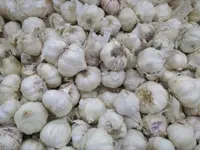
  • Look-alike confusion: Its leaves can be mistaken for wild garlic or ramps, creating a real ingestion risk. Convallaria majalis lacks the onion or garlic smell those edible plants release when crushed.

Confirm It from a Photo

Use Botan to identify or verify a plant from a photo, helping avoid mix-ups before you label it or compare similar species.

FAQ

The quickest clue is the one-sided row of small, white, bell-shaped flowers hanging from a leafless stalk, usually beside two broad basal leaves. This combination is central to lily of the valley identification.

More Plant Identification Guides

Find the Plant. Get the Details.

Identify a plant from a photo with Botan, then get species-specific care information, safety notes, and common problems.

Botan app identifying a plant from a photo
Plants That Repel Bugs – 20 Effective Options

12 min read · 16 Jul 2026

Plants That Repel Bugs – 20 Effective Options

Mosquitoes on the patio? Gnats in the kitchen? Some plants keep them away with the scent of their own leaves. Here are 20 that deal with mosquitoes, flies, aphids, and more, plus where to put them so they help.

Plant Recommendations

Plants That Repel Bugs – 20 Effective Options
12 Best Cold-Hardy Vegetables for Cold Weather

7 min read · 13 Oct 2026

12 Best Cold-Hardy Vegetables for Cold Weather

Cold-hardy vegetables can keep a garden productive through chilly fall, winter, and early spring weather. This guide covers 12 reliable crops, their frost tolerance, and practical growing tips for better cold-season harvests.

Plant Recommendations
12 Best Cold-Hardy Vegetables for Cold Weather
13 Best Front Yard Trees for Every Home and Yard

12 min read · 7 Aug 2026

13 Best Front Yard Trees for Every Home and Yard

A front yard tree can stay for decades. Therefore, choosing one deserves serious consideration. Here are 13 trees that have proven themselves, sorted by their purpose. You'll also find five species to avoid and basic planting information.

Plant Recommendations
13 Best Front Yard Trees for Every Home and Yard