

garlic Identification (Allium sativum)

Recognize garlic by its tight basal clump of flat, straplike leaves and a short, upright false stem made from overlapping leaf bases. Plants stay low, usually under 2 feet (0.6 m), with leaves arising directly from the bulb.

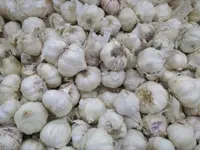
The bulb is divided into several distinct cloves wrapped in a papery outer skin.

Allium sativum Identification

Check Your Plant ID

Upload a clear photo to check your plant identification with Botan.

Clear images work best. Avoid photos taken too close or too far away

Use these quick checks to identify garlic by sight.

  • Leaves are flat, narrow, and strap-like, usually 8-24 inches (20-60 cm) long, arising in a basal clump.
  • The plant forms an upright, leafless flower stalk from the center, often taller than the leaves.
  • Underground, the bulb is made of several separate cloves packed inside a papery outer skin.
  • Flower heads, when present, are rounded clusters of many small star-shaped flowers or bulbils held at the top of the stalk.

Check for the clove-divided bulb and flat leaves together for the most reliable visual match.

Allium sativum shows clear stage-by-stage changes in leaves, stem form, and flowering structures.

  • Seedling: A seedling or sprout shows a few narrow, flat, grass-like leaves emerging in a small upright tuft, without a visible bulb neck or flowering stalk.
  • Young plant: The young plant forms several strap-shaped leaves from a short false stem, creating a denser clump and beginning the thicker basal swelling that leads to bulbs.
  • Mature plant: At maturity, garlic stands about 1-2 feet (30-60 cm) tall, with broader flat leaves in a fanlike cluster around a firm pseudostem above the bulb.
  • Flowering stage: Flowering plants send up a leafless, curling scape that rises above the leaves and ends in a papery-covered cluster of small flowers or bulbils.

In fall through spring, garlic is usually recognized by its upright, narrow blue-green leaves emerging in a small clump from the bulb. The foliage stays strap-like and fairly smooth, without woody stems. By late spring to early summer, some plants send up a leafless flower stalk. As summer advances, the leaves yellow, dry down, and collapse, leaving a papery bulb at dormancy.

A few onion relatives can be mistaken for garlic before flowering.

Leek(Allium ampeloprasum)

Both make straplike leaves from a basal clump. Leek leaves are broader, usually 1–2 inches (2.5–5 cm) wide, and form a long white pseudostem, a false stem made from leaf bases. Garlic leaves are narrower and the bulb divides into distinct cloves.

Chinese chives(Allium tuberosum)

Both have narrow basal leaves and white flower clusters. Chinese chives have flat, grasslike leaves and spread from short rhizomes, underground stems. Garlic usually stays in a tighter clump and forms a bulb with obvious cloves.

  • Pets: Garlic bulbs and leaves are toxic if eaten by pets, especially dogs and cats. The concern is ingestion.
  • Humans: Fresh cloves and juice can irritate skin on contact in some people. Larger amounts can also upset the stomach if eaten.
  • Hazardous look-alike: Garlic can be confused with toxic death camas in the bulb stage. True garlic leaves and bulbs have a clear onion-garlic odor when crushed; death camas does not.

Confirm the Species with Botan

Upload a photo to help identify the plant or confirm your ID before you label it or compare similar species.

FAQ

Yes. Garlic identification often relies on the bulb and leaves. This species forms a compound bulb of separate cloves inside a papery wrapper, with flat, narrow leaves and a strong sulfur-like odor when crushed.

More Plant Identification Guides

Find the Plant. Get the Details.

Identify a plant from a photo with Botan, then review its profile, care information, and common problems.

Botan app identifying a plant from a photo
Best Fertilizer for Vegetable Gardens – What to Use for Each Plant

11 min read · 20 Jul 2026

Best Fertilizer for Vegetable Gardens – What to Use for Each Plant

Here, you’ll find the right fertilizer formula for vegetables in your garden. Learn how to adjust feeding correctly throughout the growing cycle, spot nutrient deficiencies by their symptoms, and keep your plants healthy and prolific.

Plant Recommendations
Best Fertilizer for Vegetable Gardens – What to Use for Each Plant
Top 15 Plants That Don’t Need Sunlight

8 min read · 17 Sept 2026

Top 15 Plants That Don’t Need Sunlight

Some plants thrive in dim rooms, shaded corners, and places with indirect light. In this guide, you’ll explore the top 15 species best suited to low-light conditions and how to care for them.

Plant Recommendations
Top 15 Plants That Don’t Need Sunlight
How Fast Does Bamboo Grow Per Day, Month, and Year

10 min read · 7 Jul 2026

How Fast Does Bamboo Grow Per Day, Month, and Year

Bamboo grows extremely fast: some species can reach 5-6 m in just 3-4 months under the right conditions. This guide explains how much bamboo can grow per day, week, and year, and what affects its growth rate.

Plant Recommendations
How Fast Does Bamboo Grow Per Day, Month, and Year