garlic (Allium sativum) Watering Guide

This page explains when, how often, and how much to water Allium sativum for practical everyday care.

Water Requirements

Moderate Water

Allium sativum Watering

Originating from seasonally dry regions, Allium sativum grows best in soil that stays lightly moist, never soggy. It tolerates brief surface drying but benefits from a steady, moderate moisture level around the roots for reliable bulb development.

In the garden, watering garlic focuses on maintaining even moisture through its active growth. Container-grown plants dry faster, so monitoring soil feel helps guide how to water garlic without overdoing it.

During active growth, Allium sativum typically needs watering every 5–10 days, but adjust by checking soil dryness. Water again when the top 1–2 inches (3–5 cm) feel dry and loose. Hot, windy outdoor conditions shorten this interval, while cooler, overcast weather usually extends it.

Water Allium sativum when the top 1-2 inches (3-5 cm) of soil feel dry, using slow, deep irrigation.

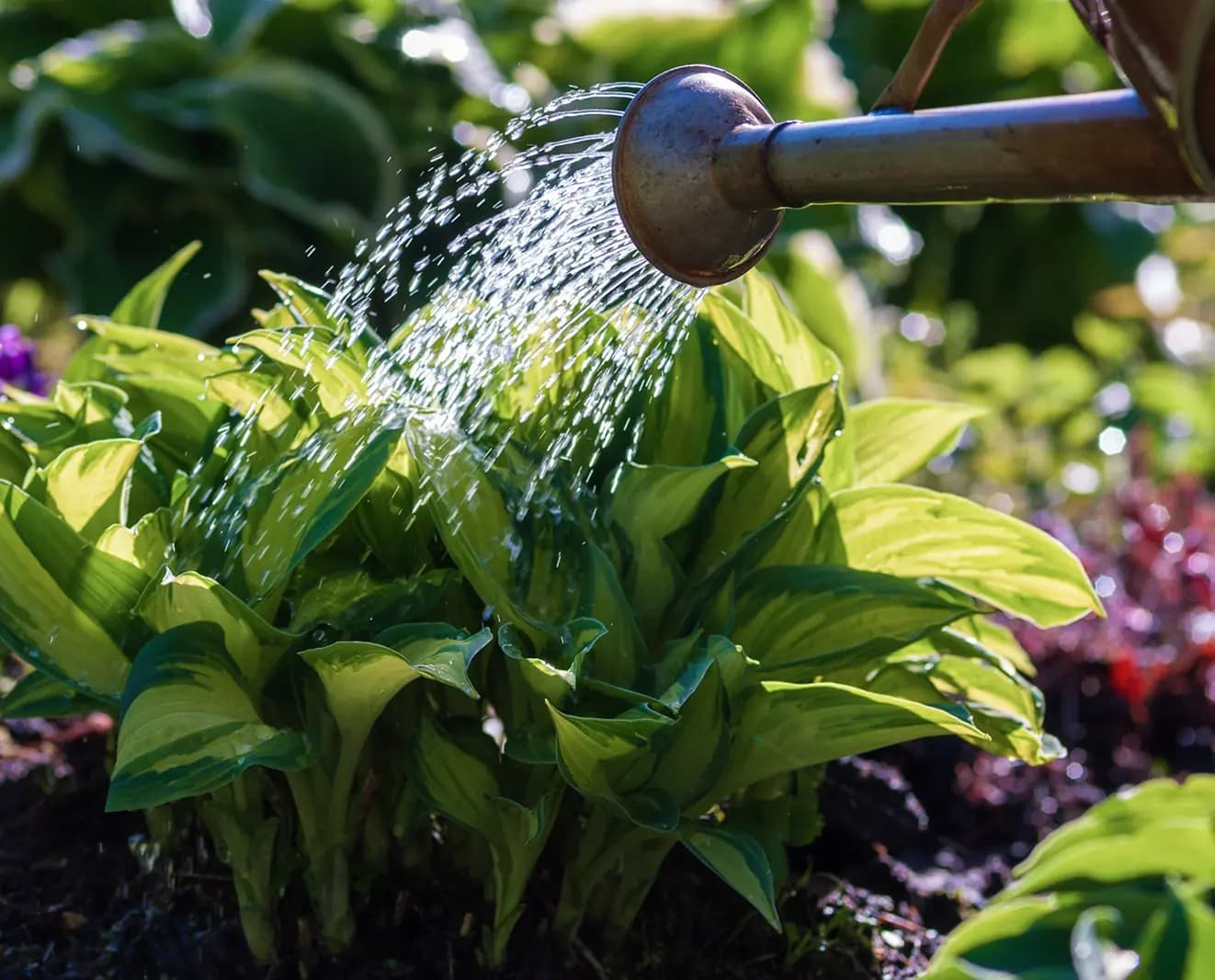
  • Direct a gentle stream at the soil around each clump, avoiding splashing the leaves and developing bulbs whenever possible.
  • Apply water slowly so moisture penetrates the full root zone without causing surface runoff or exposed, eroded soil.
  • Let excess water drain completely from beds or raised containers, ensuring the planting area never remains waterlogged after irrigation.
  • After watering, lightly level and re-firm loosened soil around plants to maintain even coverage and protect shallow roots.

Incorrect moisture levels may stress Allium sativum, reducing vigor and harvest quality over time.

Yellowing Lower Leaves:

Older leaves yellow early when soil stays wet, often from poor drainage or excessive irrigation frequency.

Soft Bulbs At Harvest:

Cloves feel mushy and split when beds remain saturated, especially during late bulb-filling stages.

Stunted, Narrow Foliage:

Thin leaves and slow growth develop when soil stays too dry between waterings during early establishment.

Basal Plate Rot:

Plants topple with rotted stem bases when heavy soils hold water around developing bulbs.

Cracked Outer Bulb Skins:

Bulb wrappers split when irregular deep soaking alternates with prolonged dryness near maturity.

Maintain evenly moist, well-drained soil, reducing water as bulbs mature to prevent rot and splitting.

Poor watering habits weaken Allium sativum, reduce bulb size, and increase disease pressure during its relatively long growing season.

  • Watering by calendar: Following a fixed schedule and ignoring soil moisture often keeps garlic too wet; instead, water only when the top layer dries.
  • Heavy, soggy soil: Planting in dense soil that drains slowly keeps bulbs saturated; use loose, well-drained beds or raised rows instead.
  • Letting saucers fill: Leaving containers sitting in runoff water suffocates roots; empty saucers promptly so excess moisture can escape.

For healthy garlic bulbs, keep soil evenly moist but free-draining, adjusting watering to real-time soil conditions and weather changes.

  • Spring: Keep soil evenly moist as leaves expand and bulbs initiate, avoiding both soggy conditions and dry swings that can split developing cloves.
  • Summer: Reduce watering as tops begin yellowing, then stop entirely 1–2 weeks before lifting bulbs to improve curing and storage quality.
  • Fall: For fall-planted cloves, water lightly after planting, then maintain modest moisture until consistent cold slows growth and soil stays cool.
  • Winter: In cold climates, outdoor garlic usually needs no watering under snow or mulch; only irrigate if soil thaws and becomes very dry.

Your garlic Care Companion

Use Botan for a clear watering guide and practical care steps for garlic. The app can also review plant photos to help flag early signs of stress or disease.

Botan plant care app — identify plants on mobile

Interesting Watering Facts

Dry‑down before harvest

Cultivated Allium sativum is typically kept on the dry side in the final 2–3 weeks before harvest to encourage outer bulb skins to dry and cure properly, a practice developed from field experience in semi‑arid and Mediterranean‑type garlic‑growing regions.


Shallow roots, targeted moisture

Allium sativum develops a relatively shallow root system, so consistent moisture in the topsoil during active bulb formation is more important than deep soaking, leading growers to favor frequent, moderate irrigation rather than rare, heavy watering in most soils.

FAQ

Water slowly until a small amount drains from the pot, then stop. This ensures the whole root zone is moistened without becoming waterlogged. Empty any saucer so the soil can begin to dry slightly between waterings.

Everything About garlic

More Plant Watering Guides

Is Watering the Reason Your Plant Struggles?

Botan evaluates your watering pattern to highlight simple adjustments for healthier moisture levels.

Watering a plant with a copper watering can
Best Bedroom Plants – Top 10 to Grow in Your Space

8 min read · 8 Jul 2026

Best Bedroom Plants – Top 10 to Grow in Your Space

Discover the top 10 houseplants that are suitable for growing in your bedroom. Compare their light and water needs, pet safety, and benefits. Find out where best to place greenery in your relaxation space and what species to avoid.

Plant Recommendations
Best Bedroom Plants – Top 10 to Grow in Your Space
What Plants Don't Like Epsom Salt?

11 min read · 29 Jul 2026

What Plants Don't Like Epsom Salt?

Learn which plants can be seriously damaged by Epsom salt and which will thrive on it. We’ll explain when and how to use it properly, provide tips for indoor & outdoor plants — read on and enjoy a healthy garden.

Plant Care
What Plants Don't Like Epsom Salt?
How To Revive a Dying Plant: 6 Steps To Bring A Plant Back To Life

6 min read · 1 Sept 2026

How To Revive a Dying Plant: 6 Steps To Bring A Plant Back To Life

Drooping leaves and brown tips don't always mean the end, and a weakened plant can often recover with a little help. These six simple steps will help you revive a dying plant and restore its health.

Plant Care
How To Revive a Dying Plant: 6 Steps To Bring A Plant Back To Life