Strict containment
Grow this plant only in sturdy containers or raised beds with solid bottoms and dispose of spent soil and plant material in sealed bags to prevent seeds from spreading into surrounding soil or natural areas.

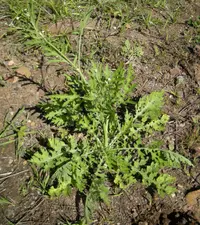
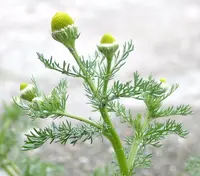
Santa Maria feverfew (Parthenium hysterophorus) is a fast-growing annual herb in the daisy family, often found as a weed in disturbed soils and roadsides. It forms many branched stems with small white flower heads and deeply divided, somewhat hairy leaves.
This species is native to the Americas but has spread widely in tropical and subtropical regions, where it can become invasive. It thrives in open, sunny sites with well-drained soil and tolerates drought once established.
Because it self-seeds heavily and spreads quickly, it is considered difficult to control in gardens and landscapes. Anyone who wants to learn how to care for Santa Maria feverfew should understand its invasive potential and manage it carefully.

Care Difficulty
Easy Care

Light Preference
Full Sun

Water Requirements
Low Water

Temperature Preference
Warm Climate

Hardiness Zone
8–11

Soil Texture
Sandy, Loamy, Clay

Soil pH
Slightly acidic (6.5–7.0), Slightly alkaline (7.0–7.5)

Soil Drainage
Well-drained

Fertilization
Minimal (feed rarely)
Scan your plant to receive care tips personalized for your specific plant
Available on iOS and Android
Parthenium hysterophorus thrives in strong light and behaves as a full-sun weed in most open landscapes.
Parthenium hysterophorus prefers dry to moderately moist soil and is highly drought-tolerant once established.
This species grows best in warm conditions and struggles where winters are long and cold.
This species tolerates a wide humidity range, so humidity management is usually not critical.
This species adapts to poor soils but thrives when the substrate is prepared thoughtfully.
This species can be grown in containers, mainly for controlled observation or restriction rather than ornamental use.
Parthenium hysterophorus is a self-sufficient wild annual that usually needs no fertilizer in typical garden or landscape soils.
Pruning Parthenium hysterophorus is mainly about limiting spread and removing unwanted growth rather than shaping.
Transplanting this vigorous annual is mostly done to relocate or control plants rather than to maintain long-term containers.
Propagation of Parthenium hysterophorus relies almost entirely on seed, as the species self-sows abundantly in suitable sites.
This frost-sensitive annual usually dies back with hard freezes and does not require dedicated winter care.

Plant Health Check
Not sure what's wrong with your plant? Check your plant's health inside the app.
This species produces large amounts of lightweight pollen that are a major cause of respiratory allergies and contact dermatitis in many regions where it has invaded, particularly in South Asia and Australia.
Its roots and decaying leaves release chemicals such as parthenin into the soil that can suppress seed germination and growth of neighboring crops and native plants, giving it a strong competitive advantage.
Originally native to the Americas, it has spread across Africa, Asia, and Australia, often colonizing disturbed sites like roadsides and construction areas, where it can quickly form dense monospecific stands that reduce local plant diversity.

This species is known to hybridize with some closely related Parthenium species in overlapping ranges, which can complicate identification and has raised concerns about the potential for even more aggressive invasive genotypes to emerge in the future.
This species self-seeds heavily and spreads quickly, especially in disturbed or bare soil. It can outcompete other plants and behave invasively. Regular removal of seedlings and cutting back flowering stems limits unwanted spread and seed production.
Keep your plants happy and healthy with plant identification, disease detection, and easy care guidance.