bunchleaf penstemon Care (Penstemon heterophyllus)

Also known as: Foothill Penstemon, Bunchleaf Beardtongue
bunchleaf penstemon

About bunchleaf penstemon

Bunchleaf penstemon (Penstemon heterophyllus) is a small, long-lived perennial native to dry slopes and open woodlands in California. It forms low mounds of narrow green leaves topped with showy tubular flowers.

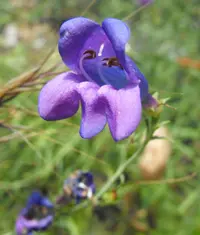
Flower colors range from blue to violet with a hint of pink, and they attract bees, butterflies, and hummingbirds. The plant has a naturally tidy, clumping habit that fits well into dry borders and native gardens.

It is adapted to lean, well-drained soils and seasonal drought, which makes it relatively easy to grow in low-water landscapes. Understanding how to care for bunchleaf penstemon starts with avoiding heavy, wet soils and providing plenty of sun.

Main Plant Requirements

Care Difficulty

Moderate Care

Light Preference

Full Sun

Water Requirements

Low Water

Temperature Preference

Cold Hardy

Hardiness Zone

6–10

Soil Texture

Sandy, Loamy, Rocky

Soil pH

Slightly acidic (6.5–7.0), Neutral (7.0)

Soil Drainage

Well-drained

Fertilization

Minimal (feed rarely)

Get Personalized Care Plan

Scan your plant to receive care tips personalized for your specific plant

Available on iOS and Android

How to Care for the bunchleaf penstemon

This western U.S. perennial thrives in bright, open conditions with long daily sun exposure.

  • Provide 6–8 hours of direct sun daily; morning to early afternoon sun promotes compact growth and abundant flowering in bunchleaf penstemon.
  • In hotter inland areas, give full morning sun with light afternoon shade to prevent leaf scorch and premature flower fade.
  • Avoid deep or constant shade; plants in less than 4 hours of sun become leggy, produce fewer blooms, and are more prone to mildew in cool seasons.

This species prefers dry to moderately dry conditions and is sensitive to excess moisture around the roots.

  • Allow the top 3–5 cm of soil to dry fully before watering; in well-drained ground this often means deep but infrequent watering once soil looks pale and feels dry.
  • During the first growing season, water when lower leaves dull or curl slightly, then reduce frequency once Penstemon heterophyllus is established.
  • Use sharply drained, gritty soil; persistent wetness, yellowing leaves, soft stems, or a sour smell indicate overwatering, while crisp, drooping foliage signals underwatering.

This drought-tolerant perennial handles a broad temperature range but grows best in mild, dry conditions.

  • Ideal growing temperatures are 60–80°F (16–27°C), with strong vegetative growth and flowering in cool to warm, low-humidity weather.
  • Mature plants typically tolerate winter lows down to about 10–15°F (-12–-9°C) with good drainage, but new plantings are more vulnerable to repeated hard frosts.
  • Short heat spells up to 95°F (35°C) are usually tolerated if soil is not waterlogged, though sustained extreme heat can shorten bloom duration and stress foliage.

Penstemon heterophyllus handles low humidity well, so humidity management is usually unnecessary.

Penstemon heterophyllus prefers lean, fast-draining, slightly alkaline to neutral soil.

  • Use a sandy or gravelly loam with coarse particles to prevent waterlogging around the roots.
  • Aim for pH 6.8–7.5; in acidic soils, lightly incorporate garden lime before planting.
  • Blend roughly 60–70% mineral topsoil with 20–30% coarse sand or fine gravel and 10–20% well-decomposed compost.
  • Avoid heavy clay, peat-heavy mixes, or sites where water stands for more than a few hours after rain.

This species can grow successfully in containers outdoors if drainage is excellent.

  • Choose a pot at least 25–30 cm deep to accommodate the taproot and stabilize the upright stems.
  • Use a gritty mix and elevate the pot on feet or bricks so drainage holes never sit in collected water.
  • Prefer unglazed clay pots in rainy climates to allow faster evaporation and reduce root rot risk.

This dryland native is adapted to lean soils and needs only light, targeted feeding for good growth and flowering.

  • Use a low-rate, balanced NPK granular or slow-release fertilizer once in early spring on established clumps.
  • Apply a thin layer of well-aged compost around, not against, crowns to support soil life without overfeeding.
  • Avoid high-nitrogen products, which encourage weak, leafy growth and reduce flower density in bunchleaf penstemon.
  • Do not fertilize in late fall or winter; excess nutrients during dormancy can stress roots and reduce cold tolerance.

Penstemon heterophyllus benefits from modest pruning to maintain a compact shape and strong flowering.

  • In late winter or very early spring, cut back old flowering stems to a low leafy framework using clean bypass pruners.
  • Remove dead, damaged, or winter-burned stems at the base to reduce disease and stimulate new shoots.
  • After the main bloom, lightly shear spent flower spikes to encourage a lighter rebloom and neater habit.
  • Thin the most crowded stems sparingly to improve air flow while preserving the plant’s natural mounding form.

This species is most often grown in the ground, with transplanting handled carefully to protect its relatively sensitive roots.

  • Transplant in early spring or early fall, when temperatures are mild and soil is workable but not waterlogged.
  • Move plants only when growth slows, roots circle a container, or the crown visibly outgrows its planting space.
  • Lift with a broad root ball, keep roots shaded and moist, and replant at the same depth into well-drained soil.
  • Water in gently, then keep soil lightly moist for 1–2 weeks to limit shock, avoiding heavy fertilization during recovery.

Penstemon heterophyllus is commonly propagated by seed and softwood cuttings to maintain desired forms.

  • Sow fresh seed in late fall outdoors or use cold stratification at 35–40°F for 4–6 weeks before spring sowing.
  • Provide a well-drained, gritty seed mix, consistent light moisture, and bright light for germination and sturdy seedlings.
  • Take non-flowering softwood cuttings in late spring to early summer and root them in a free-draining, low-peat medium.
  • Maintain cuttings at 65–75°F with high humidity and gentle airflow until rooted, then harden off gradually before planting out.

This penstemon is fairly cold hardy in many temperate regions and usually needs only minimal winter care in the ground.

  • In climates colder than its usual range, apply a light mulch layer around, not over, the crown after the soil cools.
  • Leave some stems standing through winter to shield basal growth, cutting them back in late winter or early spring.
  • For container plants, move pots to a sheltered, unheated spot where roots avoid deep freezing and saturated soil.

Care Tips

Encourage Compact Growth

Pinch back soft shoot tips in late spring to keep plants bushy, improve flowering density, and prevent stems from becoming floppy in richer soils.

Seasonal Rejuvenation Cut

After the first heavy bloom flush, shear back spent flowering stems by about one-third to stimulate a second wave of flowers and maintain a tidy, dense mound.

Strategic Companion Planting

Plant beside other low-water, sun-loving perennials or grasses to create a dry border that reduces weed pressure, improves air flow, and stabilizes the soil around the crown.

Targeted Winter Drainage

In regions with wet winters, top-dress around the crown with a thin layer of coarse gravel to keep the base of the plant drier and reduce crown and root rot risk when growing bunchleaf penstemon.

Seedling Renewal Cycle

Allow a few flower spikes to set seed and fall naturally, then thin and transplant volunteer seedlings every 2–3 years to maintain a vigorous stand as older plants decline.

Common Pests and Diseases

Powdery mildew

This disease produces white, powdery patches on leaves and stems, often during warm days with cool, humid nights. Symptoms include distorted new growth and a dull, grayish cast on foliage.

Solution

Remove and discard heavily infected leaves to reduce spore load, then increase spacing and airflow around plants and avoid overhead watering. In persistent cases, apply a sulfur or potassium bicarbonate fungicide labeled for ornamentals at the first sign of mildew, following label directions carefully for effective Penstemon heterophyllus care instructions.

Leaf spot

This disease causes small brown, purple, or tan spots on leaves that may merge into larger blotches under cool, moist conditions. Symptoms include premature yellowing and early leaf drop on stressed plants.

Solution

Prune and discard affected foliage, keep leaves as dry as possible, and water at soil level in the morning. Improve air circulation, reduce crowding, and, if needed, use a copper- or chlorothalonil-based fungicide labeled for leaf spots on ornamentals when new lesions first appear.

Aphids

These insects cluster on tender shoots, buds, and the undersides of leaves, sucking sap and causing curling or distorted growth. This pest also excretes sticky honeydew that can attract ants or encourage sooty mold.

Solution

Spray stems and leaf undersides with a strong stream of water every few days to dislodge colonies, then introduce or conserve natural predators such as lady beetles by avoiding broad-spectrum insecticides. If populations remain high, apply insecticidal soap or a light horticultural oil thoroughly to all infested surfaces, repeating as directed on the product label.

Spider mites

These pests thrive in hot, dry conditions and cause fine stippling, bronzing, and eventual drying of foliage. Symptoms include very fine webbing on leaf undersides and between stems when populations are high.

Solution

Increase humidity around plants and rinse foliage thoroughly with water, especially the undersides of leaves, to knock down mite numbers. For persistent infestations, use insecticidal soap or horticultural oil, applied in several treatments 5–7 days apart to target newly hatched mites, and avoid water stress that favors outbreaks.

Slugs and snails

These pests chew irregular holes in leaves and young shoots, often leaving shredded edges and slime trails, particularly in damp or mulched areas. Symptoms include overnight damage on lower leaves and seedlings near the soil surface.

Solution

Hand-pick slugs and snails in the evening or early morning and reduce hiding spots by keeping dense mulch and debris away from plant crowns. Use iron phosphate bait placed around, not on, the planting area, and combine this with copper barriers or rough, dry surfaces to make the area less favorable for these pests.

Interesting Facts

California foothill specialist

This species is native to California and is naturally found on dry slopes and foothills, especially in the Coast Ranges and Sierra Nevada foothills, where it thrives in well-drained, often rocky soils.

Color-shifting flowers

Its tubular flowers often show a gradient from blue to violet or purplish tones on the same inflorescence, and the color can appear to shift with viewing angle and light due to the way the petal surface reflects light.

Key hummingbird resource

The bright, tubular blossoms are rich in nectar and are an important spring and early-summer food source for hummingbirds and certain native bees in its California range.

Botan icon

Did you know?

Some coastal and foothill populations show notable variation in leaf shape and flower color, which has led to the selection of multiple horticultural forms and cultivars specifically developed for growing bunchleaf penstemon in native plant gardens.

FAQs about bunchleaf penstemon

Lack of flowers usually comes from too much shade, overly rich or wet soil, or heavy nitrogen fertilizer. Older clumps may also bloom less and benefit from division and light pruning after flowering to renew growth.

Grow Healthy Plants with Botan Care

Keep your plants happy and healthy with plant identification, disease detection, and easy care guidance.


Botan plant care app — identify plants on mobile

Explore More Plants