Encourage sturdy roots
Plant in groups of 3–5, spaced 25–30 cm apart, to create a shared root zone that stabilizes the soil and helps the plants tolerate summer heat and short dry spells better.

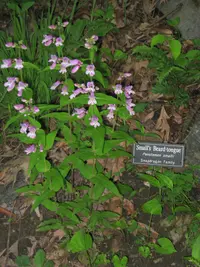
Small's beardtongue (Penstemon smallii) is a compact, clump-forming perennial native to rocky slopes and open woodlands of the southeastern United States. It belongs to the figwort family and is valued as a tough, drought-tolerant wildflower.
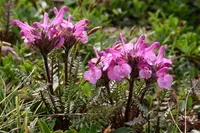
Plants carry narrow, often glossy leaves at the base and upright stems topped with showy tubular flowers in shades of pink to lavender. These flowers attract bees, butterflies, and hummingbirds.
Penstemon smallii prefers full sun to light shade, well-drained, often rocky or gravelly soil, and does not like consistently wet conditions. Gardeners who learn how to care for Small's beardtongue usually find it long-lived and reliable in suitable sites.

Care Difficulty
Moderate Care

Light Preference
Full Sun

Water Requirements
Low Water

Temperature Preference
Cold Hardy

Hardiness Zone
5–8

Soil Texture
Sandy, Loamy, Rocky

Soil pH
Acidic (5.5–6.5), Slightly acidic (6.5–7.0)

Soil Drainage
Well-drained

Fertilization
Minimal (feed rarely)
Scan your plant to receive care tips personalized for your specific plant
Available on iOS and Android
This southeastern native prefers bright outdoor conditions with several hours of direct sun for strong flowering.
This species prefers relatively dry, well-drained conditions and is sensitive to excess moisture around the roots.
This hardy perennial tolerates a wide outdoor temperature range but performs best within moderate conditions.
Humidity is not a major factor for this drought-tolerant perennial.
Penstemon smallii prefers lean, fast-draining soil that mimics rocky slopes.
This species can grow successfully in containers if drainage and root conditions are controlled carefully.
Native and adapted to lean soils, Small's beardtongue needs only light, cautious fertilization in cultivation.
Pruning Penstemon smallii is mainly aimed at keeping plants tidy and encouraging continued flowering.
This species is more often transplanted in garden beds than grown long term in containers.
Penstemon smallii is commonly propagated by seeds and softwood cuttings for maintaining desirable forms.
This species is generally cold hardy in much of its range and needs only modest winter care in the ground.

Plant Health Check
Not sure what's wrong with your plant? Check your plant's health inside the app.
This species is naturally restricted to the southern Appalachian region of the US, where it often grows on thin, rocky soils over shale or limestone outcrops that many other perennials cannot tolerate.
Its tubular, two-lipped purple flowers are shaped for bee pollination, providing a landing platform and guiding hairs that direct visiting bees toward the nectar and reproductive parts.
In parts of its range with relatively mild winters, the basal foliage can remain green through the cold season, allowing the plant to resume growth quickly in spring.

Penstemon smallii is considered regionally uncommon and of conservation interest in parts of its native range because its natural habitat of open, rocky glades and road-banks has been reduced by forest succession and development, making careful site preservation important for long-term populations.
This species forms small clumps and spreads slowly by short rhizomes and self-seeding. It is not considered invasive in typical garden settings, but deadheading spent flowers limits unwanted seedlings and keeps populations contained.
Keep your plants happy and healthy with plant identification, disease detection, and easy care guidance.