acorn peperomia Care (Peperomia tetraphylla)

Also known as: Four-leafed Pepper Plant, Fourleaf Peperomia
acorn peperomia

About acorn peperomia

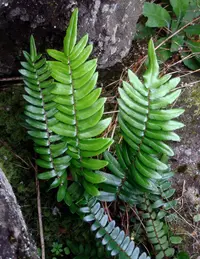
Acorn peperomia (Peperomia tetraphylla) is a compact, evergreen houseplant grown mainly for its small, rounded leaves and tidy, trailing to slightly mounding habit. It stays relatively low, making it suitable for shelves, small pots, and mixed planters.

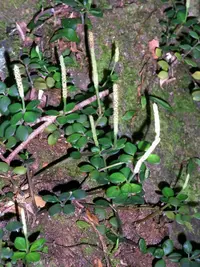
In nature, it occurs in parts of tropical and subtropical regions, often growing as a groundcover or epiphyte on trees where conditions are warm and humid. The plant has fleshy leaves and stems that store some water, which slightly increases its tolerance to missed waterings.

Because of its slow to moderate growth and modest size, it fits well into indoor spaces and does not require heavy pruning. Light, well-draining soil and bright, indirect light usually support healthy growth and make it easier to care for acorn peperomia.

Main Plant Requirements

Care Difficulty

Easy Care

Light Preference

Bright Indirect Light

Water Requirements

Moderate Water

Temperature Preference

Tropical / Frost Sensitive

Hardiness Zone

11–12

Soil Texture

Loamy, Sandy, Organic-rich

Soil pH

Acidic (5.5–6.5), Slightly acidic (6.5–7.0)

Soil Drainage

Well-drained

Fertilization

Light (every 4–6 weeks)

Get Personalized Care Plan

Scan your plant to receive care tips personalized for your specific plant

Available on iOS and Android

How to Care for the acorn peperomia

This species prefers bright, indirect light with brief gentle sun rather than intense exposure.

  • Provide 4–6 hours of bright, filtered light each day, such as near an east- or north-facing window with sheer curtains or under light shade outdoors.
  • Acorn peperomia tolerates partial shade but growth becomes looser and leaves smaller if kept in dim areas for long periods.
  • Avoid harsh midday or afternoon sun, which can cause leaf scorch and yellow patches; increase light gradually in winter or in darker rooms to prevent stress.

This plant prefers a light, even moisture cycle rather than constant wetness.

  • Allow the top 2–3 cm of soil to dry before watering, using a finger test instead of a fixed schedule, since light, temperature, and pot size change how fast soil dries.
  • Ensure sharply draining soil and unblocked drainage holes so Peperomia tetraphylla roots sit in moist, not waterlogged, conditions; soggy mix leads to leaf drop and root rot.
  • In brighter, warmer months increase watering frequency as the mix dries faster; in cooler, lower-light seasons water less, watching for wilted, thin leaves from underwatering or mushy stems from excess moisture.

This plant grows best in stable, warm conditions without sudden temperature swings.

  • Aim for 65–80°F (18–27°C) for active growth; it tolerates brief dips but performs best when temperatures stay in the mid-70s°F (around 24°C).
  • Avoid exposure below 55°F (13°C); foliage can suffer damage near 40–45°F (4–7°C), and any frost quickly destroys leaves and stems.
  • Protect from hot, drying drafts or heat over 90°F (32°C); in hot spells increase airflow and shade to prevent leaf scorch and heat stress.

This species prefers moderate household humidity and usually adapts well.

  • Aim for 40–60% humidity; acorn peperomia tolerates brief dips lower but may slow growth.
  • Crisp leaf edges, curled foliage, or stalled new leaves indicate air is too dry.
  • Increase humidity by grouping plants, placing the pot on a pebble tray with water, or running a small humidifier nearby.

Peperomia tetraphylla grows best in a loose, airy mix that drains quickly yet holds some moisture.

  • Use a mix of roughly 50–60% all-purpose potting mix with 20–30% perlite and 20% fine orchid bark or coco chips for structure.
  • Aim for a slightly acidic to neutral pH around 6.0–7.0, which supports balanced nutrient availability for roots.
  • Ensure the mix feels springy, not compact; large air spaces between particles reduce root rot risk and improve oxygen supply.
  • Avoid heavy garden soil, peat-only blends, or mixes that stay wet longer than 3–4 days after watering.

This species suits container growing and remains compact and manageable.

  • Choose a shallow, wide pot so the spreading root system and stems can fill the surface without water pooling in depth.
  • Prefer a breathable terracotta or unglazed ceramic container if overwatering is a concern, as these materials allow faster evaporation.
  • Empty saucers soon after watering so collected runoff does not wick back into the pot and keep roots saturated.

Peperomia tetraphylla is a light feeder that benefits from modest, diluted nutrition during active growth.

  • Use a balanced liquid fertilizer (around 10-10-10 or 20-20-20) diluted to 1/4–1/2 strength for acorn peperomia.
  • Feed every 4–6 weeks in spring and summer when growth is visible.
  • Skip or greatly reduce fertilization in fall and winter when growth slows.
  • Avoid heavy compost or slow-release pellets that can cause salt buildup in small pots.

Peperomia tetraphylla responds well to light, selective pruning to maintain a compact, tidy form.

  • Best time is late winter to early spring, just before or as new growth starts.
  • Remove dead, yellowing, or damaged stems first, then thin crowded or overly long shoots.
  • Pinch or trim stem tips to encourage branching and a fuller, lower habit.
  • Use sharp, clean scissors or snips and make cuts just above a node to reduce dieback.

This compact species prefers slightly tight pots and only occasional repotting.

  • Check for roots circling the pot, pushing through drainage holes, or for slow growth despite good care as signs to repot Peperomia tetraphylla.
  • Plan repotting for spring, every 2–3 years, when growth is starting.
  • Move only 1 pot size up, using a loose, well-drained mix to prevent waterlogging.
  • Handle roots gently, keep the root ball mostly intact, water lightly after repotting, and keep in bright, indirect light while it recovers.

New Peperomia tetraphylla plants are most often produced from stem or leaf cuttings.

  • Take 5–8 cm stem cuttings with 2–3 leaves in spring or early summer.
  • Let cut ends dry for 30–60 minutes, then insert into a moist, airy mix of peat-free potting soil with perlite.
  • Maintain high humidity (cover with a vented dome or bag) and keep at 70–75°F in bright, indirect light.
  • Division of small clumps at repotting is also possible; keep divisions with intact roots and water lightly until established.

This tropical species is not frost hardy and needs mild, stable indoor conditions in winter.

  • Keep plants above 60°F, ideally 65–75°F, away from drafts and cold windowsills.
  • Move outdoor containers indoors before night temperatures fall below 55°F.
  • Use a light, airy mix and allow the top layer to dry more between waterings to prevent root rot in cool conditions.
  • Provide as much bright, indirect light as possible, since low winter light can cause weak, stretched growth.

Care Tips

Rotate for symmetry

Turn the pot 1/4 turn every 1–2 weeks so the mat-forming stems receive light from all sides and the plant develops an even, compact cushion instead of leaning toward one direction.

Encourage dense mats

Pinch or trim back the longest trailing shoots by 1–2 in during active growth to promote branching from lower nodes and create a thicker, more uniform carpet of foliage.

Use shallow containers

Grow this species in a wide, shallow pot so its fine, relatively shallow roots can spread horizontally, which supports its natural mat-forming habit and reduces the risk of deep, soggy soil pockets.

Protect fragile stems

When repotting or moving the plant, support the foliage with one hand and handle only the pot or root ball, since the thin, jointed stems snap easily if bent or pulled.

Monitor stem bases

Check the lower stems and crown every few weeks for soft, darkening tissue and remove affected pieces promptly with clean scissors to stop early rot from spreading when caring for acorn peperomia.

Common Pests and Diseases

Mealybugs

This pest often hides in stem joints and under leaves, feeding on plant sap and causing leaf yellowing, distortion, and sticky honeydew. Symptoms include slowed growth and sooty mold developing on the honeydew in heavy infestations.

Solution

Isolate the plant, then dab visible insects with cotton swabs dipped in 70% isopropyl alcohol and gently wipe leaf undersides and stems. Repeat weekly until no new insects appear and improve air movement around the plant to reduce future outbreaks; this is a key part of Peperomia tetraphylla care in indoor collections.

Spider mites

These insects prefer the small, fleshy leaves of acorn peperomia in dry indoor air, causing stippled, pale foliage and fine webbing between stems and leaves. Symptoms include dull, dusty-looking leaves and gradual leaf drop if not controlled.

Solution

Rinse the plant thoroughly with lukewarm water, focusing on leaf undersides, then mist and wipe foliage to remove mites and webs. Increase humidity, keep the plant away from hot, dry drafts, and repeat washing every few days for 2–3 weeks to break the breeding cycle.

Fungus gnats

These insects thrive in constantly moist, organic potting mixes and are attracted to the shallow root system of Peperomia species. Symptoms include small black flies around the soil surface and, in heavier infestations, weakened seedlings or cuttings from larval feeding on fine roots.

Solution

Allow the top 2–3 cm of potting mix to dry between waterings, then apply yellow sticky traps to catch adults. If larvae persist, drench the soil with a biological control containing Bacillus thuringiensis israelensis (BTi) and repot into a well-draining, slightly chunky mix to discourage future problems.

Oedema

This disease-like physiological disorder occurs when roots take up more water than the leaves can transpire, which is common in thick-leaved Peperomia under cool, low-light conditions. Symptoms include corky, blister-like bumps on leaf undersides and sometimes yellow or translucent patches.

Solution

Reduce watering frequency so the potting mix dries slightly between waterings, and ensure the plant receives bright, indirect light and stable temperatures around 65–80°F. Improve drainage, avoid cold drafts, and use a breathable pot and airy substrate to reduce excess moisture around the roots.

Bacterial leaf spot

This disease appears as small, water-soaked spots on the succulent leaves that can turn dark, irregular, and sometimes sunken, particularly in crowded plants with poor air circulation. Symptoms include rapid spread of spotting across leaves that stay wet for long periods after watering or misting.

Solution

Remove and discard affected leaves, avoiding contact with healthy foliage, and improve spacing and airflow so leaves dry quickly. Water at the soil level instead of overhead and, if spread continues, apply a copper-based bactericide according to label directions, testing first on a small section to check for phytotoxicity.

Interesting Facts

Acorn-like leaf clusters

This species often forms tight rosettes of small, rounded leaves that resemble clusters of tiny acorns, which is why it is commonly called acorn peperomia.

Epiphytic growth habit

In nature, this plant commonly grows as an epiphyte on tree trunks or among mossy rocks, anchoring with fine roots in organic debris rather than deep soil.

Distinct four-leaf pattern

The name tetraphylla refers to a typical arrangement of leaves in groups of four around the stem, a feature that helps distinguish it from many other Peperomia species.

FAQs about acorn peperomia

Brown leaf edges usually come from underwatering, very low humidity, or excess fertilizer salts. Check the potting mix moisture, flush the soil occasionally, and keep the plant away from hot, dry air or heater vents.

Grow Healthy Plants with Botan Care

Keep your plants happy and healthy with plant identification, disease detection, and easy care guidance.

Botan plant care app — identify plants on mobile

Explore More Plants