Succession sowing
Stagger sowings every 2–3 weeks in spring and early summer so flowering continues over a longer period, which maximizes pollinator support and green manure benefits.

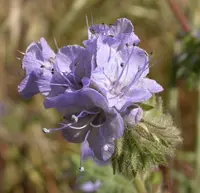
Lacy phacelia (Phacelia tanacetifolia) is a fast-growing annual often used as a cover crop and pollinator plant. It forms soft, fern-like foliage topped with curled clusters of pale lavender to blue flowers.
The plant is native to the southwestern United States and northern Mexico but is now widely grown in temperate regions. Flowers are rich in nectar and attract bees, hoverflies, and other beneficial insects.
It is generally easy to grow, as it tolerates poor soils, recovers quickly from minor stress, and self-seeds in suitable conditions. To care for lacy phacelia, provide full sun, moderately moist, well-drained soil, and avoid waterlogged spots.

Care Difficulty
Easy Care

Light Preference
Full Sun

Water Requirements
Moderate Water

Temperature Preference
Cool Climate

Hardiness Zone
3–10

Soil Texture
Sandy, Loamy, Organic-rich

Soil pH
Acidic (5.5–6.5), Slightly acidic (6.5–7.0)

Soil Drainage
Well-drained

Fertilization
Minimal (feed rarely)
Scan your plant to receive care tips personalized for your specific plant
Available on iOS and Android
This annual prefers bright conditions and produces best blooms in full sun.
This plant prefers evenly moist but not saturated soil, especially during germination and early growth.
This cool-season annual grows best in mild conditions and dislikes extreme heat or hard frost.
Humidity is rarely a limiting factor for Phacelia tanacetifolia in typical outdoor conditions.
Phacelia tanacetifolia prefers light, well-drained soil that does not stay waterlogged.
This species can be grown in containers if the pot supports its quick, fibrous root growth and tall stems.
This annual wildflower generally manages in average garden soil, but light feeding can support denser growth and flowering when growing lacy phacelia in poor ground.
Phacelia tanacetifolia benefits from light, simple pruning to extend bloom and maintain a tidy stand.
This species is most often direct-sown, but short-term container starts or small transplants can be moved with care.
This annual is almost always propagated from seed, which makes multiplication straightforward and efficient.
Phacelia tanacetifolia is an annual and usually does not require active winter care once it has completed its life cycle.

Plant Health Check
Not sure what's wrong with your plant? Check your plant's health inside the app.
Its flower clusters form a distinctive coiled shape called a scorpioid cyme, where buds unroll and open sequentially from the tip, extending the bloom period and nectar availability over time.
The small lavender-blue flowers produce abundant, easily accessible nectar and pollen, making the plant a key forage source for honey bees, wild bees, hoverflies, and other beneficial insects in mixed farming systems.
It is widely used as a cover crop because its dense, fibrous root system improves soil structure, while its fast-growing foliage shades out many annual weeds and adds organic matter when incorporated into the soil.

This species is not native to Europe or North America but has become one of the most commonly sown insectary and cover crops in those regions, so much so that it is often included by name in government-backed agri-environment and pollinator-support seed mixes.
Lack of flowers usually comes from too much shade, excess nitrogen fertilizer, or heat and drought stress. Ensure full sun, moderate nutrients, and consistent moisture. Very late sowings may also bloom poorly before hot weather ends the flowering period.
Keep your plants happy and healthy with plant identification, disease detection, and easy care guidance.