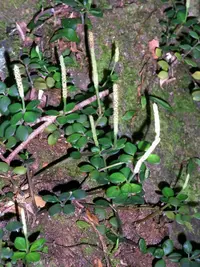
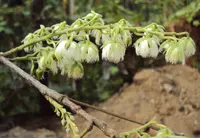
Structured canopy training
Install 2–3 sturdy horizontal wires or a simple trellis and tie young shoots loosely with soft ties to create an open, layered framework that improves light penetration and fruit set.

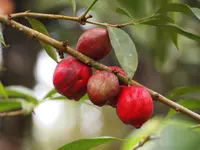
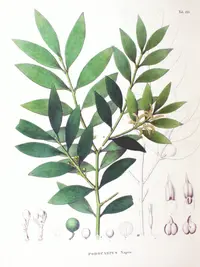
Buah mahkota dewa (Phaleria macrocarpa) is an evergreen shrub or small tree valued for its glossy leaves and striking red, egg-shaped fruits. It usually forms a dense, rounded canopy and can be grown as an ornamental feature plant in warm climates.
This species is native to Indonesia and other parts of Southeast Asia, where it grows in lowland to mid-elevation areas. It prefers consistently moist, well-drained soil and bright light with some protection from harsh sun.
Phaleria macrocarpa can be moderately demanding, as it dislikes waterlogged conditions, long dry periods, and cold temperatures. Gardeners who learn how to care for buah mahkota dewa often grow it successfully in sheltered gardens or large containers.

Care Difficulty
Moderate Care

Light Preference
Partial Sun

Water Requirements
Regular Water

Temperature Preference
Tropical / Frost Sensitive

Hardiness Zone
11–12

Soil Texture
Loamy, Sandy, Organic-rich

Soil pH
Acidic (5.5–6.5), Slightly acidic (6.5–7.0)

Soil Drainage
Moist but well-drained

Fertilization
Minimal (feed rarely)
Scan your plant to receive care tips personalized for your specific plant
Available on iOS and Android
Phaleria macrocarpa prefers bright, indirect light similar to an open, lightly shaded tropical garden edge.
Watering for Phaleria macrocarpa aims to keep the soil evenly moist but never saturated.
This species prefers warm, frost-free conditions typical of lowland tropical climates.
This species prefers moderately humid air but adapts if basic moisture needs are met.
Phaleria macrocarpa grows best in deep, loose, well-drained, organic-rich soil.
This species is suitable for container growing when given a stable, deep pot.
This tropical fruit tree benefits from moderate feeding when grown in containers or managed orchards, though established ground-grown plants often cope with lean soils.
Phaleria macrocarpa responds well to light structural pruning that maintains a strong framework and good light penetration.
This species is usually grown in the ground, so focus on careful transplanting of young trees rather than frequent repotting.
New Phaleria macrocarpa plants are typically raised from seeds or semi-hardwood cuttings under warm, humid conditions.
This tropical tree is frost-sensitive and needs protection in climates with cold winters.

Plant Health Check
Not sure what's wrong with your plant? Check your plant's health inside the app.
This species is native to Indonesia, particularly Java and surrounding islands, where it grows in lowland to mid-elevation tropical forests and is rarely found naturally outside this region.
Its fruit is structurally complex, with a thin red skin, a pale fibrous mesocarp, a hard woody shell, and a single large seed, and the fresh raw parts are considered toxic if not properly processed.
The plant is chemically rich, especially in the fruit and seeds, which contain diverse secondary metabolites such as alkaloids, lignans, and flavonoids that have been studied in laboratory settings for biological activity.

The plant has become so culturally prominent in parts of Indonesia that it is commonly cultivated in home gardens and public spaces as a symbolic ornamental tree, valued for its striking red fruit and association with traditional herbal practices.
All parts are considered toxic if eaten raw, especially the seeds and fresh fruit flesh. Ingestion can cause nausea, vomiting, or more serious symptoms. Keep pets and children away and never self-medicate with homemade preparations.
Keep your plants happy and healthy with plant identification, disease detection, and easy care guidance.