Segment support
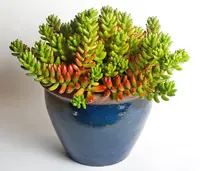
Use a shallow, heavy pot and loosely circle the trailing stems on the soil surface to prevent breakage and to encourage more even light exposure to all segments when growing Piaranthus geminatus.

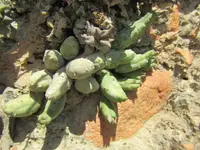
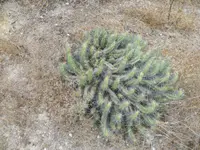
Piaranthus geminatus is a small, mat-forming succulent from arid regions of southern Africa. It belongs to the stapeliad group, known for their unusual star-shaped flowers.
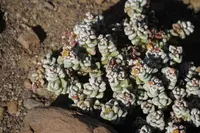
The plant grows as low, jointed stems that creep over the soil surface, forming dense cushions. Its flowers are typically fleshy, often patterned, and may attract flies for pollination.
This species prefers bright, indirect light, low to moderate watering, and very fast-draining, gritty soil. Once the basic conditions are stable, how to care for Piaranthus geminatus is relatively straightforward for growers familiar with succulents.

Care Difficulty
Moderate Care

Light Preference
Partial Sun

Water Requirements
Low Water

Temperature Preference
Tropical / Frost Sensitive

Hardiness Zone
Unknown

Soil Texture
Sandy, Loamy, Rocky

Soil pH
Slightly acidic (6.5–7.0), Neutral (7.0)

Soil Drainage
Well-drained

Fertilization
Minimal (feed rarely)
Scan your plant to receive care tips personalized for your specific plant
Available on iOS and Android
This succulent prefers bright, indirect exposure that mimics open, lightly shaded desert scrub.
Watering should mimic brief desert rains followed by thorough drying.
This species prefers warm, dry air with protection from frost and extreme heat spikes.
This species tolerates typical indoor humidity and prefers relatively dry air.
Use a very fast-draining, mineral-rich mix to protect the roots from constant moisture.
This species is well suited to container culture due to its compact, shallow-rooted growth.
This species grows well in lean, fast-draining soil and needs only light feeding to stay healthy.
Pruning needs are minimal and mainly focus on cleanliness and shaping of this compact succulent.
This slow-growing plant prefers to stay slightly root-bound and only needs infrequent repotting.
Propagation is commonly done from stem cuttings, which root well in warm, dry conditions.
This succulent is not frost hardy and needs basic winter protection in cooler climates.

Plant Health Check
Not sure what's wrong with your plant? Check your plant's health inside the app.
This species typically produces its fleshy, star-shaped flowers in closely paired clusters, which is reflected in the epithet geminatus, meaning twinned or paired.
The flowers emit a faint carrion-like odor and display mottled, flesh-toned patterns that mimic decaying organic matter, adaptations that help attract specific fly pollinators in its native habitat.
In the wild, it often grows in shallow soil pockets among rocks in arid regions of southern Africa, where its mat-forming, succulent stems help it store water and cope with intense sun and periodic drought.

This species belongs to a group of stapeliads known for their highly specialized fly-pollination systems, and its flower structure includes a complex corona (crown-like inner ring) that guides visiting insects into precise positions to ensure efficient pollen transfer.
Lack of flowering usually comes from insufficient light intensity, a pot that is too large, or excess nitrogen fertilizer. Cool, bright, dryish conditions and a brief rest period often trigger buds. Old, exhausted stems may bloom less and need renewing.
Keep your plants happy and healthy with plant identification, disease detection, and easy care guidance.