

Austrian pine Identification (Pinus nigra)

To recognize Austrian pine, look for stiff needles in pairs, each about 3 to 6 inches (8 to 15 cm) long, and oval cones about 2 to 3 inches (5 to 8 cm) long.

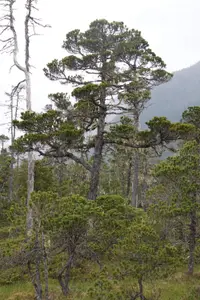
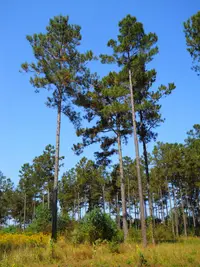
Mature trees usually form a broad, dense crown with dark, furrowed bark on the trunk.

Pinus nigra Identification

Is This Austrian pine?

Use a clear photo to confirm what plant you have.

Clear images work best. Avoid photos taken too close or too far away

Use these quick visual cues to check Pinus nigra by sight.

  • Needles are grouped in pairs, stiff and straight, usually 3 to 6 inches (8 to 15 cm) long.
  • The crown is dense and broadly conical to rounded, with strong horizontal branches.
  • Bark on older trunks is dark gray to blackish and broken into thick, blocky plates.
  • Cones are oval to egg-shaped, about 2 to 3 inches (5 to 8 cm) long, and sit close to the twigs.

Check several parts of the tree, especially needles, bark, and cones, for the most reliable match.

Pinus nigra shows clear structural shifts from seedling to cone-bearing mature tree.

  • Seedling: First growth shows a slender stem with soft, short juvenile needles, unlike later dense paired needles and heavier side branching.
  • Young plant: A young plant forms a narrow conical outline with regular whorled branches and stiff paired needles about 3-6 inches (8-15 cm) long.
  • Mature plant: The crown broadens from narrowly conical to rounded or irregularly flat-topped, while the trunk thickens and bark breaks into dark, plated ridges.
  • Fruiting stage: Cone-bearing plants show oval to conical seed cones held near branch tips, adding a woody, persistent feature absent on nonfruiting younger plants.

Austrian pine has several named forms that can be picked out by needle color, branch habit, or overall shape.

  • Pinus nigra 'Oregon Green': A dense, narrow pyramidal cultivar with very dark green needles and tightly layered branches, usually staying much slimmer than the typical broad tree.
  • Pinus nigra 'Pyramidalis': Marked by a strongly columnar to narrowly conical crown, with upright branching that keeps the tree relatively narrow as it matures.
  • Pinus nigra 'Hornibrookiana': A dwarf, flattened mound with short, crowded needles and low, spreading growth, unlike the typical tall single-trunk form.
  • Pinus nigra 'Aurea': New needles and winter foliage show a yellow to golden cast instead of the usual deep green.

Austrian pine stays green year-round, so there is no fall leaf drop or bare winter outline. The long, stiff needles remain dense through winter, which helps separate it from deciduous conifers. In spring, pale new shoots, called candles, extend at branch tips. Pollen cones may appear then, and seed cones become more noticeable as they enlarge from summer into fall.

Several two-needle pines are easy to confuse with Austrian pine.

Japanese black pine(Pinus thunbergii)

Similar dark, stiff needles in pairs and a rugged outline. It differs by having conspicuously white spring buds, while Pinus nigra buds are not white-coated.

Scots pine(Pinus sylvestris)

Also has paired needles and an irregular mature crown. The quickest check is bark: upper trunk and branches turn orange to cinnamon, not dark gray to black.

lodgepole pine(Pinus contorta)

Another two-needle pine with small cones. Needles are usually shorter and often slightly twisted, and cones commonly stay closed on branches for years.

Pinus nigra is native to southern Europe, from Italy and Austria through the Balkans to Greece, with separate native populations in parts of the Mediterranean region. It is most often found in montane woodland and on dry, rocky limestone slopes. In the wild, it commonly occurs from about 800 to 5,900 feet (250 to 1,800 m). That setting helps narrow identification when a dark-needled pine is growing on exposed uplands rather than in lowland wet forests or coastal dunes.

Not Sure About the ID?

Use Botan to compare a photo and help identify the plant or confirm your answer before you label it.

FAQ

The clearest field mark is its stiff, dark green needles in bundles of two, usually 3 to 6 inches (8 to 15 cm) long, with a dense, broadly pyramidal to rounded crown.

More Plant Identification Guides

Know Your Plant Better

Identify it from a photo with Botan, then get plant details, care information, and common problems matched to the result.

Botan app identifying a plant from a photo
Top 15 Plants That Don’t Need Sunlight

8 min read · 17 Sept 2026

Top 15 Plants That Don’t Need Sunlight

Some plants thrive in dim rooms, shaded corners, and places with indirect light. In this guide, you’ll explore the top 15 species best suited to low-light conditions and how to care for them.

Plant Recommendations

Top 15 Plants That Don’t Need Sunlight
Best Time to Water Grass in Summer – Lawn Watering Tips

5 min read · 21 Jul 2026

Best Time to Water Grass in Summer – Lawn Watering Tips

Summer watering is easy to get wrong. This guide explains when to turn on your sprinkler, how much liquid your grass needs each week, and how to tell if you're overwatering or underwatering.

Plant Care
Best Time to Water Grass in Summer – Lawn Watering Tips
How Long Can Flowers Go Without Water? Everything You Need to Know

6 min read · 10 Jul 2026

How Long Can Flowers Go Without Water? Everything You Need to Know

Flowers can survive without water anywhere from 1-2 hours to several months, depending on the plant type, species, and growing conditions. Some strong-looking flowers are drought-sensitive, while delicate-looking plants may tolerate long dry periods surprisingly well.

Plant Care
How Long Can Flowers Go Without Water? Everything You Need to Know