
Red Pine Identification (Pinus resinosa)

To recognize Red Pine, check for needles in bundles of two, each 4 to 6 inches (10 to 15 cm) long, and egg-shaped cones about 2 inches (5 cm) long.

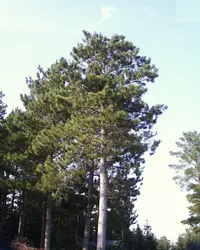
Mature trees usually have a straight trunk with broad, flat-topped branching.

Pinus resinosa Identification

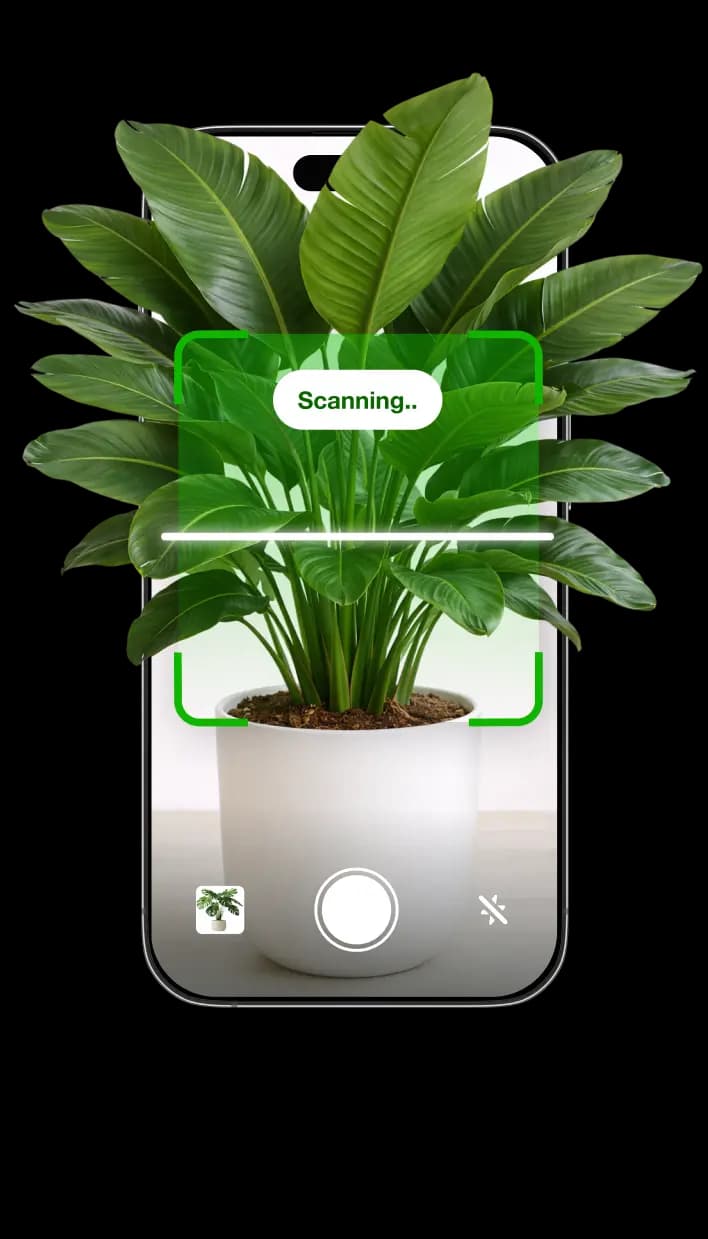
Scan to Confirm Red Pine

Take a photo and use Botan to confirm your plant identification.

Clear images work best. Avoid photos taken too close or too far away

Check the needles, crown, bark, and cones for a quick field read of Pinus resinosa.

  • Needles are in bundles of two, stiff and straight, usually 4 to 6 inches (10 to 15 cm) long.
  • The crown is broadly conical to rounded, with whorled branches that give the tree a layered outline.
  • Bark on older trunks breaks into broad, flat plates with reddish to orange-brown tones.
  • Cones are narrow and egg-shaped, about 1.5 to 2.5 inches (4 to 6 cm) long, hanging downward from branch tips.

Use several features together, especially the two-needle bundles and plated reddish bark.

Pinus resinosa shows clear age-related differences in branching, bark, and cone-bearing structures.

  • Seedling: Seedlings begin with a small upright stem and soft first leaves, later shifting into dense bundles of needles that give a tidier, pine-like outline.
  • Young plant: Young plants are narrow and symmetrical, with whorled branches and long paired needles, usually 4-6 inches (10-15 cm), on a single straight leader.
  • Mature plant: Mature trees develop a tall clear trunk, broader crown, and plated reddish bark; lower branches often thin out, changing the outline from dense to open.
  • Fruiting stage: Cone-bearing branches show ovoid cones held near twig tips, adding a visible woody structure absent on nonfruiting younger plants and helping confirm adult identity.

Pinus resinosa stays green year-round, so it does not show a dramatic fall color change or a bare winter outline. Seasonal clues are subtle but useful when they are present. In spring to early summer, new candles and pollen cones can make the branch tips look paler and more crowded. By late summer into fall, mature cones are easier to spot, adding a visible, oval cone crop among the needles.

A few two-needle pines are regularly mistaken for Pinus resinosa.

Austrian pine(Pinus nigra)

Often confused because both have dark green needles in pairs and a straight trunk. Austrian pine has stiffer, slightly twisted needles and yellow-brown twigs; cones are more broadly egg-shaped.

Scots pine(Pinus sylvestris)

Similar from a distance as a paired-needle pine. Scots pine usually has shorter, often slightly twisted needles and distinctive orange bark on the upper trunk, unlike the more uniformly reddish bark below.

Japanese red pine(Pinus densiflora)

It can resemble young trees by bark color and paired needles. Japanese red pine typically has slimmer, more flexible needles and a more irregular, airy crown.

Pinus resinosa is native to northeastern North America, from Newfoundland and the Canadian Maritimes west to Manitoba, and south around the Great Lakes into parts of Minnesota, Wisconsin, Michigan, New York, and New England. It is most often found in dry to mesic conifer forests, sandy outwash plains, and rocky ridges. That range and habitat help separate it from pines of the Southeast or high mountains.

Confirm It from a Photo

Use Botan to identify or verify the plant from an image, which helps avoid mix-ups before you label, buy, or compare it.

FAQ

The quickest clue is the needles in pairs, each about 4 to 6 inches (10 to 15 cm) long, snapping cleanly when bent. Reddish upper bark in broad plates is another strong Red Pine identification feature.

More Plant Identification Guides

One Photo. More About Your Plant.

Identify it from a photo with Botan, then get plant details, care information, and common problems for that species.

Botan app identifying a plant from a photo
Best Time to Mow Lawn – A Complete Guide

5 min read · 10 Aug 2026

Best Time to Mow Lawn – A Complete Guide

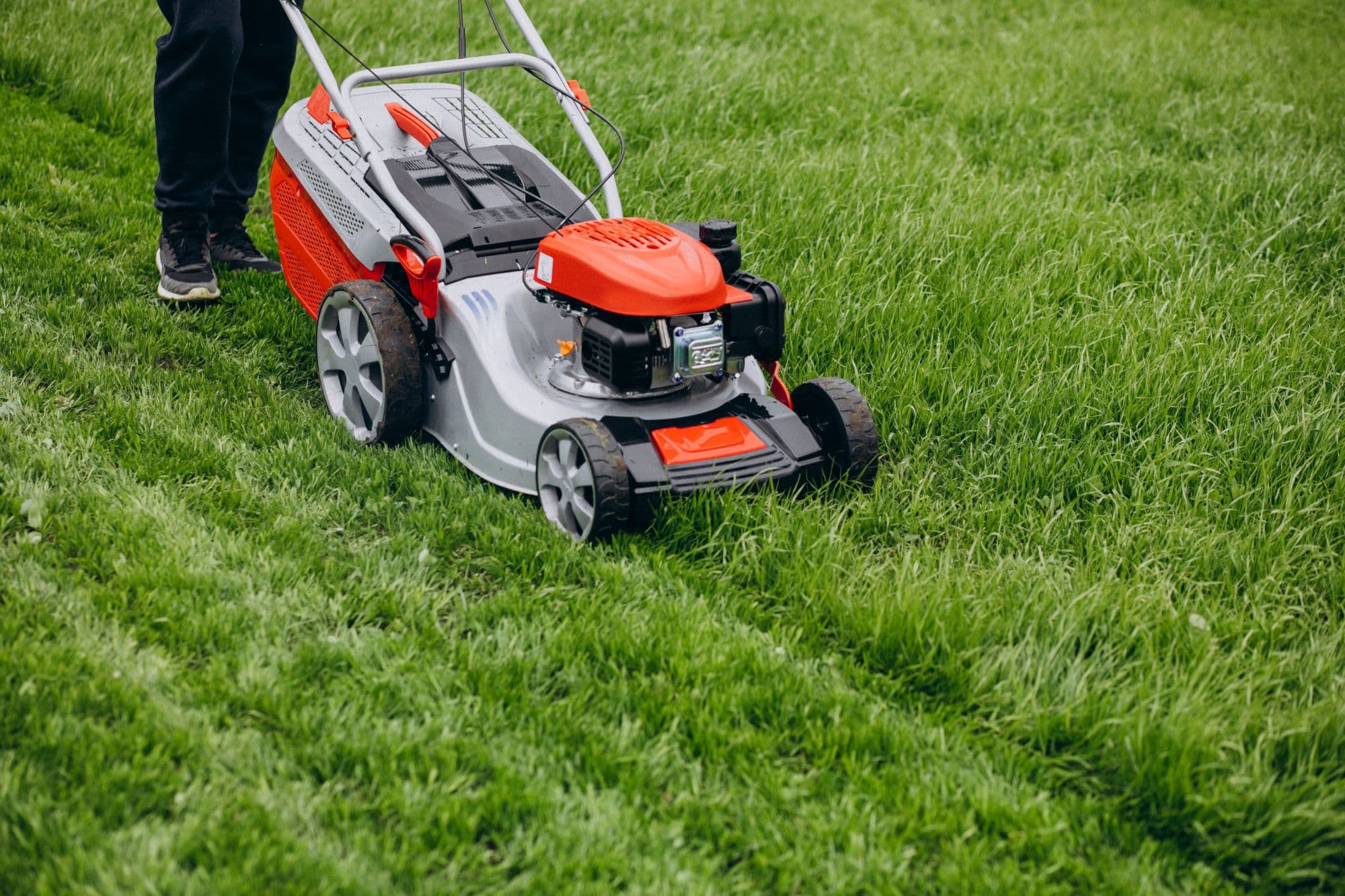
Explore when to mow your lawn for its health and a pleasant green color. Find out the best time for this task during the summer heat, and follow practical tips for correctly cutting the grass, and learn common mistakes to avoid.

Plant Care
Best Time to Mow Lawn – A Complete Guide
Planting Grass Seed in Summer – What Works and What Fails

7 min read · 6 Aug 2026

Planting Grass Seed in Summer – What Works and What Fails

Summer seeding succeeds when the grass type suits the season, and the soil stays moist. Find out how to prepare the seedbed and choose a safe window for planting.

Plant Care
Planting Grass Seed in Summer – What Works and What Fails
How to Mist Plants – Proper Technique and Common Mistakes

7 min read · 30 Jul 2026

How to Mist Plants – Proper Technique and Common Mistakes

Find out when misting works well and when to avoid it. Here, you’ll find detailed information about compatible and incompatible species, tips on how often to mist plants and do it correctly, and some great alternatives for raising humidity.

Beginner Guides
How to Mist Plants – Proper Technique and Common Mistakes