
eastern white pine Identification (Pinus strobus)

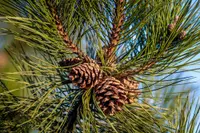
Recognize eastern white pine by its needles in bundles of five, each 3 to 5 inches (8 to 13 cm) long, and by its long, narrow cones, usually 4 to 8 inches (10 to 20 cm).

Mature trees often show straight trunks and layered horizontal branches in broad whorls.

Pinus strobus Identification

Identify Your Plant with Botan

Upload a plant photo and check the identification in seconds.

Clear images work best. Avoid photos taken too close or too far away

Use these visible traits to check for Pinus strobus.

  • Needles are soft, slender, and borne in bundles of five.
  • Each needle is about 2 to 5 inches (5 to 13 cm) long and often looks slightly flexible or drooping.
  • Twigs usually carry long, narrow cones that hang down rather than sit upright.
  • Cones are typically 4 to 8 inches (10 to 20 cm) long, thin, and lightly curved.
  • The crown often looks airy and irregular, with horizontal branches forming layered whorls.

A quick count of five needles per bundle is one of the most useful checks.

Pinus strobus shows useful visual shifts from a tufted seedling to a layered, tall tree.

  • Seedling: Begins as a slender stem with soft juvenile needles, then soon forms the species’ distinctive bundles of 5 flexible needles.
  • Young plant: Develops a narrow, symmetrical outline with regular whorled branches; the trunk stays smooth and gray-green, and needles look long, soft, and feathery.
  • Mature plant: Becomes a tall tree, often 50-80 feet (15-24 m), with horizontal layered limbs, a straighter trunk, and darker bark broken into broad ridges.
  • Fruiting stage: Shows long, slender cones hanging from branch tips, usually 4-8 inches (10-20 cm) long, adding a noticeably drooping texture absent on younger plants.

Several cultivated forms of eastern white pine are easy to separate by shape and needle color.

  • 'Fastigiata': Keeps a narrow, strongly upright outline, with ascending branches forming a column rather than the broad, open crown of the species.
  • 'Pendula': Shows a distinctly weeping habit, with long branches drooping downward instead of spreading outward.
  • 'Nana': Stays much smaller, usually forming a dense rounded mound only a few feet tall and wide rather than a tall tree.
  • 'Blue Shag': Forms a compact, shaggy mound with noticeably blue-green needles and short, dense branching.
  • 'Radiata': Develops a low, broad, often irregular outline, with shorter stature and wider spread than the typical form.

Pinus strobus stays green year-round, so seasonal color change is limited. The clearest clues come in spring, when soft pale new needles expand at branch tips and small pollen cones may be visible. By late summer into fall, long slender cones become more noticeable as they mature and hang down. In winter, the evergreen needles remain, while buds and the tree’s layered branching are easier to see.

A few five-needle pines are regularly confused with eastern white pine.

western white pine(Pinus monticola)

Often confused because both have soft blue-green needles in bundles of five and a narrow crown. Western white pine usually has longer cones, often 6 to 10 inches (15 to 25 cm), while Pinus strobus more often has 4 to 8 inch (10 to 20 cm) cones.

limber pine(Pinus flexilis)

It can look similar from the foliage alone because it also has five needles per bundle. Limber pine typically has stouter, often curved cones and thicker twigs; its branches are usually less feathery and more rigid overall.

Pinus strobus is native to eastern North America, from southeastern Canada through the northeastern and Great Lakes states and south along the Appalachian Mountains into northern Georgia. It is most often found in mixed forests, old fields, sandy outwash, and rocky uplands, and also along cool stream valleys. Seeing a tall five-needled pine in these regions, especially in northeastern or Appalachian woodland, helps narrow identification.

Confirm the Species with Botan

Upload a photo to help identify the plant or verify your ID before you label it or compare similar species.

FAQ

Needles are bundled in groups of five, called fascicles, with a small papery sheath at the base. This five-needle arrangement is one of the clearest traits for identifying eastern white pine.

More Plant Identification Guides

Identify the Plant and Get Its Profile

Use Botan to identify a plant from a photo, then review species-specific care information, safety notes, and common problems.

Botan app identifying a plant from a photo
Best Time to Mow Lawn – A Complete Guide

5 min read · 10 Aug 2026

Best Time to Mow Lawn – A Complete Guide

Explore when to mow your lawn for its health and a pleasant green color. Find out the best time for this task during the summer heat, and follow practical tips for correctly cutting the grass, and learn common mistakes to avoid.

Plant Care
Best Time to Mow Lawn – A Complete Guide
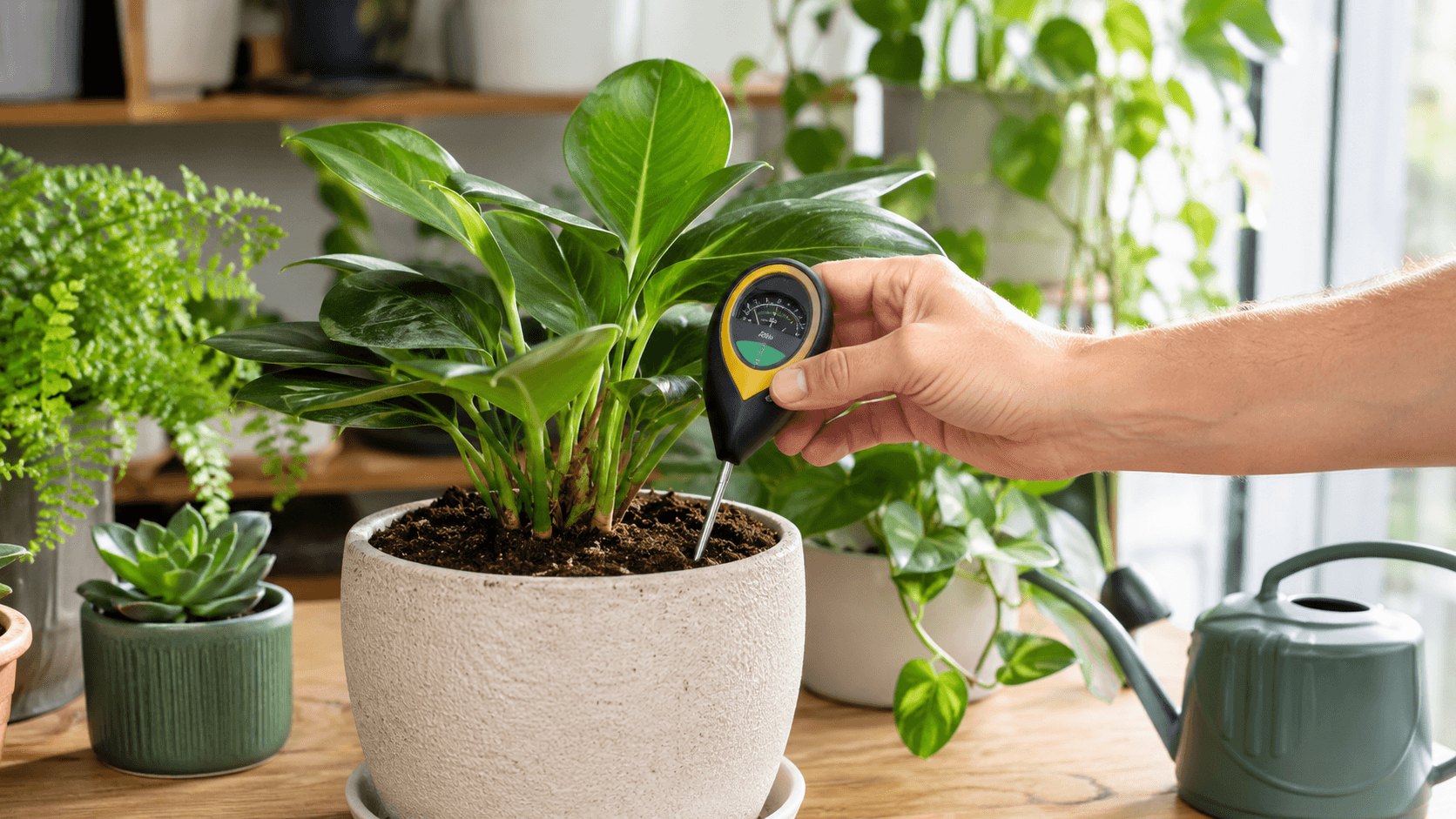
How to Use a Moisture Meter for Plants

5 min read · 4 Sept 2026

How to Use a Moisture Meter for Plants

Watering by feel kills plenty of houseplants. A moisture meter checks the soil for you, and takes the guesswork out of it. This guide will show you how to use it correctly, from the first touch to the final reading.

Beginner Guides
How to Use a Moisture Meter for Plants
How to Mist Plants – Proper Technique and Common Mistakes

7 min read · 30 Jul 2026

How to Mist Plants – Proper Technique and Common Mistakes

Find out when misting works well and when to avoid it. Here, you’ll find detailed information about compatible and incompatible species, tips on how often to mist plants and do it correctly, and some great alternatives for raising humidity.

Beginner Guides
How to Mist Plants – Proper Technique and Common Mistakes