



8 min read · 16 Oct 2026
20 Funny Plant Names That Make You Laugh
Some plants carry names that sound like jokes. This guide explains the origins of 20 funny plant names. You will also see which of these plants you can grow at home.

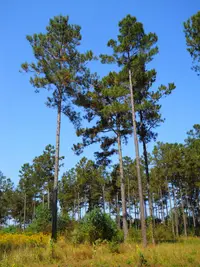
Loblolly Pine grows best outdoors in full sun, with long daily exposure and minimal shade.

Light Preference
Full Sun

Loblolly Pine is native to the southeastern United States, where it grows in warm, humid climates across open forests, fields, and disturbed sites. Young trees establish best where overhead shade is limited and sunlight reaches the crown for much of the day.
This open-canopy background explains why cultivated trees decline in shaded sites and perform best with direct sun. Preferred light is full sun.
Ideal exposure: Loblolly Pine needs about 6–8+ hours of full sun daily, including at least 6 hours of direct sunlight.
Established trees tolerate strong direct sun through the day when planted in open ground with good air movement.
Partial shade or nearby structures can cause thin growth, slower establishment, and a weaker, uneven crown.
Morning and afternoon sun are both suitable; avoid locations shaded for half the day or more.
Excess light is uncommon in established outdoor trees, but sudden exposure can stress young or container-grown specimens.
Needles on the most exposed side may turn tan or straw-colored after an abrupt move into strong afternoon sun.
Damage often appears on the south or west side, where heat and direct rays are strongest.
New soft growth may dry or curl when shade-grown plants are placed immediately in full sun.
Young trunks with sudden exposure can develop pale or damaged patches on the sunny side.
Shift young plants into brighter exposure over 1–2 weeks, or use temporary shade during the hottest afternoon hours. Keep established trees in open sun once acclimated.
Low light is a common problem when this species is planted near buildings, dense tree lines, or shaded slopes.
New growth may extend toward the brightest opening, leaving a narrow or leaning shape.
Branches in shade often carry fewer needles, so the canopy looks sparse instead of full.
Needles and branch clusters may be spaced farther apart when light is too weak.
Young trees may gain height and trunk thickness slowly during the active growing season.
Move young Pinus taeda to an open site with at least 6 hours of direct sun. Prune only nearby competing shade if it can be done safely.
Choose the most open planting spot available if ideal full sun is limited. A site with uninterrupted southern or western exposure is better than a bright area shaded for half the day.
Reduce nearby competing shade only when practical and safe. For young potted trees, turn the container every few weeks so growth does not lean toward one side.
Scan your plant to receive care tips personalized for your specific plant
This species needs full sun outdoors. It performs best with long, direct daily exposure and should not be treated as a shade-tolerant landscape tree.
Discover how to care for your plants with Botan.


8 min read · 16 Oct 2026
Some plants carry names that sound like jokes. This guide explains the origins of 20 funny plant names. You will also see which of these plants you can grow at home.

5 min read · 28 Sept 2026
Learn how to prepare your garden for winter with a practical six-step checklist covering cleanup, tender plant care, watering, mulching, winter protection, and winterizing equipment and containers.

5 min read · 21 Jul 2026
Summer watering is easy to get wrong. This guide explains when to turn on your sprinkler, how much liquid your grass needs each week, and how to tell if you're overwatering or underwatering.