Select planting stock
Choose container-grown or root-pruned nursery seedlings with a strong central leader and outward-spreading roots, since high-quality planting stock establishes faster and is less prone to windthrow when growing Loblolly Pine.

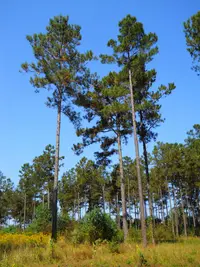
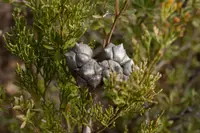
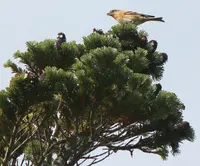
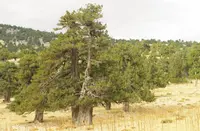
Loblolly pine, Pinus taeda, is a fast-growing evergreen conifer and one of the most common pines in the southeastern United States. It naturally forms tall, straight trunks with a high, open crown and long, flexible needles in bundles of three.
This species typically occurs in lowland forests, old fields, and coastal plains, where it adapts well to warm, humid climates. It is valued in forestry for its rapid growth and usefulness as timber.
In landscapes, loblolly pine is considered relatively easy to establish where there is full sun, adequate moisture, and well-drained, acidic soil. Understanding how to care for Loblolly Pine helps it develop a strong root system and stable structure over time.

Care Difficulty
Moderate Care

Light Preference
Full Sun

Water Requirements
Moderate Water

Temperature Preference
Cold Hardy

Hardiness Zone
6–9

Soil Texture
Sandy, Loamy, Clay

Soil pH
Strongly acidic (4.5–5.5), Acidic (5.5–6.5)

Soil Drainage
Well-drained

Fertilization
Minimal (feed rarely)
Scan your plant to receive care tips personalized for your specific plant
Available on iOS and Android
This fast-growing pine needs abundant direct light to build a strong, balanced crown.
This species prefers moist but not waterlogged soil, especially during establishment.
This pine is adapted to warm temperate climates with distinct seasons and tolerates a wide range of outdoor temperatures.
Humidity is rarely a limiting factor for this species, which adapts well to typical outdoor air in most regions.
This pine prefers deep, well‑aerated mineral soil that drains freely but does not dry out extremely fast.
This species can be grown in containers only for temporary or juvenile stages, as it becomes large and heavy-rooted.
This pine usually thrives in average soils, so fertilizing Pinus taeda is modest and situational.
Pruning Pinus taeda focuses on safety, structure, and removal of unhealthy wood rather than heavy shaping.
Pinus taeda is mainly grown in-ground, so care centers on transplanting field or container-grown young trees.
Reproduction of Pinus taeda for forestry or landscape use is done mainly from seed under controlled conditions.
This species is cold hardy in much of its range and usually needs minimal winter care once established.

Plant Health Check
Not sure what's wrong with your plant? Check your plant's health inside the app.
This species is the most widespread and commercially important pine in the southeastern United States, often forming extensive, nearly pure stands on former agricultural land.
Compared with many other native pines, it grows rapidly, reaching pulpwood size in only a few decades, which is why it is heavily used in timber plantations and forestry research on growing Loblolly Pine.
Pinus taeda was one of the first conifers to have its huge genome sequenced, providing key insights into conifer evolution, adaptation, and disease resistance at the molecular level.

Loblolly pine is a major host for southern pine beetle outbreaks, and its dense plantations can strongly influence the frequency and scale of these insect epidemics across the southeastern United States.
This species is considered fast-growing, often adding 30–60 cm in height per year in youth under good light, moisture, and soil conditions. Growth slows with age as the tree approaches its mature size.
Keep your plants happy and healthy with plant identification, disease detection, and easy care guidance.