
prostrate knotweed Identification (Polygonum aviculare)

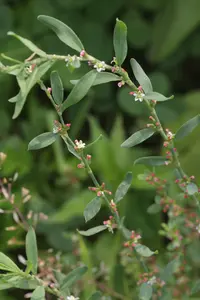
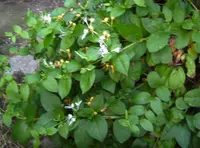
To recognize prostrate knotweed, look for a low, mat-forming plant with many wiry stems radiating from a central point, usually staying just a few inches tall. Leaves are small, alternate, and narrow oval to lance-shaped.

Tiny greenish to pinkish flowers sit in the leaf axils at the stem nodes, often singly or in small clusters.

Polygonum aviculare Identification

Confirm What Plant You Have

Take or upload a photo to confirm your plant ID with Botan.

Clear images work best. Avoid photos taken too close or too far away

  • 1 free identification
  • No sign-up
  • 30,000+ plants in database

Use these quick visual checks for Polygonum aviculare.

  • Stems are slender and wiry, usually flat to the ground, branching from the base into mats.
  • Leaves are alternate, narrow to oval, and small, often about 1/2 to 1 1/2 inches (1-4 cm) long.
  • Each node has a thin, papery sheath around the stem, a key knotweed trait.
  • Tiny greenish to pinkish flowers sit in small clusters at the leaf axils, where leaves meet stems.

Check several nodes and leaf axils, since the sheath and flower position are especially useful.

Polygonum aviculare shows useful visual shifts from tiny seedling to fruiting mat-forming plant.

  • Seedling: Seedlings show a small upright start with few narrow leaves, then quickly produce slender branching stems and the first papery node sheaths.
  • Young plant: At this stage, stems begin to sprawl and branch from lower nodes, forming a flat outline; leaves are still relatively larger in proportion.
  • Flowering stage: Tiny greenish-white to pink flowers appear in leaf axils along the stems, often in small clusters, without changing the plant’s low, wiry habit.
  • Fruiting stage: After flowering, the axils hold small enclosed fruits; stems may spread 1-2 feet (30-60 cm), and the mat looks denser than earlier stages.

In spring, Polygonum aviculare appears as low, spreading stems with small alternate leaves. By summer, tiny greenish to pink flowers become visible in the leaf axils, a useful clue on mats along paths and compacted ground. By late fall, plants often turn brown and dry, leaving wiry, flattened stems and papery sheaths at the nodes visible after leaf drop.

A few low, mat-forming weeds are regularly mistaken for Polygonum aviculare.

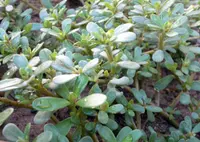
common purslane(Portulaca oleracea)

Both sprawl flat on compacted ground. Purslane has smooth, fleshy leaves and often reddish, succulent stems. Polygonum aviculare has thinner, non-succulent leaves and papery leaf sheaths at the nodes.

prostrate spurge(Euphorbia prostrata)

Both form wiry mats with tiny leaves. Prostrate spurge usually has opposite leaves, often with a dark spot, and it bleeds white sap if broken. Polygonum aviculare has alternate leaves and no milky sap.

Polygonum aviculare is native across much of temperate Europe and Asia, and it is widely naturalized elsewhere. Its broad native range matters less than its very consistent habitat pattern. It typically occurs in compacted, open ground such as paths, farmyards, roadsides, field edges, and disturbed soil in lowland settings. Finding it in repeatedly trampled places helps narrow identification, especially when a low knotweed is spreading flat across bare or hard-packed ground.

Not Sure About the ID?

Use Botan to identify or confirm the plant from a photo, which helps reduce mix-ups before you spend more time on it.

FAQ

The quickest check is its low, mat-forming habit with wiry, branching stems and tiny leaf-bearing nodes sheathed by papery ocreae, the thin stipules typical of the knotweed family. That combination is central to prostrate knotweed identification.

More Plant Identification Guides

Identify It. Learn More About It.

Use Botan to identify a plant from a photo, then view plant details, care information, and common problems for that species.

Botan app identifying a plant from a photo
How Long Can Flowers Go Without Water? Everything You Need to Know

6 min read · 10 Jul 2026

How Long Can Flowers Go Without Water? Everything You Need to Know

Flowers can survive without water anywhere from 1-2 hours to several months, depending on the plant type, species, and growing conditions. Some strong-looking flowers are drought-sensitive, while delicate-looking plants may tolerate long dry periods surprisingly well.

Plant Care
How Long Can Flowers Go Without Water? Everything You Need to Know
How to Kill Weeds With Vinegar in Driveway and Sidewalk Cracks

5 min read · 25 Nov 2026

How to Kill Weeds With Vinegar in Driveway and Sidewalk Cracks

Vinegar works on weeds, but there are some nuances. Household vinegar (about 5%) sprayed onto the leaves of young annual weeds on a sunny day makes them wilt within a few hours.

Plant Care
How to Kill Weeds With Vinegar in Driveway and Sidewalk Cracks
Plants That Repel Bugs – 20 Effective Options

12 min read · 16 Jul 2026

Plants That Repel Bugs – 20 Effective Options

Mosquitoes on the patio? Gnats in the kitchen? Some plants keep them away with the scent of their own leaves. Here are 20 that deal with mosquitoes, flies, aphids, and more, plus where to put them so they help.

Plant Recommendations
Plants That Repel Bugs – 20 Effective Options